02/22/2026
The international transportation and logistics sector recently experienced a notable market selloff, largely driven by anxieties surrounding artificial intelligence. Investors panicked over the idea that AI-enabled freight optimization platforms might instantly render traditional freight brokerage obsolete. However, a closer look at the data reveals that this panic may be significantly mispriced.
For professionals navigating the complexities of import and export logistics, understanding the true impact of AI is crucial. AI is poised to transform the industry by enhancing efficiency and network depth, but it is not the immediate, destructive force the market fears. Let's unpack why the traditional brokerage model is evolving rather than dying, and where the real opportunities lie.

The spark for much of this industry anxiety was a whitepaper from Algorhythm Holdings regarding SemiCab, an AI-enabled freight optimization platform. The document suggested massive industry disruption, claiming the ability to reduce empty miles from 33% to 8% by shifting from transactional planning to network-led planning. It also touted throughput increases of up to 2,000 loads per operator annually.
While these numbers sound revolutionary for supply chain efficiency, a deeper analysis reveals some critical gaps. The 2,000-load metric, for instance, represents back-office planning productivity per agent—not physical driver capacity. The software significantly reduces the manual workload of route planning, but that does not automatically equate to a physical reduction in empty lanes on the highway.
Furthermore, the whitepaper lacks the scientific rigor necessary to prove total disruption. It omits vital context regarding time sensitivity, lane imbalances, and geographical constraints. AI undoubtedly streamlines back-office execution, but equating software planning efficiency directly to physical trucking efficiency is a leap the current data does not fully support.
>>> Read more of the related articles:
Generative AI in Logistics to Soar to USD 13.6 Billion by 2032
Smarter Logistics: Unlocking Sustainability Gains Through AI-Powered Innovation
Ready to move beyond the tech hype and secure reliable physical capacity for your cargo? Discover the Comprehensive Global Freight Forwarding Services at Worldcraft Logistics to keep your supply chain moving seamlessly. |
The core fear driving the market selloff is that AI will eliminate the need for freight brokers. If an AI system can instantly execute automated load matching, dynamic pricing, carrier sourcing, and compliance documentation, the traditional labor-heavy brokerage model seems threatened.
AI does allow for a decoupling of volume growth from labor costs. As overhead costs per load drop, the traditional spreads that brokers rely on will likely shrink. However, this does not spell the end of the brokerage industry.
As AI introduces real-time, dynamic pricing based on minute-to-minute supply and demand, spot market volatility will likely increase. In response, shippers and carriers will crave predictability. Long-term contracts and capacity lock-ins will become highly valued. Freight brokers will transition from profiting off labor-cost markups to profiting off their ability to guarantee capacity and hedge against AI-driven price volatility.
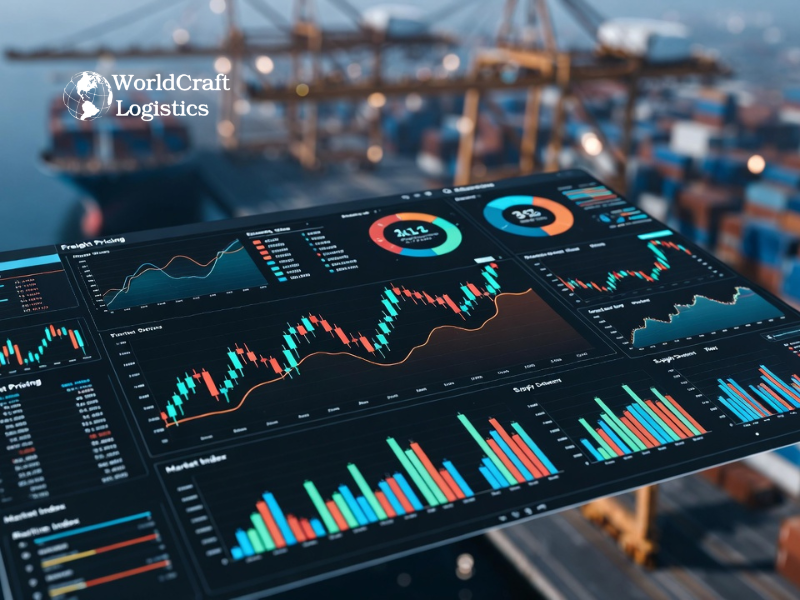
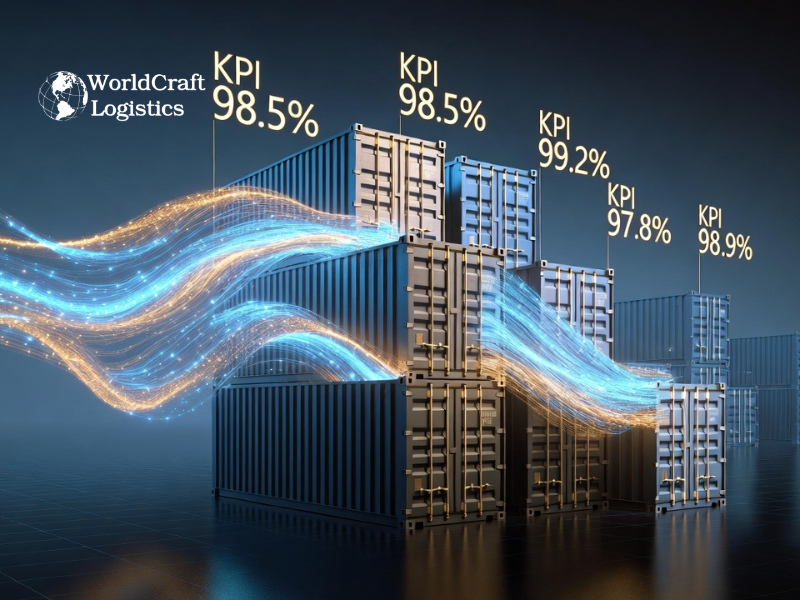
We are witnessing a paradigm shift where freight will no longer be priced purely as a commodity. Instead, pricing will be dictated by network performance, data leverage, and capacity orchestration. Brokerage firms will compete on a new set of governing Key Performance Indicators (KPIs) focused on cost efficiency and algorithm utilization.
The table below illustrates this fundamental shift in how logistics performance will be measured moving forward.
Old Transport Metrics | AI-Driven Software Platform Metrics |
Spot exposure | Network size |
Brokerage margin % | Software cost per load |
Loads volume | Network liquidity |
Revenue growth | AI-enabled efficiency |
Asset utilization | Algorithm utilization |
>>> Explore: 7 Strategic Shifts Defining the Future of Global Transportation in Logistics 2026
Not all segments of the import and export logistics ecosystem will feel the impact of AI equally. The true winners will be organizations that possess large data flows and expansive physical networks, allowing AI algorithms maximum surface area for optimization.
Here is a breakdown of estimated margin targets across different segments during various phases of the freight cycle.
Segment | Downturn | Normal | Peak |
3PL / Contract Logistics | 0–3% | 2–6% | 5–8% |
Integrated Freight | 2–5% | 4–7% | 6–10% |
Freight Forwarding | 1–3% | 3–7% | 5–11% |
Freight Brokerage | 8–12% | 10–14% | 15–18%+ |
Intermodal Operators | 1–3% | 2–5% | 4–8% |
Hybrid Models | 2–5% | 4–8% | 7–12% |
Integrated Freight Providers: These companies stand to benefit immensely. Their large networks provide the data necessary for AI to genuinely reduce empty legs and optimize routing, lowering overall operational costs.
Third-Party Logistics (3PL): Due to their heavy reliance on physical warehouse footprints and long-term contract structures, 3PLs are somewhat insulated from direct spot-rate disruptions.
Freight Brokers and Forwarders: While initially facing margin pressure, adaptable brokers will transform into tech-forward, data-driven entities. Those who successfully leverage AI to improve network liquidity will maintain healthy margins. Smaller firms lacking the budget for digital transformation will face the steepest uphill battle.
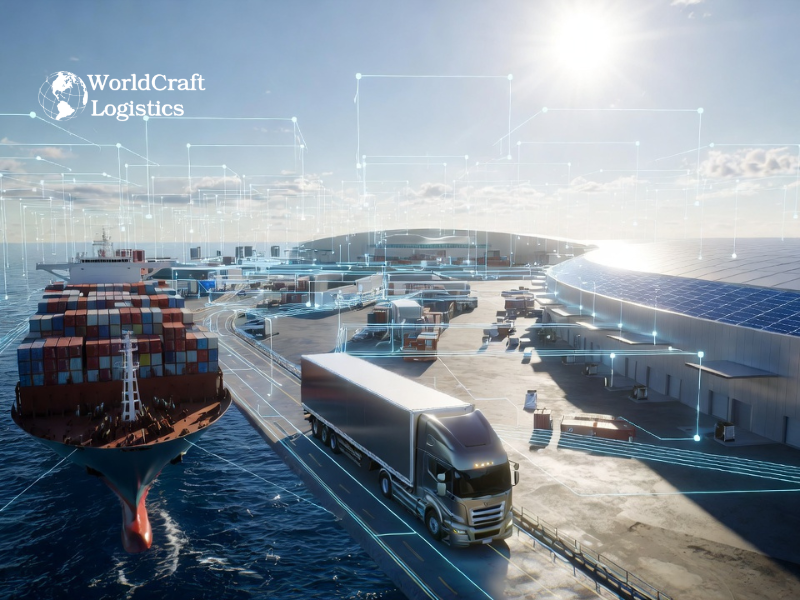
As an industry observer analyzing the intersection of technology and global logistics, I view the narrative surrounding AI through a heavy dose of pragmatism. The notion that a single software platform will instantly upend international transportation is misguided. The logistics industry is inherently physical; goods must still cross oceans, clear customs, and traverse highways. AI is a remarkably powerful back-office tool that will shift the basis of competition from human labor arbitrage to data processing efficiency.
However, true disruption requires widespread digital maturity. Large portions of the global supply chain still rely on fragmented, legacy systems and manual paperwork. Until the entire ecosystem undergoes a foundational digital transformation, AI's impact will be confined to optimizing isolated networks rather than revolutionizing the entire open market. Freight brokers will not die out; they will simply evolve. The future belongs to those who view AI not as a threat to their current margins, but as a foundational utility to build deeper, more resilient logistics networks.
| Navigate the future of international transportation with a partner who masters both digital innovation and physical freight execution. Connect with the experts at Worldcraft Logistics today to build a resilient and future-proof supply chain strategy. |

*Note: This article has been comprehensively edited and updated to suit the readers of Worldcraft Logistics, providing tailored insights into the evolving landscape of international transportation.

SEO
Digital Marketing/SEO Specialist
Simon Mang is the SEO and Digital Marketing Specialist at Worldcraft Logistics, where he leads content strategy to promote the company's online presence. With years of experience in digital marketing and a strong understanding of the logistics industry, he has published more than 500 specialized articles across freight, warehousing, and supply chain topics. ( Reviewed for accuracy by the Worldcraft Logistics Operations Team ).