10/15/2026
When a shipment is running behind schedule, every hour can affect production, inventory availability, customer commitments, and operating costs. Expedited freight shipping helps businesses move time-sensitive cargo faster than their standard transportation arrangements by prioritizing pickup, transit, routing, or delivery.
However, expedited freight is not simply a matter of choosing the fastest truck or booking an air shipment. The right solution depends on how much time remains, where the cargo is located, whether the shipment is ready for pickup, and what happens if the delivery deadline is missed.
For manufacturers, importers, distributors, and other commercial shippers, understanding these factors makes it easier to determine when expedited freight services are worth the additional cost and which transportation option is most likely to meet the actual delivery requirement.
This guide explains how expedited freight shipping works, compares the available service options, examines cost drivers, and provides a practical framework for evaluating urgent shipments without creating unnecessary supply chain risk.
Expedited freight shipping is a transportation service designed to prioritize the movement of cargo when a standard shipping schedule cannot meet the required delivery timeline. Depending on the shipment, this may involve dedicated ground transportation, expedited less-than-truckload (LTL) service, hot shot delivery, team drivers, air freight, or a combination of transportation modes.
Unlike conventional freight arrangements that may rely on scheduled routes, consolidation, or multiple terminal transfers, expedited freight can use a more direct routing plan, dedicated capacity, or a higher-priority service to reduce avoidable delays.
The exact service depends on the provider. Expedited freight does not automatically mean guaranteed delivery, nonstop transportation, or a specific transit time. Shippers should confirm the pickup window, delivery commitment, service conditions, and applicable exceptions before booking.

A shipment is generally considered expedited when its required delivery timeline calls for a higher level of transportation priority than the shipper's standard option can provide.
Common reasons include:
The important distinction is urgency. A shipment may be small or large, domestic or international, and relatively inexpensive or highly valuable. What makes expedited freight appropriate is the relationship between the delivery deadline, the available transportation options, and the consequences of arriving late.
These terms are sometimes used interchangeably in marketing, but they do not always describe the same service.Service Typical Characteristics Important Consideration Expedited Freight Priority transportation for commercial cargo, potentially using dedicated trucks, specialized equipment, or air freight. Availability, transit time, and service commitments depend on the shipment and provider. Express Shipping A time-definite or faster delivery service commonly offered for parcels and certain freight shipments. Check shipment size limits, delivery coverage, and the provider's service terms. Priority Shipping A service category that gives shipments higher handling or transportation priority under a provider's service structure. The word "priority" alone does not establish a particular delivery deadline. Standard Freight Transportation planned around regular service schedules, consolidation, and routine capacity availability. Usually more appropriate when the delivery window allows greater scheduling flexibility.
Before selecting a service, ask the provider what the quoted delivery time actually represents. A faster estimated transit time is not necessarily a guaranteed appointment, and a priority service does not eliminate delays caused by weather, receiving restrictions, or regulatory requirements.
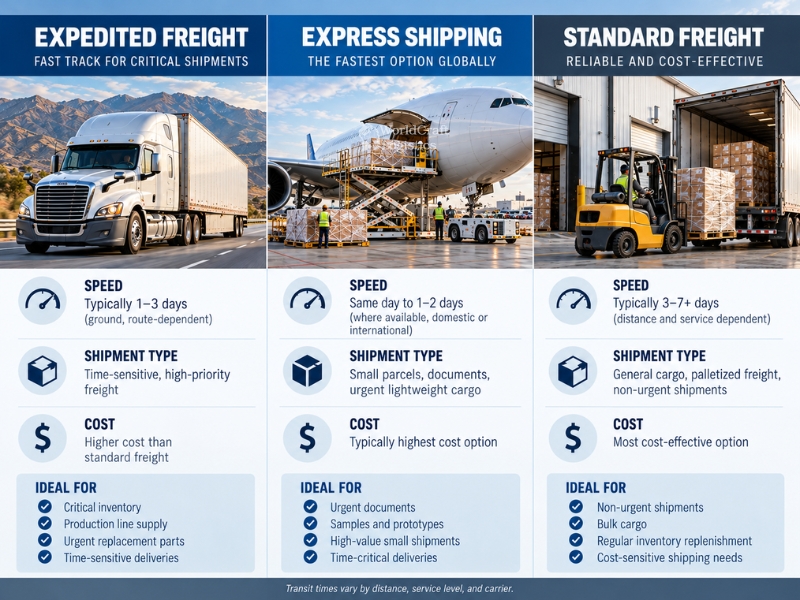
Expedited freight shipping starts with a defined delivery requirement rather than a transportation mode. The shipper and provider determine what must arrive, where it needs to go, when it must arrive, and which transportation plan can realistically meet the deadline.
The most important step is validating the timeline before dispatch. A shipment may have a short driving distance but still require several hours of preparation, loading, appointment coordination, or receiving procedures. Expedited freight works best when these activities are included in the transportation plan rather than treated as separate details.
Different expedited freight services solve different transportation problems. The best option depends on cargo dimensions, shipment weight, origin and destination, equipment availability, and the time remaining before delivery is required.
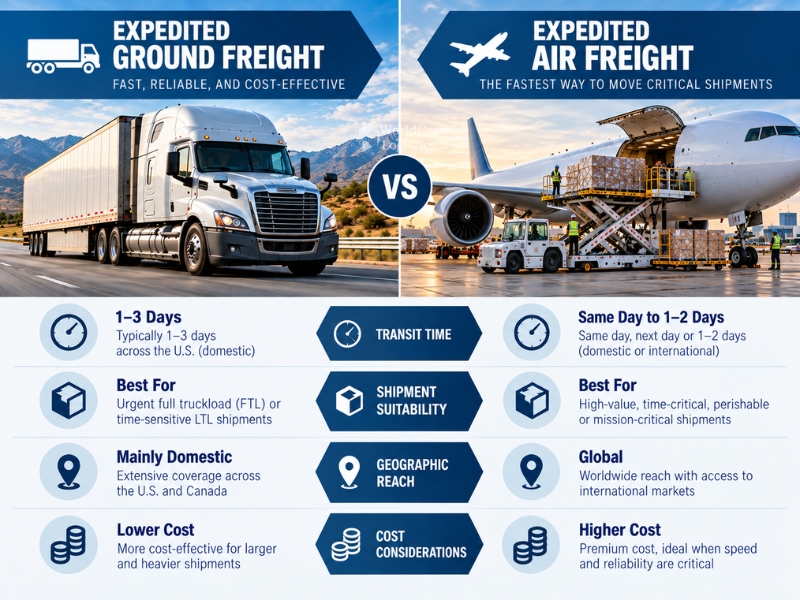
Dedicated ground transportation assigns a truck or other suitable vehicle to a shipment or specific transportation requirement. It can reduce delays associated with consolidation, intermediate terminals, and additional freight transfers.
This option is worth evaluating when a shipment requires direct routing, specialized handling, substantial cargo space, or a delivery schedule that does not align with standard freight services.
However, dedicated transportation does not automatically mean nonstop transit. Driver availability, legally required rest periods, route conditions, and loading or unloading requirements still affect the schedule.
Expedited LTL shipping is designed for shipments that do not require an entire truck but need faster handling or transportation than a standard LTL service may provide.
Depending on the provider, expedited LTL may involve prioritized handling, reduced terminal transfers, or other service arrangements. Availability and transit commitments vary by lane and service offering.
Shippers should compare the actual routing, terminal handling, pickup schedule, and delivery commitment rather than assuming that every expedited LTL service follows the same process.
Hot shot trucking generally uses suitable smaller trucks or specialized vehicles to move urgent freight, often over regional or shorter-distance routes. Cargo vans may be appropriate for smaller shipments that need direct transportation.
These options can be useful for replacement parts, urgent commercial supplies, smaller equipment, and shipments that do not require a full-size tractor-trailer.
Vehicle suitability is critical. Cargo weight, dimensions, loading requirements, securement, and applicable transportation regulations must be checked before selecting a vehicle.
Expedited air freight can be appropriate when ground transportation cannot meet the required timeline or when a shipment must travel a long distance within a limited window.
Air transportation may reduce the main transit portion of a shipment, but the total delivery time also includes pickup, airport handling, booking cutoffs, security procedures, arrival processing, and final-mile transportation.
For urgent domestic or international shipments, compare the complete door-to-door timeline rather than the flight duration alone.
Team-driver arrangements may help keep a vehicle moving for longer periods because drivers can alternate driving and resting. Relay arrangements may transfer a shipment between qualified drivers or transportation resources along a route.
Neither arrangement removes applicable hours-of-service requirements or guarantees a particular delivery time. Availability, route planning, driver schedules, and handoff coordination must all be considered.
Some urgent shipments require more than one transportation mode. A shipment might use air freight for the long-distance portion and ground transportation for pickup and final delivery.
Multimodal expedited freight can be useful when a single mode cannot satisfy the deadline or when a combination of services provides a better balance between speed, coverage, and cost.
The key is to coordinate transfers, booking cutoffs, cargo handling, documentation, and delivery appointments as one transportation plan.

The fastest advertised service is not necessarily the most suitable choice. A sound expedited freight decision evaluates the actual deadline, shipment characteristics, available capacity, and operational consequences of a delay.
Calculate the time remaining between shipment readiness and the required delivery appointment. Include loading, pickup, transit, transfers, unloading, and receiving restrictions.
For example, if a facility needs a component by 8:00 a.m. the following morning, a service that reaches the destination area shortly before that time may still be unsuitable if the receiving facility opens later or requires an appointment.
Ask the provider to confirm whether the proposed timeline includes all necessary transportation and handling stages.
Shipment dimensions and weight influence vehicle selection, capacity, loading equipment, and transportation cost. Freight that requires a flatbed, liftgate, temperature-controlled equipment, or specialized securement may have fewer available options.
Provide accurate measurements and identify any restrictions before requesting an expedited freight quote. Incorrect shipment information can lead to unsuitable equipment, additional charges, and missed pickup windows.
Distance is only one factor in transit time. Consider pickup location, road access, proximity to airports, carrier availability, traffic conditions, receiving hours, and the time required for transfers.
Ground freight may be practical for a regional shipment with direct access to suitable trucking capacity. Air freight may be worth evaluating for a long-distance shipment when the full airport-to-door process can meet the deadline.
For remote destinations, check whether local transportation is available and whether additional coordination is required after the main transit leg.
In the United States, applicable federal hours-of-service rules limit driving time for covered commercial motor vehicle operations. Under the standard property-carrying rules, drivers generally may drive up to 11 hours after 10 consecutive hours off duty and may not drive beyond the 14th consecutive hour after coming on duty, subject to the applicable regulations and exceptions.
See the FMCSA Hours of Service summary for the relevant requirements.
These rules illustrate why a shipment's mileage alone cannot establish its delivery time. Route planning must also account for lawful driving schedules, required breaks, traffic, and the receiver's appointment availability.
Before dispatch, determine what happens if the shipment misses its planned pickup, encounters a road closure, or cannot be received as scheduled.
A contingency plan cannot prevent every disruption, but it can shorten decision-making time when the original transportation plan becomes unworkable.

Expedited freight shipping typically costs more than a comparable standard service because it may require dedicated capacity, special routing, priority handling, additional coordination, or a more expensive transportation mode. The actual rate depends on the shipment and the provider's available service options.
There is no single expedited freight rate that applies to every shipment. A reliable quote requires sufficient information about the cargo, route, pickup window, delivery deadline, and handling requirements.
Dedicated expedited trucking may cost more than standard LTL because the shipper is paying for a transportation arrangement tailored to the shipment rather than relying on routine consolidation.
Likewise, a shipment that requires specialized equipment or coordinated driver arrangements may involve additional operational costs. These expenses should be evaluated against the time saved and the potential cost of missing the delivery deadline.
The lowest freight rate is not always the lowest-cost business decision. When a shipment is critical to operations, compare the expedited freight quote with the financial consequences of arriving late.
Consider a manufacturer waiting for a replacement component. An expedited shipment may cost more than standard transportation, but the relevant comparison includes the potential cost of production downtime, delayed customer orders, additional labor, and rescheduling.
This does not mean expedited freight is always worthwhile. If the deadline can be adjusted without significant consequences, a standard service or a different inventory plan may be more economical.
The decision should be based on the expected business impact, the likelihood of meeting the deadline, and the incremental cost of the faster service.
When comparing expedited freight quotes, make sure each provider is pricing the same shipment requirements and service scope.Comparison Item What to Confirm Pickup Pickup window, ready time, loading arrangements, and any waiting-time terms. Delivery Required arrival time, appointment requirements, and the nature of the service commitment. Equipment Vehicle type, capacity, temperature control, and special handling requirements. Routing Direct service, transfers, terminal handling, and planned transportation modes. Pricing Included services, accessorial charges, surcharges, and conditions that could change the final rate. Communication Tracking availability, exception notifications, and the escalation process.
A well-defined quote makes it easier to compare service quality and total cost, not just the initial price.

Expedited freight is most useful when the cost of delay is significant enough to justify paying for a faster or more direct transportation arrangement. The following scenarios illustrate when businesses should evaluate expedited freight services.
Manufacturers may need urgent deliveries of replacement components, tools, or production materials to avoid an extended interruption. In these cases, the shipment's priority depends on its operational role, the remaining inventory, and the expected time needed to restore production.
Before booking, confirm the required component, receiving location, unloading requirements, and latest acceptable arrival time.
Commercial shipments may need to arrive within a scheduled receiving window. Missing that window can require rescheduling, additional handling, or further coordination with the customer.
Expedited freight may help when the original transportation schedule no longer fits the appointment, provided the alternative route and receiving arrangements are confirmed.
Distributors and retailers sometimes need to replenish inventory faster than their normal replenishment cycle allows. An urgent shipment can help reduce the risk of stockouts when demand is higher than expected or a previous delivery is delayed.
However, frequent reliance on expedited transportation may indicate that forecasting, reorder points, supplier lead times, or inventory buffers need attention.
Construction, industrial, and infrastructure projects may depend on specific equipment or components arriving before a scheduled installation or work phase. Delayed cargo can affect labor planning, equipment utilization, and project milestones.
These shipments may require specialized trailers, route planning, loading coordination, or other services beyond standard expedited trucking. Confirm the cargo specifications and delivery site's restrictions before arranging transportation.
When a shipment misses its planned pickup or a carrier experiences a disruption, expedited freight may offer a recovery option. The provider must first determine the cargo's current location, readiness, available capacity, and remaining delivery window.
Switching to a faster service cannot recover time that is no longer operationally achievable. A realistic reassessment of the deadline is essential before paying for a new transportation arrangement.

Expedited freight reduces certain sources of delay, but it cannot eliminate every operational or external constraint. Understanding the main risks helps shippers set realistic expectations and prepare alternatives.
Late production, incomplete packaging, inaccurate dimensions, or missing shipment details can prevent a carrier from collecting freight as planned. Verify cargo readiness and provide accurate information before confirming dispatch.
Even a dedicated truck must operate within applicable safety regulations and practical route limitations. Equipment shortages, road restrictions, traffic, and delays at loading facilities can also affect delivery.
Shippers should ask how the provider has accounted for these constraints when confirming the transportation schedule.
Severe weather, road closures, accidents, and other disruptions can affect ground transportation. Air freight can also be affected by weather, capacity constraints, flight changes, and airport processing.
Monitoring shipment progress and communicating exceptions early can improve the ability to evaluate alternatives.
A truck arriving in the destination area does not necessarily mean the shipment can be delivered immediately. Warehouses may have fixed receiving hours, appointment requirements, security procedures, or limited unloading capacity.
Confirm these requirements before dispatch and include them in the planned delivery window.
International expedited freight introduces additional requirements that do not apply in the same way to ordinary domestic shipments. Documentation, cargo declarations, customs examinations, and other regulatory procedures can affect release timing.
For U.S. imports, U.S. Customs and Border Protection guidance on commercial invoices explains the information generally required with entry documentation before release is authorized, subject to applicable requirements and exceptions.
Expedited transportation does not automatically expedite customs clearance. Shippers should coordinate with the appropriate customs broker, confirm documentation requirements, and verify that the shipment is eligible for the planned next transportation stage.
Preparation helps providers evaluate capacity, quote accurately, and avoid preventable delays. Before requesting an expedited freight quote, assemble the following information.
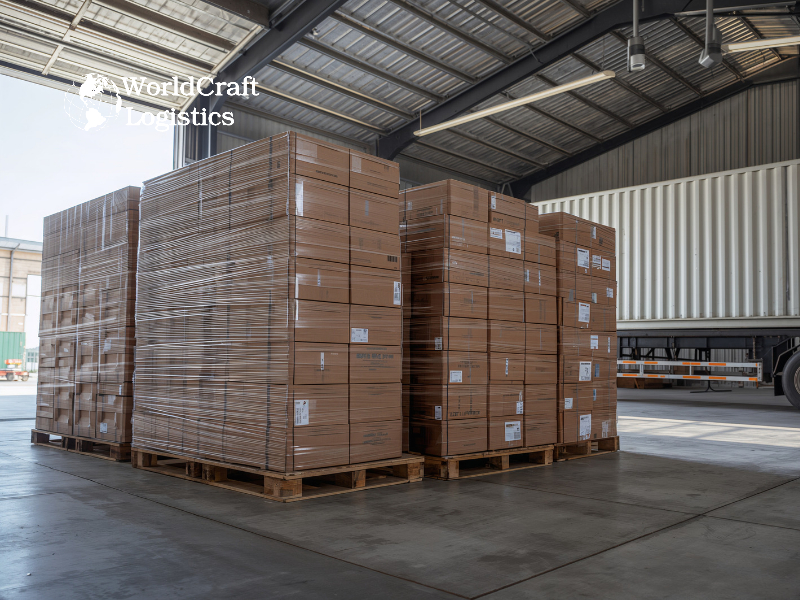
Accurate cargo measurements help determine vehicle capacity, loading configuration, and equipment suitability. Packaging should protect the shipment during the planned transportation and handling process.
For irregular, fragile, oversized, or temperature-sensitive freight, provide additional specifications and explain any restrictions that could affect loading, transit, or unloading.
Provide reliable contacts at both ends of the shipment. Confirm site access, check-in procedures, appointment references, unloading arrangements, and escalation contacts before dispatch.
These details help prevent avoidable waiting time and make it easier to resolve problems if the planned delivery schedule changes.
Prepare the applicable shipping documents and disclose special cargo requirements before transportation is arranged. Cross-border shipments may require additional customs documentation, while regulated cargo may be subject to specific handling, packaging, and transportation rules.
Do not assume that an urgent shipment can bypass documentation or regulatory requirements simply because the delivery deadline is short.
Choosing an expedited freight provider involves more than comparing rates. Shippers need a provider that can assess the shipment, confirm realistic service options, coordinate execution, and communicate when conditions change.
Ask whether suitable equipment and capacity are available for the required pickup window. If a provider proposes dedicated ground transportation, air freight, or a specialized vehicle, confirm that the option is operationally feasible for the specific shipment.
Request an explanation of the planned routing, transit assumptions, pickup timing, delivery window, and any transfers. A credible plan should identify important constraints rather than relying only on a broad promise of fast delivery.
Find out how shipment progress is monitored, when potential delays will be reported, and who can authorize changes. For time-critical freight, timely communication can be just as important as transportation speed.
Understand what the quote includes, which charges may be added, and how the provider defines its delivery commitment. Review applicable cancellation, waiting-time, liability, and exception terms before booking.
A provider experienced in ordinary palletized freight may not necessarily have the equipment or operational resources needed for oversized cargo, specialized handling, or a strict receiving appointment.
Evaluate the provider's capabilities against your actual requirements, including shipment size, route, handling restrictions, and the need for coordination across multiple transportation stages.
Yes, it may be possible to arrange expedited transportation after a delay, but feasibility depends on the cargo's current location, readiness, remaining delivery window, and available capacity. Contact the provider with the latest shipment status and required arrival time. The provider can then evaluate whether a direct truck, alternative routing, air freight, or another option is realistic.
A late-ready shipment may require a revised pickup appointment, a different vehicle, or a new delivery estimate. Depending on the service terms, waiting time, cancellation, or re-dispatch charges may apply. Notify the provider as soon as the delay becomes apparent and confirm the impact on the original delivery commitment before approving additional costs.
A provider may offer a defined delivery commitment under specified service terms, but the scope of that commitment and its exceptions must be confirmed in writing. Weather, road closures, equipment availability, and receiving restrictions can affect execution. Ask how exceptions are handled, what notification process applies, and whether alternative arrangements are available if the original schedule becomes unworkable.
Prepare pickup and delivery locations, cargo dimensions, total weight, packaging details, commodity description, shipment ready time, required delivery time, and any equipment or handling restrictions. Include receiving appointments and relevant contact information. For international freight, identify the shipment's customs status and available documentation. Complete information helps the provider assess capacity and quote a suitable service more efficiently.
It can, provided the shipment is eligible for the proposed service and the provider has suitable equipment and operational capability. Oversized cargo may require specialized trailers and route planning, while hazardous materials or temperature-sensitive goods may be subject to additional regulations, equipment standards, and handling procedures. Disclose these requirements before booking so the provider can verify feasibility.
Responsibility depends on the transportation agreement, the applicable service terms, the cause of the delay, and any relevant legal requirements. Review the service commitment, notification obligations, liability provisions, and claims process. Document shipment milestones and communications, notify the provider promptly, and follow the agreed escalation process. Do not assume that an expedited service automatically guarantees reimbursement for every business loss caused by late delivery.
Expedited freight shipping can help businesses respond to urgent demand, protect production schedules, replenish critical inventory, and recover from transportation disruptions. Its value, however, depends on selecting a service that can realistically meet the delivery requirement.
Before booking, establish the deadline, confirm shipment readiness, evaluate equipment and capacity, compare the complete transportation timeline, and understand the cost of a potential delay. Clear communication and a practical contingency plan can also reduce avoidable uncertainty.
For shipments that require dedicated ground transportation, expedited trucking, or coordination across multiple transportation stages, WorldCraft Logistics provides land transportation and logistics coordination options for commercial shippers.
The goal is not simply to move freight faster. It is to choose a transportation plan that fits the shipment, the deadline, and the business impact of getting it there on time. WorldCraft Logistics | Land Transport From LTL and FTL to specialized trucking, WorldCraft Logistics helps coordinate transportation around your shipment requirements, delivery schedules, and cargo handling needs. *Flexible transportation options for your business.Need a Reliable Land Transport Solution?

SEO
Digital Marketing/SEO Specialist
Simon Mang is the SEO and Digital Marketing Specialist at Worldcraft Logistics, where he leads content strategy to promote the company's online presence. With years of experience in digital marketing and a strong understanding of the logistics industry, he has published more than 500 specialized articles across freight, warehousing, and supply chain topics. ( Reviewed for accuracy by the Worldcraft Logistics Operations Team ).