Flatbed Trucking Explained: Types, Costs, and Shipping Requirements
Flatbed trucking is an important transportation option for businesses shipping oversized, heavy, irregularly shaped, or non-containerized freight. Unlike enclosed trailers, flatbed trailers have an open deck that allows cargo to be loaded from the sides, above, or from the rear, depending on the equipment and loading environment.
Manufacturers, construction companies, industrial suppliers, distributors, and other businesses use flatbed freight transportation to move machinery, steel, lumber, building materials, structural components, and equipment that may not fit inside a standard dry van.
However, choosing a flatbed truck involves more than selecting an available trailer. Shippers need to consider cargo dimensions, weight distribution, loading and unloading access, securement requirements, weather exposure, route restrictions, and the possibility of oversize or overweight permits.
This guide explains how flatbed trucking works, the different types of flatbed trailers, typical dimensions and weight considerations, current market rate benchmarks, and practical steps for preparing freight for transportation.
What Is Flatbed Trucking?
Flatbed trucking is a freight transportation method that uses a truck pulling an open, flat-deck trailer rather than an enclosed trailer. The flat surface provides flexibility for transporting cargo that is too large, too heavy, too long, or too awkwardly shaped for conventional enclosed transportation.
Because the trailer does not have fixed walls or a roof, forklifts, cranes, and other suitable equipment may be able to load or unload freight from different directions. This flexibility can be particularly valuable at construction sites, manufacturing facilities, industrial yards, and locations where loading access is limited.
Flatbed transportation also requires careful planning. Cargo is exposed to the weather unless appropriate covers or specialized equipment are used, and the shipper and transportation providers must account for securement, weight distribution, cargo dimensions, and applicable transportation regulations.
1. How Does Flatbed Freight Transportation Work?
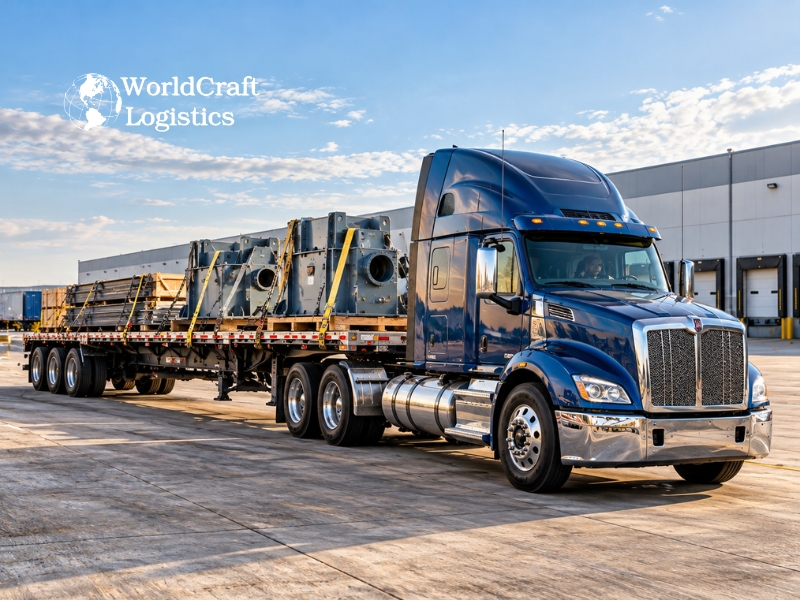
A typical flatbed shipment begins with the shipper providing the cargo details, including the commodity, dimensions, total weight, pickup and delivery locations, and loading requirements. The transportation provider then determines which equipment is appropriate for the shipment.
After the truck and trailer are assigned, the freight is loaded and secured using suitable equipment and securement methods. The driver transports the shipment along a planned route, taking into account road restrictions, clearance requirements, permits, and delivery appointments where applicable.
At the destination, the cargo is unloaded using the site's available equipment and procedures. Depending on the shipment, the process may also involve tarping, specialized handling, permit coordination, or additional arrangements for oversized freight.
For a broader introduction to truck transportation, read How Does Truck Freight Work?
2. What Makes Flatbed Trucking Different From Enclosed Trucking?
The primary difference is the trailer structure. A dry van encloses the freight within a trailer, while a standard flatbed carries cargo on an open deck.
An open deck can simplify loading certain types of cargo and accommodate freight that cannot fit through a conventional trailer door. However, it offers less protection from rain, wind, road debris, and unauthorized access unless additional protective measures are arranged.
Flatbed trucking is therefore most appropriate when the cargo's physical characteristics or handling requirements make an open-deck trailer a practical choice. It is not automatically the best option for every heavy or large shipment.
What Are Flatbed Trucks Used For?
Flatbed trucks are commonly used to transport freight that benefits from open-deck loading, requires specialized handling, or cannot be accommodated efficiently in an enclosed trailer.
1. Construction Materials
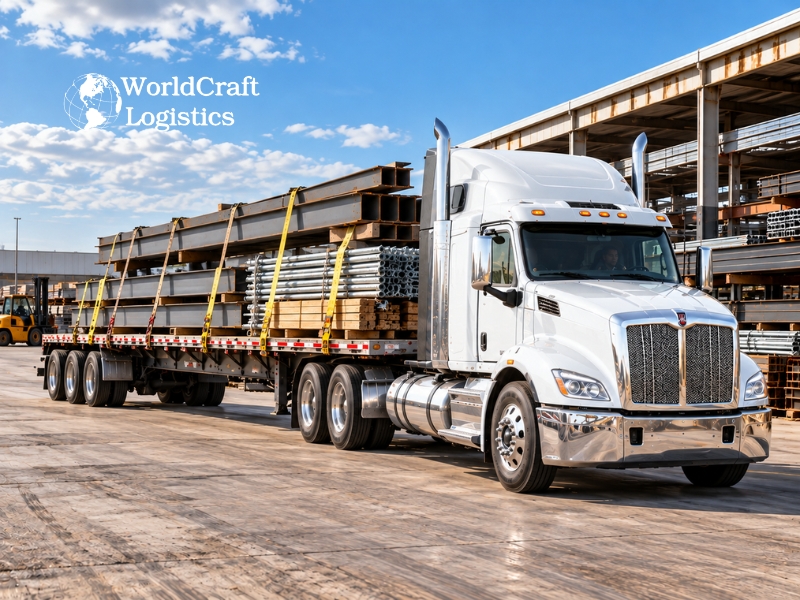
Construction projects frequently require the movement of lumber, steel beams, roofing materials, concrete products, scaffolding, and other building supplies. Flatbed trailers can accommodate many of these materials when the dimensions, weight, and loading method are compatible with the selected equipment.
Construction shipments may involve delivery to active job sites, where unloading access, ground conditions, delivery windows, and available lifting equipment need to be considered before dispatch.
2. Industrial Machinery and Equipment
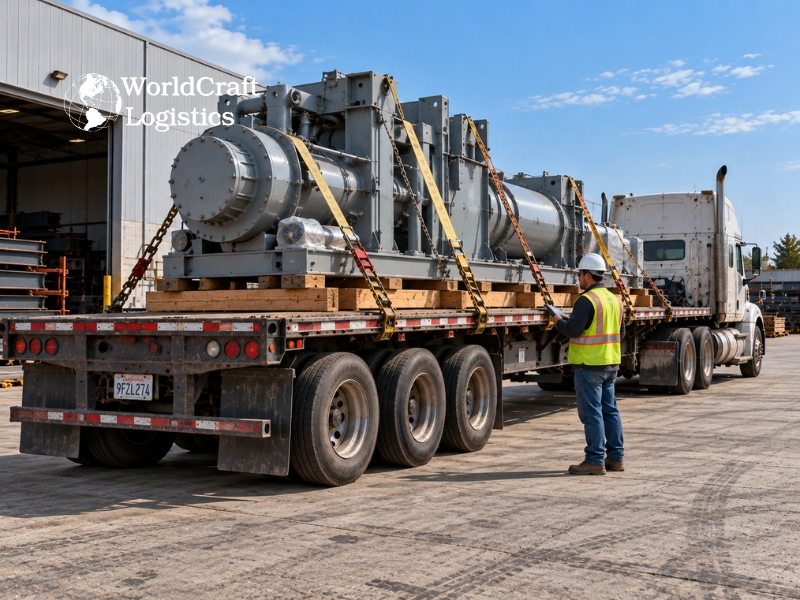
Manufacturing equipment, generators, compressors, industrial components, and certain types of machinery may be suitable for flatbed transportation. The open deck can make it easier to position large items using cranes or forklifts.
Before booking, shippers should provide the dimensions and weight of each item, identify lifting points where applicable, and disclose any handling restrictions. Some machinery may require a step deck, lowboy, removable gooseneck trailer, or other specialized equipment rather than a standard flatbed.
3. Steel, Metal, and Structural Components
Steel coils, metal sheets, pipes, fabricated components, and structural assemblies are among the types of freight that may move on flatbed equipment. The appropriate trailer and securement method depend on the cargo's shape, weight, stability, and loading requirements.
Heavy or concentrated loads require particular attention to weight distribution and applicable axle and bridge limits. Cargo that can shift, roll, or slide must be secured using methods appropriate to its characteristics.
4. Oversized and Irregularly Shaped Cargo
Some cargo has unusual dimensions or shapes that make enclosed transportation impractical. Flatbed equipment can offer greater loading flexibility, but the shipment may still require specialized trailers, route planning, permits, escorts, or other arrangements depending on its actual dimensions and weight.
For additional guidance, see Shipping Heavy, Overweight, and Large Items.
5. Palletized and General Industrial Freight
Although flatbed trucking is often associated with heavy or oversized cargo, some palletized and industrial freight can also move on flatbed trailers. The decision depends on the cargo's packaging, weather sensitivity, loading equipment, securement needs, and total shipment economics.
If the freight requires protection from the elements or additional security, an enclosed trailer may be a more suitable option.
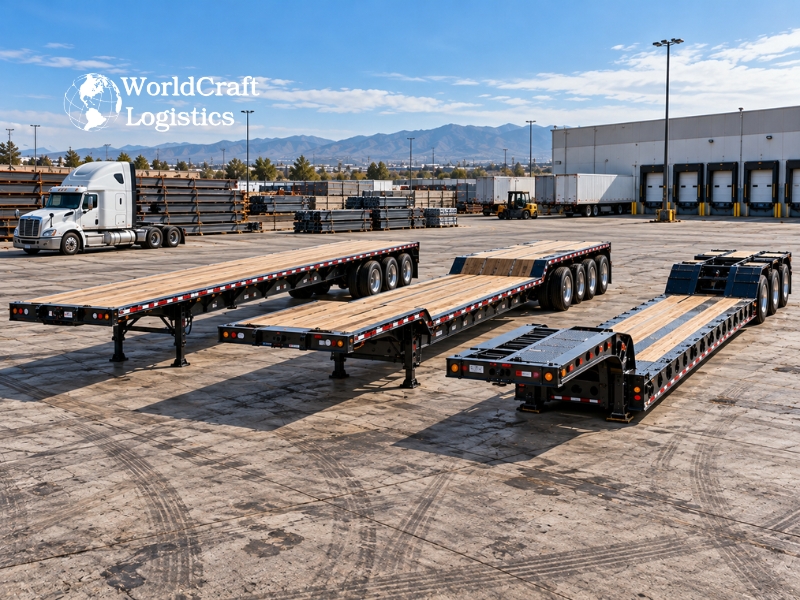
Types of Flatbed Trailers and When to Use Them
Not every flatbed shipment can use the same trailer. Trailer selection should reflect the cargo's dimensions, weight, loading method, ground clearance, and unloading conditions.
1. Standard Flatbed Trailer
A standard flatbed is an open-deck trailer commonly used for building materials, steel products, lumber, palletized industrial goods, and many types of general freight that can be loaded and secured on a flat platform.
It is often a practical starting point when the shipment fits within the trailer's usable dimensions and weight capacity and does not require a lower deck height or specialized loading configuration.
2. Step Deck Trailer
A step deck trailer, also called a drop deck, has an upper deck near the tractor and a lower deck behind it. This configuration can accommodate taller cargo than a standard flatbed when overall height restrictions are a concern.
Step deck trailers may be suitable for machinery, industrial equipment, and other freight that requires additional vertical clearance. Actual usable dimensions and capacity depend on the specific trailer.
3. Double Drop and Lowboy Trailer
A double drop trailer has a low central deck between raised sections at the front and rear. Lowboy equipment is commonly used for tall or heavy machinery and equipment that benefits from a lower loading height.
These trailers may be appropriate for construction equipment, industrial machinery, and other freight that exceeds the practical height limits of a standard flatbed or step deck.
Equipment availability, deck dimensions, loading configuration, and legal requirements must be confirmed for the individual shipment.
4. Extendable or Stretch Flatbed Trailer
An extendable flatbed can lengthen to accommodate cargo that exceeds the usable deck length of a conventional trailer. It may be used for long structural components, pipes, beams, and other elongated materials.
Because the cargo length affects handling and route planning, shippers should provide accurate measurements and disclose whether the freight has any unusual loading or support requirements.
5. Removable Gooseneck Trailer
A removable gooseneck trailer, often called an RGN, has a detachable front section that can allow certain equipment to be driven or moved onto the trailer from the front. This configuration can be useful for machinery and equipment that cannot be easily lifted into position.
RGN equipment is commonly considered for specialized or heavy-haul shipments. The correct configuration depends on the equipment being transported, its weight, dimensions, and the available loading area.
6. Conestoga and Tarped Flatbed Equipment
A Conestoga trailer uses a movable frame and tarp system to provide weather protection while retaining some of the loading flexibility associated with open-deck transportation. Other flatbed shipments may use tarps when suitable for the cargo and operating conditions.
Covering requirements should be discussed before dispatch. Not all cargo can be safely or effectively tarped, and a tarp does not automatically provide the same protection as an enclosed trailer.
Flatbed Truck Dimensions and Weight Limits
Trailer dimensions and weight limits are critical when selecting flatbed equipment. A trailer that can physically accommodate the cargo may still be unsuitable because of payload capacity, axle loading, total vehicle weight, cargo height, or route restrictions.
1. Typical Flatbed Trailer Dimensions
Many standard flatbed trailers are approximately 48 or 53 feet long and about 8.5 feet wide. These are common reference dimensions, not guarantees for every trailer or shipment. Usable deck dimensions, deck height, axle configuration, and equipment specifications vary by trailer.
For this reason, shippers should confirm the actual equipment dimensions with the transportation provider instead of relying solely on general industry measurements.
2. Payload Capacity Versus Gross Vehicle Weight
Payload capacity refers to the weight of the freight a vehicle can carry. Gross vehicle weight includes the truck, trailer, cargo, fuel, and other items carried by the vehicle. These are different measurements and should not be used interchangeably.
The amount of freight a flatbed can legally carry depends on the truck and trailer configuration, axle distribution, applicable road limits, and other operating conditions. A trailer's physical capacity does not mean that the same load is legal on every route.
3. Federal Weight Limits and State Permits
For interstate travel on the U.S. Interstate Highway System, federal limits generally include 80,000 pounds for gross vehicle weight, 20,000 pounds for a single axle, and 34,000 pounds for a tandem axle, subject to applicable requirements such as the Federal Bridge Formula and other restrictions.
These figures are general reference points, not a complete determination of whether a specific load is legal. The Federal Bridge Formula can affect allowable weight based on axle spacing, and state-specific rules may also apply.
Oversize or overweight shipments may require permits issued by the relevant states. Depending on the load and route, additional restrictions or arrangements may apply, including travel times, escort vehicles, designated routes, and clearance requirements.
Review the Federal Highway Administration's Oversize and Overweight Load Permit information and its Bridge Formula Weights guidance when evaluating applicable requirements.
How Does the Flatbed Shipping Process Work?
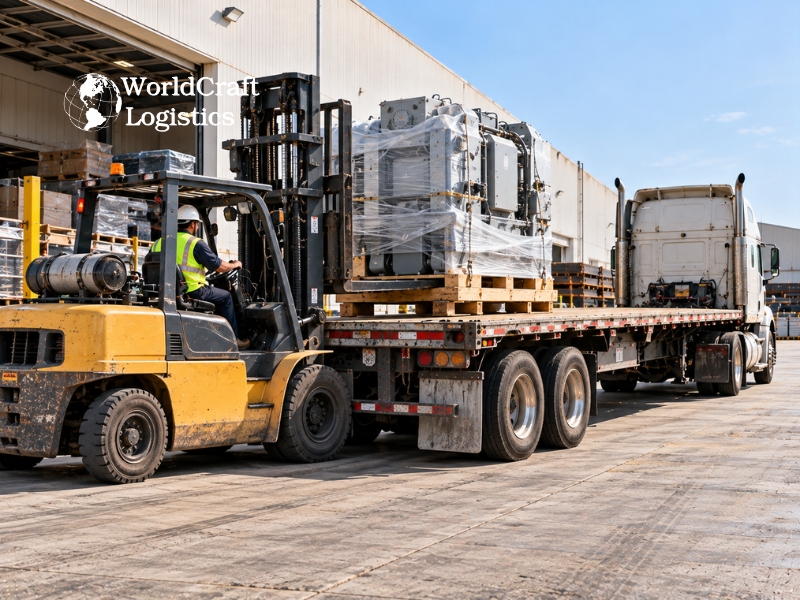
Successful flatbed transportation depends on coordination before the truck arrives, during loading, throughout transit, and at delivery. The following steps provide a practical overview of the process.
Step 1: Provide Shipment Details
Start by providing the cargo description, quantity, dimensions, total weight, pickup and delivery addresses, ready date, and requested delivery date. Include photographs, drawings, or specifications when the cargo is irregularly shaped or requires specialized handling.
Shippers should also disclose whether the freight can be loaded from the side, top, or rear and identify the equipment available at both locations.
Step 2: Select the Appropriate Trailer
The transportation provider evaluates the cargo details to determine whether a standard flatbed or specialized trailer is appropriate. The assessment should consider deck length, deck height, weight distribution, loading method, and any unusual handling requirements.
If the cargo is oversized or overweight, the provider may need to evaluate permits, route feasibility, and other requirements before confirming the transportation plan.
Step 3: Coordinate Loading and Securement
Before loading begins, the shipper and transportation team should confirm that the freight is ready, the loading equipment is available, and the site can accommodate the assigned truck and trailer.
The cargo must be positioned and secured appropriately for its characteristics and the applicable regulations. The loading plan should account for weight distribution, cargo stability, and the prevention of shifting or falling during transportation.
Step 4: Transport the Shipment
During transit, the driver follows the planned route and applicable operating restrictions. Oversized or overweight shipments may require approved routes, permit conditions, or additional coordination.
Communication between the shipper, dispatch team, driver, and consignee helps manage delivery appointments, delays, and changes to the shipment plan.
Step 5: Unload and Confirm Delivery
At the destination, the consignee needs suitable equipment and a safe unloading area. The unloading method should be planned before dispatch, particularly for heavy machinery, long materials, and freight that cannot be handled with standard forklifts.
After unloading, the receiving party should check the freight and document any visible damage or discrepancies according to the applicable receiving procedures.
Flatbed Load Securement and Tarping Requirements
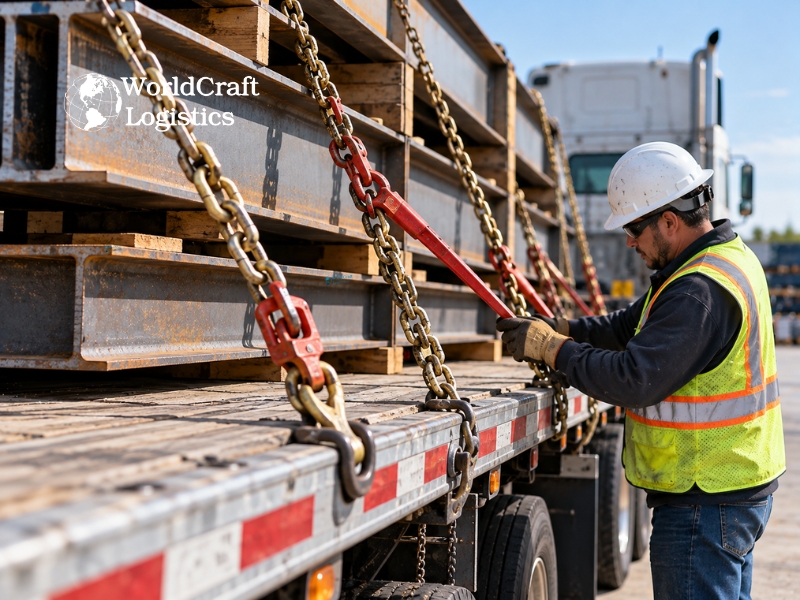
Load securement is one of the most important parts of flatbed transportation. Because cargo is carried on an open deck, it must be restrained appropriately to prevent shifting, rolling, falling, or otherwise creating a hazard during transit.
1. How Is Flatbed Cargo Secured?
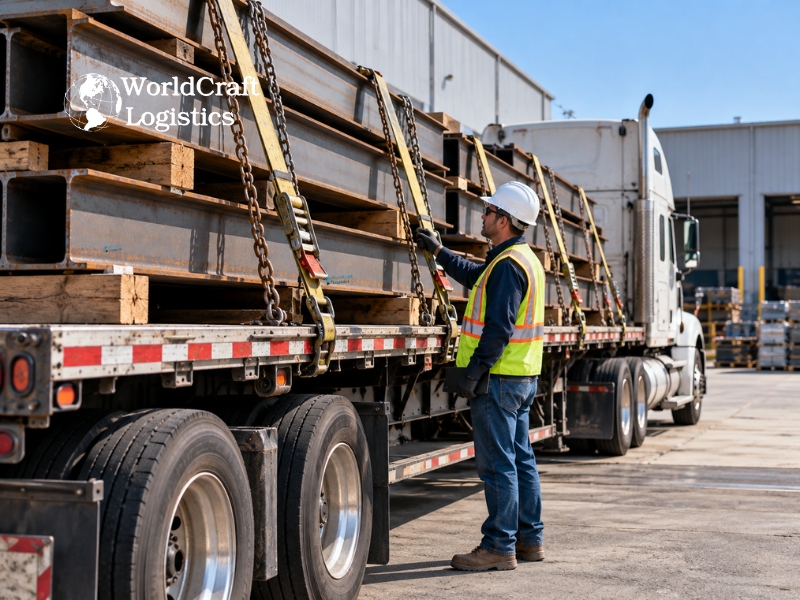
Depending on the freight, securement may involve tiedowns, chains, straps, blocking, bracing, edge protection, or other suitable equipment. The appropriate method depends on the cargo's weight, shape, stability, packaging, and applicable requirements.
Heavy machinery, steel products, pipes, lumber, and irregularly shaped items can have different securement needs. A method suitable for one type of freight may not be appropriate for another.
Shippers should provide accurate cargo information and disclose any handling restrictions. The driver and other responsible parties must ensure that the load is secured in accordance with applicable regulations and operating requirements.
2. What Are the U.S. Cargo Securement Rules?
The Federal Motor Carrier Safety Administration establishes cargo securement requirements for covered commercial motor vehicles operating in interstate commerce. These rules are designed to prevent cargo from shifting or falling and include general requirements as well as provisions for particular commodities.
Specific requirements depend on the load and its characteristics. Shippers and carriers should not assume that a single securement method meets every regulatory requirement.
For official guidance, consult the FMCSA Cargo Securement Rules.
3. When Is Tarping Necessary?
Tarping may be appropriate when freight needs protection from rain, dust, or other environmental exposure. Whether tarping is necessary depends on the cargo, packaging, weather sensitivity, and the shipper's requirements.
Before booking, confirm whether tarping is required, who will supply the tarp, whether the cargo can be covered safely, and whether the additional handling affects the rate or loading schedule.
For cargo that requires continuous weather protection or a higher level of security, an enclosed trailer or specialized covered equipment may be more appropriate.
Flatbed Trucking Rates: What Does Flatbed Freight Cost?
Flatbed trucking rates vary based on market conditions, shipment distance, equipment availability, cargo characteristics, pickup and delivery requirements, and the type of transportation agreement. A national average can provide context, but it should not be treated as a guaranteed rate for an individual shipment.
1. Latest Flatbed Trucking Rate Benchmarks
According to DAT's weekly flatbed market report published October 13, 2026, the average flatbed spot linehaul rate paid to carriers was $2.65 per mile for the week ending October 10, 2026. DAT reported that this figure increased 0.4% week over week and 28.8% year over year. The weekly linehaul figure excludes fuel and surcharges.
DAT's monthly September 2026 report, also published October 13, 2026, provided additional benchmarks. The average flatbed spot rate including fuel was $3.61 per mile, while the spot linehaul rate excluding fuel was $2.60 per mile. The average flatbed contract rate paid by shippers to brokers was $4.04 per mile including fuel, with the contract linehaul component excluding fuel reported at $3.03 per mile.
These figures use different reporting periods and rate definitions. They should not be compared as if they were identical measures. The weekly spot linehaul rate excludes fuel, while the monthly spot and contract figures include both all-in and linehaul-only measurements.
Read DAT's weekly flatbed market report and September 2026 truckload rate report for the underlying data.
Market averages are reference points rather than shipment-specific quotes. Actual pricing may differ substantially based on lane, timing, equipment, cargo dimensions, permits, and service requirements.
2. What Factors Affect Flatbed Trucking Rates?
- Distance and route: Longer trips affect the overall transportation cost, but the rate per mile does not necessarily remain constant across all distances or lanes. Backhaul availability, regional freight demand, and route conditions can influence pricing.
- Trailer type: A standard flatbed and a specialized trailer may have different availability and operating costs. Step decks, double drops, RGNs, and extendable trailers should be evaluated based on the specific shipment requirements.
- Cargo dimensions and weight: Oversized, overweight, unusually long, or concentrated loads may require additional planning, specialized equipment, permits, or other arrangements.
- Loading and unloading requirements: Crane loading, limited site access, special appointments, long loading times, and restricted delivery windows can affect the transportation plan and cost.
- Securement and tarping: Additional materials, equipment, or labor needed to secure or protect the cargo may influence the final quote.
- Market conditions: Capacity, seasonal demand, fuel costs, weather, and regional freight imbalances can affect available rates.
- Permits and escorts: When a shipment exceeds applicable legal size or weight limits, permits and other requirements may add cost and affect transit time.
2. Spot Rates vs. Contract Rates
Spot rates generally apply to individual shipments arranged in the current market. They can change with short-term supply and demand, lane conditions, and equipment availability.
Contract rates are established through an agreed transportation arrangement covering a defined period, lane, or volume commitment. They may provide greater predictability for businesses with recurring freight, although the actual terms depend on the agreement.
When comparing quotes, confirm whether the rate includes fuel, permits, accessorial charges, tarping, loading or unloading assistance, and other shipment-specific costs. A lower base rate may not represent the lowest total transportation cost.
What Information Is Needed for a Flatbed Freight Quote?
To receive a useful quote, prepare the following information:
- Pickup and delivery addresses, including ZIP codes.
- Pickup date and requested delivery date or appointment window.
- Commodity description and number of pieces.
- Length, width, and height of each item.
- Total shipment weight and, where relevant, the weight of individual pieces.
- Loading and unloading methods, including forklift, crane, or other equipment requirements.
- Weather protection, tarping, or special securement requirements.
- Any known oversize or overweight concerns, special permits, or route restrictions.
- Photos, drawings, or specifications for unusual cargo.
Providing complete details at the beginning helps the transportation provider evaluate the right equipment and identify potential constraints before dispatch.
Flatbed vs. Dry Van vs. Step Deck
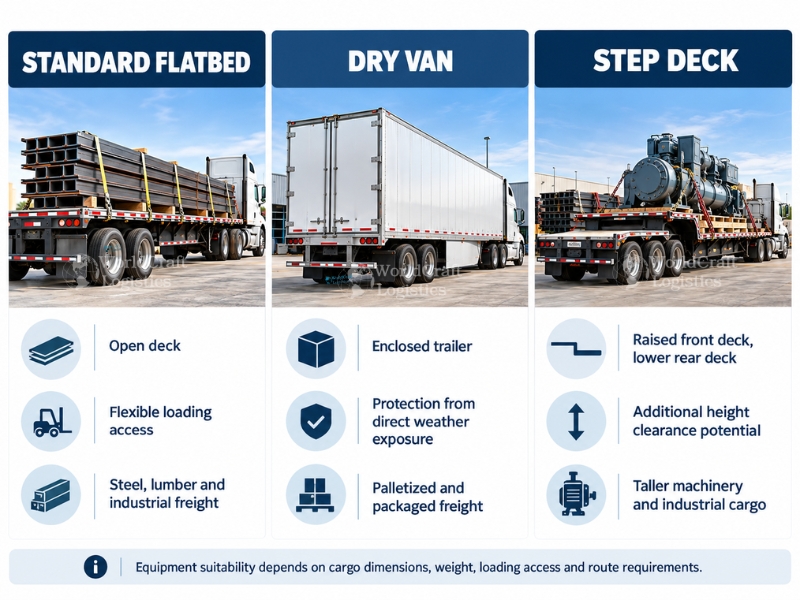
Flatbed, dry van, and step deck trailers serve different transportation needs. The best choice depends on the cargo's physical dimensions, weather sensitivity, loading access, and regulatory requirements.Consideration Standard Flatbed Dry Van Step Deck Cargo access Open sides and top Primarily through trailer doors Open sides and top Weather protection Requires suitable covering when needed Enclosed cargo space Requires suitable covering when needed Typical use Materials, machinery, irregular freight Boxed, palletized, packaged goods Taller freight needing a lower deck Vertical clearance Depends on deck and legal limits Depends on interior dimensions Lower main deck can provide additional clearance Loading method Can accommodate suitable side or overhead loading Typically dock or rear loading Can accommodate suitable side or overhead loading Main consideration Securement and weather exposure Cargo must fit through doors and within interior dimensions Loaded height, deck configuration, and route restrictions
These are general comparisons. Equipment specifications vary, and a transportation provider should confirm the appropriate trailer for the actual shipment.
For more information about full truckload transportation, see What Is Full Truckload (FTL) in Shipping?
Common Flatbed Shipping Challenges and How to Avoid Them
Flatbed transportation can be an effective option, but shipment planning needs to account for challenges that may be less prominent with enclosed freight.
1. Incorrect Cargo Measurements
Incomplete or inaccurate measurements can result in the wrong trailer being assigned or a shipment being found unsuitable for the planned route. Measure the cargo's actual length, width, and height, including protrusions, packaging, and any components that affect the final shipping dimensions.
For irregular freight, provide photographs or drawings and confirm whether the dimensions refer to the cargo alone or the complete loaded configuration.
2. Improper Weight Distribution
A shipment may fit on the trailer but still create problems if the weight is concentrated incorrectly. Cargo position can affect axle loads, vehicle stability, and compliance with applicable restrictions.
Provide accurate weight information and allow the transportation team to determine a suitable loading arrangement. Do not rely on total weight alone when individual pieces are exceptionally heavy or concentrated.
3. Inadequate Cargo Securement
Inadequate securement can create safety risks, cargo damage, delays, and regulatory issues. Securement requirements depend on the freight's characteristics and applicable rules.
Discuss the cargo's shape, weight, packaging, and handling requirements before pickup. Confirm that suitable securement equipment and procedures are available for the shipment.
4. Weather Exposure
Rain, wind, dust, and other environmental conditions may affect cargo carried on an open trailer. Sensitive products may need suitable packaging, tarping, specialized covered equipment, or an enclosed trailer.
Determine the level of protection required before booking rather than assuming that a standard flatbed will provide it.
5. Unexpected Permit or Route Restrictions
Oversized and overweight cargo can require permits and route-specific planning. Bridges, road geometry, overhead clearances, axle limits, and state requirements may affect the feasible route.
Share complete shipment dimensions and weight information early so that the transportation provider can identify potential restrictions and coordinate the necessary arrangements.
6. Unprepared Pickup or Delivery Sites
A suitable truck cannot compensate for a site that lacks the required loading equipment, access, or space. Limited turning room, unsuitable ground conditions, unavailable cranes, and missed appointments can delay the shipment.
Confirm site access, loading and unloading equipment, operating hours, contact details, and appointment requirements before dispatch.
How to Prepare Your Freight for Flatbed Transportation
Preparation helps reduce delays and improves coordination between the shipper, transportation provider, driver, and consignee. Before pickup, review the following points.
- Measure the cargo accurately. Record the length, width, height, and weight of each item, including any protrusions or packaging that affects the loaded dimensions.
- Choose suitable packaging. Protect vulnerable surfaces and components against handling damage, vibration, and expected environmental exposure.
- Confirm lifting and loading requirements. Identify whether the cargo needs a forklift, crane, ramp, specialized rigging, or other equipment.
- Communicate securement requirements. Disclose unusual shapes, fragile components, rolling hazards, and any manufacturer-specific handling instructions.
- Discuss weather protection. Confirm whether tarping or specialized covered equipment is required and whether the cargo is suitable for the planned protection method.
- Verify pickup and delivery access. Check the site's available space, operating hours, equipment, appointment procedures, and any access restrictions.
- Identify regulatory concerns early. Provide accurate dimensions and weight so that applicable permit and route requirements can be evaluated.
- Prepare shipment documentation. Ensure that the shipping instructions, cargo description, piece count, and receiving information are accurate and available.
- Keep contacts accessible. Provide reliable contacts for the pickup site, delivery site, and shipment coordinator in case operational details change.
For unusually large or heavy cargo, review the requirements before finalizing the transportation booking. Early planning gives the team more time to assess equipment, access, permits, and handling arrangements.
How WorldCraft Logistics Can Help Coordinate Truck Freight
Flatbed shipments often require coordination beyond simply arranging a truck. Equipment selection, pickup readiness, cargo dimensions, loading requirements, securement, route restrictions, and delivery appointments can all affect the transportation plan.
WorldCraft Logistics supports businesses with freight and transportation coordination. For shippers moving cargo through the United States, a coordinated approach can help align transportation requirements with the shipment's actual handling and delivery needs.
When evaluating a flatbed shipment, provide the cargo dimensions, weight, commodity, pickup and delivery locations, required dates, loading method, and any known permit or securement considerations. These details help determine whether a standard flatbed or another equipment configuration should be evaluated.
If your shipment involves heavy, oversized, or unusually shaped cargo, review the requirements in advance and communicate any special handling needs before requesting transportation.
Request a Flatbed Freight Quote
Need to transport machinery, construction materials, steel, or other freight that may require flatbed equipment? Start with accurate shipment details so the appropriate equipment and transportation requirements can be evaluated.
Contact WorldCraft Logistics to discuss your shipment and request a flatbed freight quote. Include your pickup and delivery locations, cargo dimensions, total weight, preferred dates, and any special loading, unloading, securement, or permit requirements.
The more complete your shipment information is, the easier it is to assess equipment suitability and identify potential constraints before transportation begins.
Frequently Asked Questions About Flatbed Trucking
1. How much weight can a flatbed truck carry?
There is no single weight limit that applies to every flatbed shipment. The legal and practical carrying capacity depends on the truck and trailer configuration, axle distribution, applicable road limits, and the route. Interstate travel is generally subject to federal weight limits and requirements such as the Bridge Formula, while state-specific rules and permits may also apply.
2. Can furniture be shipped on a flatbed truck?
Furniture can sometimes be transported on a flatbed, but suitability depends on the dimensions, packaging, weather sensitivity, securement requirements, and available loading equipment. Furniture that needs greater protection from rain, dust, or unauthorized access may be better suited to an enclosed trailer.
3. Can a vehicle or piece of heavy equipment be transported on a flatbed?
Yes, certain vehicles and pieces of equipment can be transported on flatbed or specialized low-deck trailers. The appropriate equipment depends on the cargo's dimensions, weight, ground clearance, loading method, and securement requirements. Heavier or taller equipment may require a step deck, lowboy, or removable gooseneck trailer.
4. Is a flatbed truck suitable for shipping a refrigerator?
A refrigerator may be transportable on a flatbed in some circumstances, but the shipper must consider weather exposure, packaging, orientation requirements, handling, and securement. An enclosed vehicle is often more suitable when the appliance requires protection from moisture, dirt, or impact during transportation.
5. Who is responsible for securing flatbed cargo?
Responsibilities depend on the applicable regulations, contractual arrangements, and the parties involved in loading and transportation. Cargo must be properly secured in accordance with the relevant requirements. Shippers should provide accurate cargo information and communicate handling restrictions, while the transportation team must ensure that the load is transported safely and compliantly.
6. Does flatbed freight need to be covered?
Not every flatbed shipment requires a tarp. The decision depends on the cargo's sensitivity to weather, packaging, customer requirements, and the expected transportation conditions. If the cargo requires a higher level of environmental protection, consider suitable tarping or covered equipment and confirm the arrangement before booking.
7. What information should I provide when requesting a flatbed quote?
Provide pickup and delivery locations, shipment dates, commodity description, piece count, dimensions, total weight, loading and unloading requirements, and any tarping, securement, or permit considerations. Photos or drawings are useful for unusual or oversized freight. Accurate information helps the transportation provider assess equipment suitability and prepare a more relevant quote.
References and Further Reading
- DAT: Flatbed Report – Rates Hold Near the Top of the Nine-Year Range as Load Posts Fall
- DAT: Truckload Rates Rise in September as Diesel Tops $6 a Gallon
- Federal Motor Carrier Safety Administration: Cargo Securement Rules
- Federal Highway Administration: Oversize and Overweight Load Permits
- Federal Highway Administration: Bridge Formula Weights