10/01/2026
How does truck freight work in the U.S.? Truck freight is the movement of goods by commercial truck from a shipper to a receiver. The shipper requests a quote and books the load; a dispatcher assigns a carrier and driver; the driver picks up the freight under a bill of lading; the load travels with tracking; and delivery ends with a signed proof of delivery.
If you are shipping for the first time, the process can look like a maze of acronyms. It is not. Every truck shipment follows the same basic path, and once you know the path, quotes, delays and paperwork stop being a surprise.Quick Answer: The 7 Steps of the Truck Freight Process
Truck Freight Process: Quick Answers
Question Short Answer What is it? Moving palletized or boxed goods by semi-truck and trailer inside the U.S. Who is involved? Shipper, receiver, carrier, driver, dispatcher, and sometimes a freight broker. Where does it start and end? Usually a warehouse, factory, port terminal or store, ending at the receiver's dock. How long does it take? Often 1 to 5 days on long lanes, depending on distance and driver hours. How much does it cost? Depends on distance, weight, equipment, freight class for LTL, and market demand.
Trucks carry most of what Americans buy. The American Trucking Associations (ATA) reports that trucks haul roughly 72 percent of domestic freight by weight. That is why understanding the truck freight process matters for importers, manufacturers, e-commerce sellers and Amazon FBA sellers alike.
| Role | What they do | Where they show up |
|---|---|---|
| Shipper | Owns the goods and requests transport | Steps 1 to 3 |
| Consignee (receiver) | Receives the goods at the destination | Step 7 |
| Carrier | Owns or operates the trucks and holds the operating authority | Steps 4 to 7 |
| Driver | Picks up, hauls and delivers the load | Steps 5 to 7 |
| Dispatcher | Plans the move, assigns the carrier and driver, and keeps the shipment on schedule | Steps 3 to 7 |
| Freight broker | Matches a shipper's load with a carrier in the market | Steps 2 to 4 |
Many shippers mix up the dispatcher and the broker. The simple difference is that a dispatcher coordinates the truck, the driver and the schedule, while a broker is a licensed intermediary that sells the capacity of other carriers to a shipper.
| Feature | FTL (full truckload) | LTL (less than truckload) | Partial truckload |
|---|---|---|---|
| Space used | Whole trailer, often a 53 foot trailer with about 26 standard pallets | A few pallets sharing a trailer | Several pallets, more than LTL but less than a full trailer |
| Handling | Loaded once, delivered once | Sorted at terminals along the way | Usually direct, may share space |
| Speed | Fastest and most predictable | Slower because of terminal stops | In between |
| Pricing | Priced per lane (origin to destination) | Based on weight, dimensions and freight class | Priced per lane or by space |
This guide follows the FTL path because it is the cleanest way to see each step. Where LTL works differently, we point it out.
Everything starts before a truck arrives. Freight is usually palletized, stretch-wrapped, and labeled with the shipper and consignee details. You also need an accurate weight and the dimensions of every pallet.
For LTL shipments, you need a freight classification under the NMFC system, which reflects density, handling and liability. A wrong class means reclassification fees later. FTL shipments skip the class step because carriers price the lane instead.
A freight quote needs a handful of facts: pickup and delivery locations, weight, number of pallets, equipment type (dry van, reefer or flatbed) and any special needs such as liftgate or appointment delivery.
Two pricing models exist. A spot rate reflects the market today and moves with supply and demand. A contract rate is agreed in advance for a period and gives you price stability. For one-off shipments, most shippers start with a spot quote.
Once you accept the quote, you tender the load. That means you formally hand the shipment to the carrier side. The booking confirms the pickup window, the delivery date and the equipment. In most FTL moves, a rate confirmation is issued so everyone agrees on the price and terms before the truck rolls.
This is the step most guides skip, and it decides whether your shipment goes smoothly. A dispatcher checks which truck and driver can legally and realistically make your pickup window, confirms the trailer is the right type, and sends the driver the pickup details.
Good dispatch is mostly about avoiding problems nobody sees. A driver without enough legal driving hours, a trailer in the wrong city or a missed appointment can each turn a simple lane into a delay.

At pickup, the driver checks the freight, counts the pallets and signs the bill of lading (BOL). The BOL is the receipt, the contract and the tracking reference for the shipment.
Here is a practical tip from the dock. If a pallet is damaged at pickup, the note should be written on the BOL before the truck leaves. Under U.S. cargo liability rules, a clean BOL at origin is what helps you prove later that the freight left in good condition.
Pickup happens in one of two ways. In a live load, the driver waits while the dock loads the trailer. In a drop and hook, the carrier drops an empty trailer, the shipper loads it at its own pace, and the carrier hooks a loaded trailer later.
Once loaded, an FTL trailer goes straight to the destination. No terminal transfers, no cross-docking. LTL freight is different because it moves through terminals in a hub-and-spoke network, which adds handling and time.
Drivers cannot simply drive until they arrive. Under FMCSA hours of service rules for property-carrying drivers, a driver may drive up to 11 hours after 10 consecutive hours off duty, all within a 14-hour window, and must take a 30-minute break after 8 hours of driving. In practice, a single driver covers roughly 500 to 600 miles in a typical day.
Tracking comes from GPS, electronic logging devices and driver check calls. Good dispatch teams update the shipper before the shipper has to ask.
Before arriving, the dispatcher confirms the delivery appointment with the receiver. At the dock, the receiver inspects the freight and signs. Any shortage or visible damage must be written on the delivery receipt right then.
The signed proof of delivery (POD) closes the shipment. After that, the carrier side invoices the shipper and the payment cycle begins.
Here is an illustrative FTL move on a common lane. The road distance between Ontario, California and Dallas, Texas is about 1,400 miles depending on exact pickup and drop points, which is roughly 22 to 24 hours of pure driving.Day What happens Day 0 Shipper requests a quote, accepts it and books the load. Dispatch confirms a driver and a dry van trailer. Day 1 morning Driver arrives at the Ontario warehouse, freight is loaded, BOL is signed. Truck heads east on I 10 through Arizona. Day 1 evening First driving shift ends within the 11-hour limit. Mandatory 10 hours off duty. Day 2 Second shift across New Mexico and West Texas. Dispatcher sends a status update and confirms the delivery appointment. Day 3 Final stretch into Dallas. Receiver inspects and signs. POD is sent to the shipper.
A single driver typically needs about three days for this lane. A team of two drivers can shorten it, but the cost goes up. This is why "how long does truck freight take" always has the same honest answer: it depends on distance, driver hours and appointment times.
| Document | Who issues it | Who signs | Why it matters |
|---|---|---|---|
| Bill of lading (BOL) | Shipper or carrier | Shipper and driver | Receipt, contract and basis for any damage claim |
| Rate confirmation | Dispatch or broker | Carrier | Locks price, pickup and delivery terms |
| Proof of delivery (POD) | Carrier | Receiver | Confirms delivery time and condition |
| Freight invoice | Carrier or dispatch | Not signed | Triggers payment |
| Packing list or commercial invoice | Shipper | Not signed | Describes contents, useful for imports and audits |
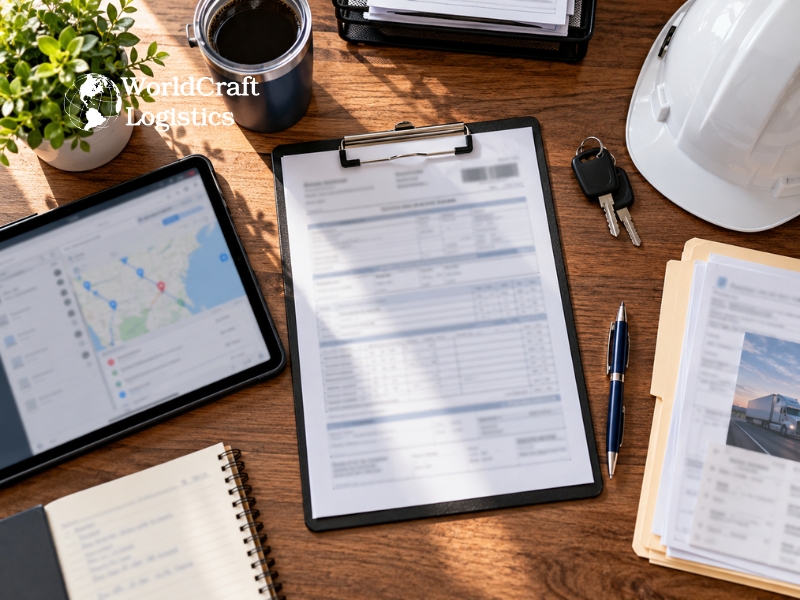
You do not need a formula to understand the price. Five things move the cost: distance, weight and cube, equipment type, market demand and fuel, and accessorial services such as liftgate, inside delivery or detention. FTL is priced per lane. LTL starts with weight and freight class, then adds fuel and accessorials. We cover each factor in detail in our guide to truck freight rates.

Detention is the fee a carrier charges when a driver waits too long at the dock. A 2024 study by the American Transportation Research Institute (ATRI) found detention affects nearly 40 percent of truckload stops and costs the industry more than 15 billion dollars a year. TONU, or truck order not used, is a fee when a booked truck is cancelled late. The best defense is accurate appointment times and a loading dock that is ready when the truck arrives.
For interstate shipments, the Carmack Amendment makes the carrier nearly strictly liable for loss or damage while the freight is in its care. A carrier cannot set a claim filing period shorter than nine months after delivery, and a lawsuit window of at least two years after a written denial. Liability amounts can still be limited by the BOL terms or a released value, so ask about declared value or cargo insurance before high value freight moves.
Double brokering happens when a load is resold to another party without the shipper knowing, which often leads to unreliable service or unpaid carriers. Protect yourself by verifying the carrier's MC and DOT numbers and insurance through FMCSA, and by asking who will physically haul your freight.
Before you book, ask these questions:
If you want a second opinion on a quote, request a freight quote from Worldcraft Logistics and we will walk you through it.
Many importers and Amazon FBA sellers do not start with pallets on a dock. They start with a container at a port. In that case the process begins with drayage, which is the short haul move of the container from the terminal to a warehouse or cross dock. There the freight is unloaded or transloaded into a domestic trailer and the normal truck freight steps take over.
The handoff is where time is lost. Delays often come from container pickup appointments, chassis availability and warehouse unloading windows, and port charges such as demurrage and per diem can add up if the container sits. Planning the drayage leg and the domestic leg together keeps the whole chain tight.
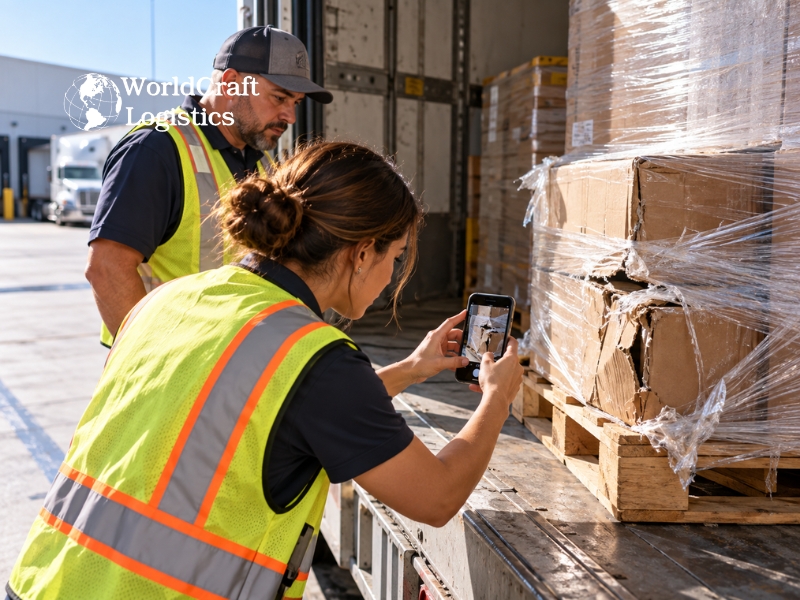
At Worldcraft Logistics, truck freight is built on dispatch. We coordinate partner carriers and also run our own trucks to serve customers inside the WCL logistics chain, with warehouses in Ontario, Cerritos and Union City, California. That setup lets us connect the port, the warehouse and the delivery dock under one coordination point instead of three separate vendors.
Our dispatch team focuses on what shippers rarely see but always feel: matching the right equipment, confirming appointments early, tracking the load in transit and flagging problems before they become delays. Answers to common questions about shipping freight by truck in the U.S. You prepare and label your freight, request a quote with pickup, delivery, weight and equipment details, book the load, and a dispatcher assigns a driver. The driver signs a bill of lading at pickup, hauls the load, and the receiver signs a proof of delivery. It depends on distance. A single driver covers roughly 500 to 600 miles a day because of federal hours of service limits, so a 1,400-mile lane usually takes about three days. LTL takes longer because of terminal stops. At minimum, a bill of lading and a rate confirmation. You will also receive a proof of delivery and an invoice. Imports may need a packing list or commercial invoice. A carrier owns or operates the trucks. A freight broker is a licensed intermediary that matches shippers with carriers. A dispatcher coordinates the truck, the driver and the schedule so the shipment runs on time. FTL is priced per lane and shaped by distance, equipment, fuel and market demand. LTL is based on weight, dimensions and freight class. Accessorial services such as liftgate or detention add to the total. FTL gives you the whole trailer and goes direct from pickup to delivery. LTL shares a trailer with other shippers and moves through terminals, which is cheaper for small loads but slower. Yes, in most cases. Carriers use GPS, electronic logging devices and driver updates, and a good dispatch team shares status proactively. Ask your provider how often you will get updates. Note any damage on the delivery receipt immediately and file a written claim with the carrier. Under the Carmack Amendment, claim windows can be no shorter than nine months after delivery. For delays, check the booking terms because late delivery is handled differently from damage. Verify their MC and DOT numbers and insurance on the FMCSA website, ask who will actually haul your freight, and be cautious of quotes far below the market. A drayage truck moves the container from the terminal to a warehouse or cross dock. The freight is then unloaded or transloaded into a domestic trailer, and the normal quote, dispatch, pickup, transit and delivery steps follow.Truck Freight FAQs
How does truck freight shipping work for a first-time shipper?
How long does truck freight take in the U.S.?
What documents do I need to ship freight by truck?
What is the difference between a freight broker, a carrier and a dispatcher?
How is truck freight priced?
How does LTL work compared to FTL?
Can I track truck freight in real time?
What happens if freight is damaged or late?
How do I know if a freight broker or carrier is legitimate?
How does domestic truck freight work after my container arrives at the port?
So, how does truck freight work? It works as a chain of seven clear steps, from preparation and quoting to dispatch, pickup, transit and a signed delivery. Shippers who know the chain ask better questions, avoid surprise fees and choose partners with confidence.
Ready to move a load? Request a freight quote from Worldcraft Logistics and our dispatch team will confirm equipment, timing and next steps.

SEO
Digital Marketing/SEO Specialist
Simon Mang is the SEO and Digital Marketing Specialist at Worldcraft Logistics, where he leads content strategy to promote the company's online presence. With years of experience in digital marketing and a strong understanding of the logistics industry, he has published more than 500 specialized articles across freight, warehousing, and supply chain topics. ( Reviewed for accuracy by the Worldcraft Logistics Operations Team ).