10/05/2026
Port to warehouse delays usually happen because a container is not ready to move even after the ship arrives. The most common causes are customs holds, containers that are not yet available, terminal congestion, chassis shortages, limited drayage capacity, warehouse appointment problems, poor coordination between parties, and detention or demurrage pressure. Each one can be diagnosed, and most can be prevented with earlier planning.
Your vessel arrived. Customs may already be cleared. Yet the container still is not at your warehouse, and your team, your customer, or your production schedule is waiting on it.
If that sounds familiar, you are not alone. At WorldCraft Logistics (WCL), a California-based 3PL and freight forwarding company with warehouses in Ontario, Cerritos, and Union City, this is one of the most common questions importers ask us. This guide answers four things clearly:
If you would rather hand the whole move to one team, jump to the section on when a 3PL makes sense, or contact WorldCraft Logistics for a port to warehouse trucking quote.
A container can be delayed after arrival because "arrived" is only the first milestone in a longer chain. Vessel arrival does not equal container availability. Container availability does not equal customs release. Customs release does not equal truck pickup. And truck pickup does not equal warehouse delivery.
Every one of those handoffs is a place where port to warehouse delays can start. If you want a deeper walkthrough of the trucking leg, read our guide on port to warehouse trucking and how freight moves by truck. Here is the full path a container follows:
Many importers only watch step 1 and step 7. The delay usually hides in between. Understanding that distinction is the single most useful thing you can do to reduce port to warehouse delays on your next shipment.
Most delays start before a truck ever moves. Industry drayage specialists point out that many problems originate before booking, when availability, equipment, timing, and visibility are never confirmed. Based on how we see shipments move every week, we group delays into three zones.
This is where the largest share of avoidable problems live. It covers customs status, container availability, chassis, pickup appointments, last free day (LFD), and documentation.
Once the container leaves the terminal, delays come from terminal congestion, driver capacity, traffic, weather, and equipment issues. If you are new to how this stage works, our explainer on how truck freight works covers the basics.
The final zone covers warehouse appointments, receiving capacity, unloading, transloading, and empty container return.
Keep these three zones in mind. We use them to organize the ten causes below, and they make it much easier to answer the first question every importer asks, which is where the problem actually is.
Each cause below follows the same pattern so you can diagnose quickly: what the problem is, why it happens, what it can cost you, how to prevent it, and what to check right now.
The problem. The container is at the port but cannot be released for pickup.
Why it happens. Missing or incorrect paperwork, a customs examination, a regulatory hold from another government agency, or release order issues. The sequence runs from vessel arrival to discharge, then customs clearance, then terminal release, then pickup availability. A break at any point stops the move.
What it can cause. Lost days at the start of the process, and a ticking clock on free time even though you cannot touch the box.
How to prevent it. Run a documentation check before the vessel arrives, not after.
What to check
The problem. The vessel is in, the ocean tracking says arrived, but the terminal will not release the container to a truck.
Why it happens. The container may not be discharged yet, may be buried in the stack, may still have a hold, or may not be linked to a valid pickup appointment. This is one of the most common drayage delay causes, and it comes from treating "arrived" as if it meant "available."
How to prevent it. Before you dispatch a truck, confirm five things in order:
A truck sent too early wastes a trip and can add costs.
The problem. Trucks wait in line at the gate, appointment slots fill up, and turn times stretch.
Why it happens. Large gateways handle huge volumes. The Port of Los Angeles handled 10.2 million TEUs in 2025, its third highest year on record. Together with the Port of Long Beach, the San Pedro Bay complex handled about 31% of all containerized international waterborne trade in the U.S. that year, according to the Port of Los Angeles.
A caution on that number. It describes the scale of the gateway, not the share of delays. A big port is not automatically a delayed port, but high volume means less room for error when your pickup is poorly planned.
How to prevent it. Monitor terminal status, schedule early, keep pickup windows flexible, line up alternative windows, and never wait until the last free day to move.
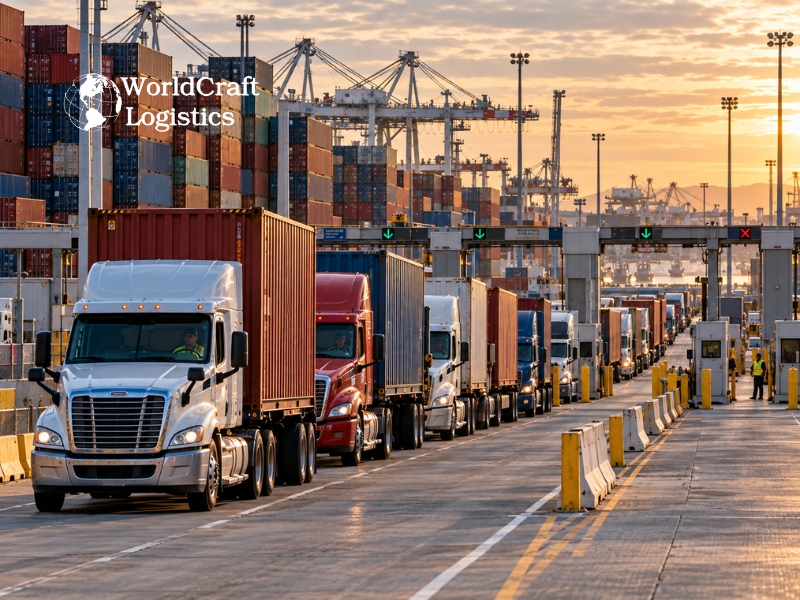
The problem. The container is available, but the truck cannot legally or safely move it because the right chassis is not there.
A container is not road-ready simply because it is available at the terminal. It also needs the right roadworthy equipment to move.
Common failure points. No chassis available, the wrong chassis type, a chassis split between pickup locations, equipment condition, and roadability failures found at inspection.
How to prevent it. Confirm chassis type and source at the same time you confirm container availability, not after the driver reaches the gate.
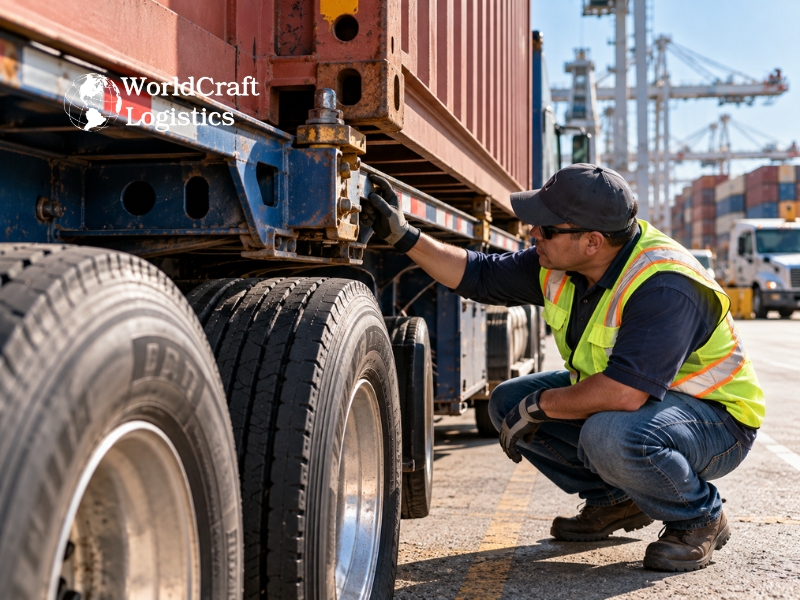
The problem. There is no truck when you need one.
Why it happens. This is not only "there aren't enough trucks." It is capacity, timing, appointment, equipment, and driver availability all lining up at once. Booking a drayage carrier after the container becomes available puts you in the same queue as everyone else who waited.
How to prevent it. Do not wait for the container to be available before you think about the truck. If the ETA, customs status, and warehouse window are reasonably clear, prepare the drayage plan early and adjust as milestones change.
The problem. The container is port ready and truck ready, but the warehouse is not ready.
Why it happens. Limited receiving hours, full appointment calendars, dock congestion, yard congestion, and labor constraints often combine. Importers tend to overlook this because it happens at the very end.
What to check
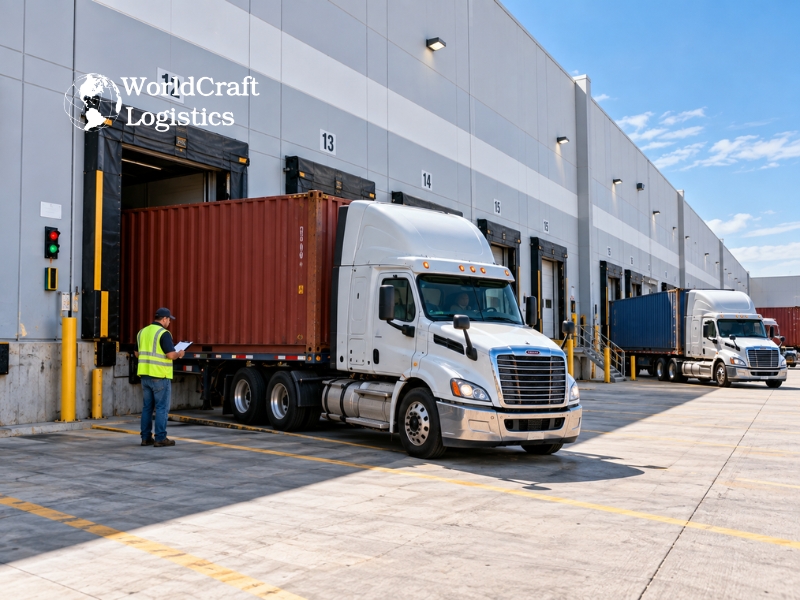
The problem. A truck misses its window, and the appointment has to be rebooked.
Why it happens. We call this the coordination gap. A single container touches the importer, the customs broker, the ocean carrier, the terminal, the drayage carrier, and the warehouse. When one party changes a time, every other party has to adjust, and information gets lost between handoffs. Logistics operators have highlighted this exact port to warehouse handoff as a growing pain point in 2026.
How to prevent it. Use a single point of coordination. Fewer handoffs of information mean fewer missed windows. This is also where working with a full service 3PL starts to make practical sense.
The problem. The truck is on time in theory and late in practice.
Separate predictable delay from unpredictable disruption.
How to prevent it. You cannot control weather, but you can plan around it with tracking, buffer time, exception alerts, flexible receiving windows, and a backup plan.
The problem. The truck arrives on time, but the container still is not processed.
It helps to separate three ideas: transportation time, waiting time, and handling time. A 2-hour drive does not mean a 2 hour port to warehouse operation, because waiting, appointment checks, unloading, and documentation can take up most of the elapsed time.
How to prevent it. Pre alert the warehouse, plan labor, schedule dock time, share cargo information in advance, and prepare transload instructions before the truck arrives.
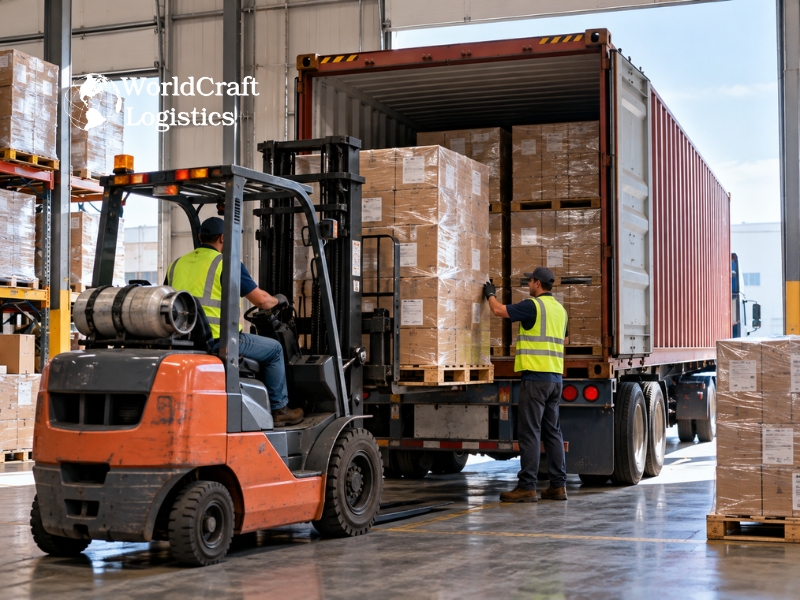
The problem. The delay turns into a bill.
The Federal Maritime Commission (FMC) explains the difference clearly. Demurrage accrues when a container exceeds free time at a marine terminal. Detention is charged for extended use of intermodal equipment. For a full breakdown, see our guide on demurrage and detention and the critical differences between them. The FMC also reports that nine major ocean carriers collected roughly $15.4 billion in detention and demurrage charges between April 1, 2020 and March 31, 2025.
A delay is not only a delivery problem. It can become a cash flow problem.
Rates vary by carrier, terminal, container type, and free time agreement, so we do not quote a single "per day" figure here. Check your carrier or terminal tariff for exact numbers. Under current FMC rules, carriers and terminals must also send invoices within 30 calendar days from when charges were last incurred, which makes it worth reviewing every invoice you receive.
How to prevent it. Track the clock, not just the container. Monitor ETA, availability, LFD, pickup, delivery, and empty return as one timeline.
Instead of asking "what causes delays" in general, ask "my container status says this, so what should I check?" Use this table as a starting point.Container Status: Problem and First Action
Shipment Status Likely Problem First Action Vessel arrived Discharge pending Check terminal Discharged Customs or release issue Check broker and carrier Released Not available for pickup Check terminal Available Pickup issue Check truck and chassis Picked up In transit Check drayage carrier At warehouse Receiving issue Check appointment and dock Delivered Empty return pending Check return instructions
This simple lookup solves a large share of "where is my container" questions without long email chains.
Not every delay can be avoided, and any provider who promises zero delays is overselling. It is more honest to sort them into three groups.
Preventable
Partially controllable
External disruption
Most importers lose time and money on the first group, which is also the group you can fix fastest.
Break the process into four stages and assign an owner to each.
Before arrival
Before pickup
Before delivery
After delivery
Copy this into your own process or share it with your team.
Before vessel arrival
Before pickup
Before delivery
After delivery
Ask yourself one question. When does managing the whole process on your own become inefficient?
In a self managed model, the importer coordinates the broker, the carrier, the terminal, and the warehouse separately. In a coordinated 3PL model, the importer talks to one team, and that team manages the broker, carrier, terminal, and warehouse together.
A 3PL adds value in more than trucks. The real benefit is:
A one stop provider is especially useful if you ship regularly through Southern California, where the Ports of Los Angeles and Long Beach concentrate a large share of U.S. container traffic. WorldCraft Logistics operates warehouses in Ontario, Cerritos, and Union City, so port pickup, drayage, transloading, and warehousing can sit under one point of contact. You can see the full range of land transport and trucking services from WorldCraft Logistics.
If you want an A to Z partner for your next container, talk to WorldCraft Logistics about end to end port to warehouse trucking. Most often because it is not yet available for pickup. Customs holds, pending discharge, missing release, or a lack of chassis can all keep a container at the terminal even after the vessel arrives. Check customs status first, then terminal availability, then truck and chassis readiness. The main causes are customs holds, container availability issues, terminal congestion, chassis shortages, limited drayage capacity, warehouse appointment problems, poor coordination, weather and traffic, unloading bottlenecks, and detention or demurrage pressure. It depends on the port, the distance, customs status, equipment, and appointment availability. The drive itself may take only hours, but waiting, appointments, and unloading often take more time than the trip. Ask your provider for a timeline that includes every milestone, not only the drive. Drayage delays come from late booking, no available driver, missing chassis, terminal wait times, closed appointment slots, and poor communication between parties. Most start before the truck leaves, which is why early planning matters. Yes. A container may be released and available, but it cannot move without the correct roadworthy chassis. Wrong chassis type, no chassis, and equipment condition issues are common causes. Demurrage accrues when a container stays at the marine terminal beyond its free time. Detention is charged when intermodal equipment, such as the container, is kept beyond the allowed time outside the terminal. Both depend on your carrier or terminal agreement. Confirm information early, track the right milestones (ETA, availability, LFD, pickup, delivery, empty return), and coordinate port, trucking, and warehouse as one process. Book drayage and warehouse appointments before the container is ready. There is no single number. Costs depend on carrier and terminal tariffs, container type, free time terms, and how long the container sits. Delays can lead to demurrage, detention, rebooking, storage, and missed sales. Always check the tariff that applies to your shipment. It depends on the contract and who is billed. Under FMC rules, invoices must identify the billed party and be sent within 30 calendar days from when charges were last incurred. Review your carrier agreement and your broker or 3PL agreement to confirm responsibility. A 3PL can reduce avoidable delays by coordinating the broker, terminal, drayage carrier, and warehouse in one place. It cannot control weather or labor disruptions, but it can remove the coordination gaps that cause most preventable delays.FAQs About Port to Warehouse Delays
Why is my container delayed at the port?
What causes port to warehouse delays?
How long does port to warehouse delivery take?
What causes drayage delays?
Can a chassis shortage delay my container?
What is the difference between detention and demurrage?
How can I avoid port to warehouse delays?
How much do port to warehouse delays cost?
Who is responsible for demurrage and detention charges?
Does a 3PL reduce port to warehouse delays?
The fastest port to warehouse moves are usually planned before the container is ready for pickup.
If you remember three things:
Ready to move your next container without the guesswork? Request a port to warehouse trucking quote from WorldCraft Logistics today.

SEO
Digital Marketing/SEO Specialist
Simon Mang is the SEO and Digital Marketing Specialist at Worldcraft Logistics, where he leads content strategy to promote the company's online presence. With years of experience in digital marketing and a strong understanding of the logistics industry, he has published more than 500 specialized articles across freight, warehousing, and supply chain topics. ( Reviewed for accuracy by the Worldcraft Logistics Operations Team ).