10/19/2026
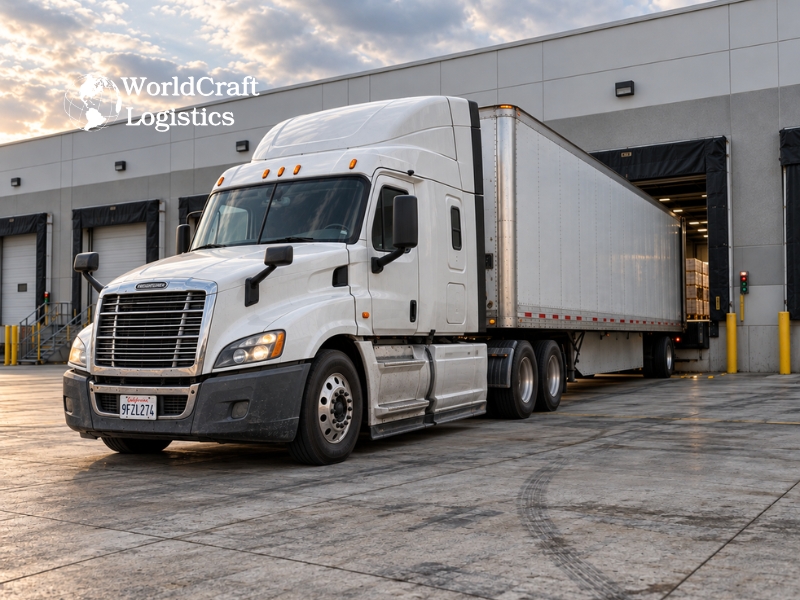
Dry van trucking is one of the most widely used methods of transporting freight across the United States. It uses an enclosed semi-trailer to move palletized goods, packaged products, retail inventory, and many types of commercial cargo while protecting shipments from direct exposure to rain, wind, road debris, and other external elements.
For shippers, however, choosing dry van transportation involves more than selecting an enclosed trailer. Cargo dimensions, weight distribution, loading requirements, delivery schedules, freight rates, and the rest of the supply chain all influence whether this shipping method is the right fit.
This guide explains what dry van trucking is, what it can haul, how trailer specifications affect loading, what determines shipping costs, and how businesses can plan more reliable freight movements.
Dry van trucking is a freight transportation method that uses an enclosed trailer to carry goods over the road. The trailer is typically attached to a semi-truck tractor and is designed to protect cargo from direct exposure to outside weather and road conditions.
Dry van transportation is commonly used for full truckload (FTL) and less-than-truckload (LTL) freight, depending on shipment size, carrier network, and service arrangement. Unlike refrigerated trailers, dry vans do not have built-in refrigeration systems designed to maintain a controlled cargo temperature. They are also different from flatbed trailers, which carry freight on an open deck.
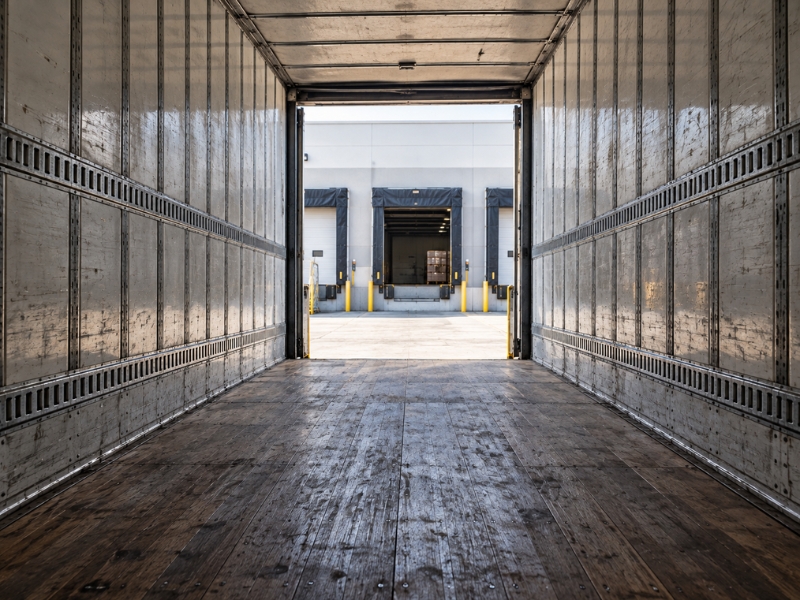
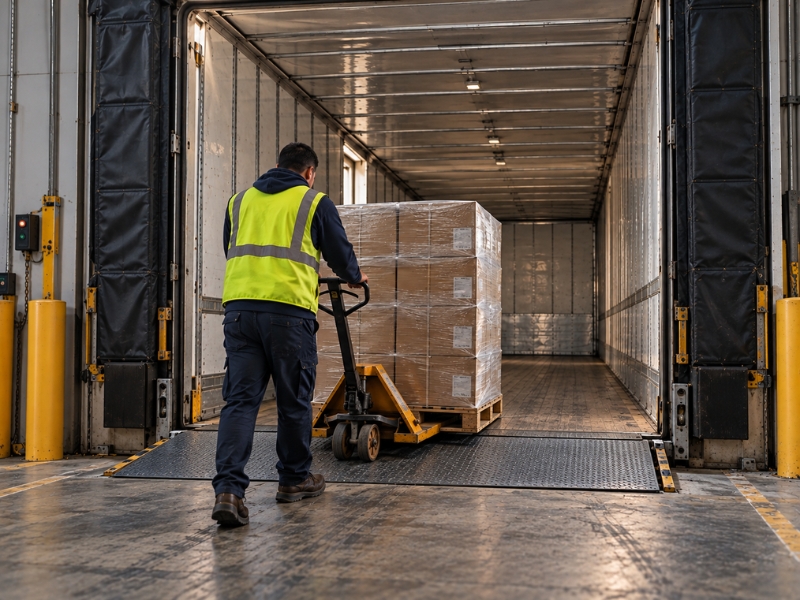
A dry van trailer is a rigid-sided, enclosed trailer with a roof, floor, and rear doors. Most standard trailers are loaded through the rear, typically at a warehouse loading dock.
An enclosed trailer does not automatically provide temperature control, humidity control, or protection against every type of cargo damage. Packaging, trailer condition, loading practices, and the characteristics of the goods still matter.
The exact process depends on the service. A direct FTL shipment may travel from one shipper to one consignee, while LTL freight may pass through terminals and involve additional handling. For a related overview, see WCL's guide to how truck freight works.
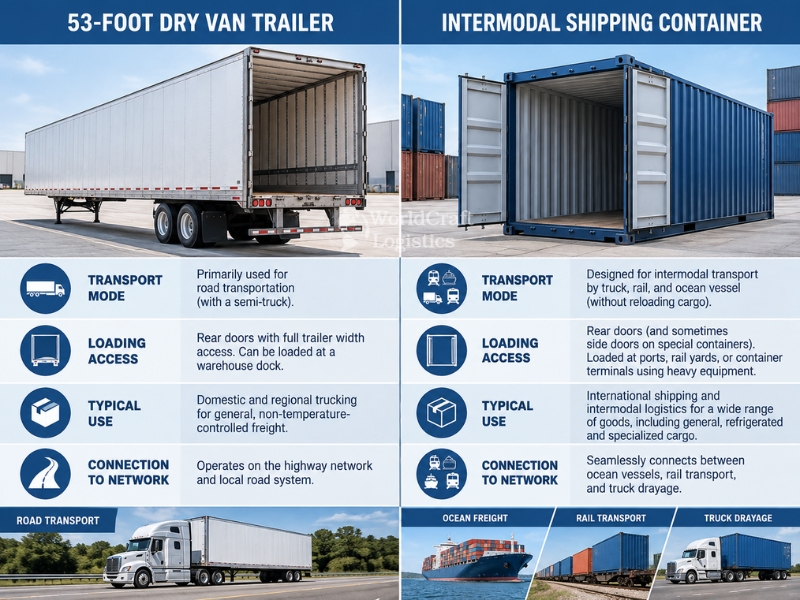
A dry van trailer and a shipping container are not the same thing. A dry van is a road trailer with its own wheels and running gear. An intermodal shipping container is a separate cargo unit designed to move between transportation modes, such as ships, trains, and trucks.
A container arriving at a U.S. port may be transported on a container chassis or unloaded and transferred into a dry van through a process such as transloading. The right approach depends on the shipment, equipment availability, handling requirements, and final destination.
Dry van hauling is suitable for many types of non-temperature-controlled freight that can be safely loaded inside an enclosed trailer.Industry Typical Dry Van Freight Retail and E-commerce Packaged consumer goods, clothing, accessories, and general merchandise. Manufacturing Components, finished products, machine parts, and packaged industrial supplies. Furniture Boxed furniture, packaged home furnishings, and items that fit within trailer dimensions. Food and Beverage Shelf-stable packaged food, bottled beverages, and dry ingredients when suitable for the shipment. Electronics Boxed electronics, appliances, and components with appropriate packaging. Packaging and Paper Cartons, corrugated boxes, packaged paper products, and printed materials. Consumer Products Household supplies, personal care products, and other packaged goods.
The suitability of a product depends on its physical properties, packaging, handling instructions, and applicable regulatory requirements. Packaged shelf-stable food may be suitable for dry van shipping if the trailer and transportation process meet the product's requirements. Frozen food, by contrast, generally requires temperature-controlled transportation.
Dry van transportation may be unsuitable when a shipment has requirements that an ordinary enclosed trailer cannot meet.
The key question is not simply whether cargo can physically fit inside a trailer. It is whether the equipment can transport it safely while meeting the shipment's delivery and handling requirements.
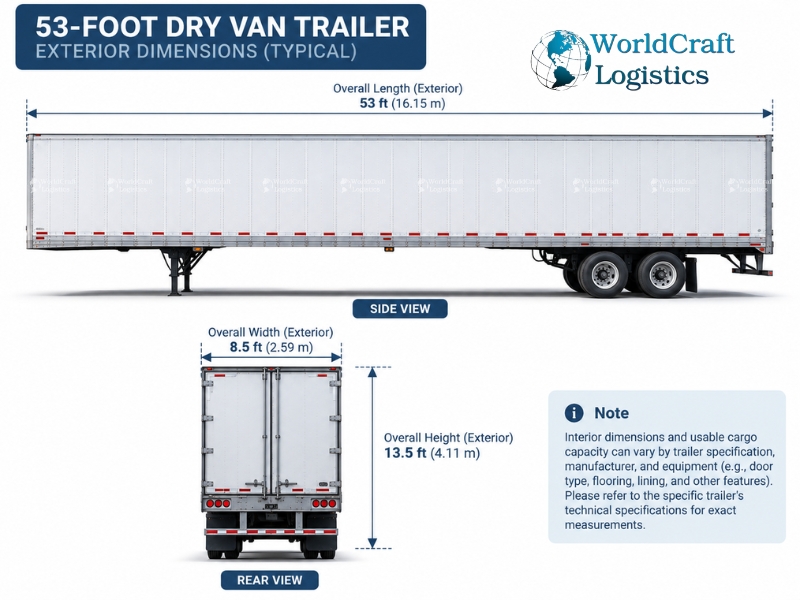
Understanding dry van trailer dimensions helps shippers avoid equipment mismatches, loading delays, and unexpected costs. A 53-foot dry van is common in U.S. truckload transportation, but its usable interior dimensions are smaller than its advertised exterior length.
The following figures are approximate planning references. Actual specifications vary by manufacturer, trailer model, door design, and interior construction. Confirm the assigned trailer's specifications before booking freight close to dimensional limits.Specification Typical 53-Foot Dry Van Exterior Length 53 ft Interior Length Approximately 52–52.5 ft Interior Width Approximately 98–101 in Interior Height Approximately 108–110 in Interior Volume Approximately 3,900–4,050 cu ft Typical Payload Planning Range Approximately 42,000–45,000 lb, subject to equipment and legal limits.
These figures are not guaranteed capacity limits. The rear-door opening may also be smaller than the interior cargo compartment. A pallet that fits inside the trailer may still be difficult or impossible to load through the doors.
A standard 53-foot dry van can typically accommodate around 26 standard 48 × 40-inch pallets in a single layer when loaded in a conventional straight configuration. Some arrangements may accommodate more, depending on the pallet orientation, actual trailer dimensions, and loading plan.
Actual capacity depends on pallet dimensions and orientation, stackability, load height, weight distribution, securement requirements, and the loading and unloading sequence. Do not assume that the maximum number of pallet positions represents the maximum number of pallets your shipment can safely carry.
For example, 26 unusually heavy pallets may exceed the available legal payload before using all the floor space. Conversely, lightweight freight may use the available space without approaching the trailer's weight limits.
Payload is the weight of the cargo a vehicle can carry. Gross vehicle weight includes the vehicle and its load, while gross combination weight includes the combined vehicle units and their loads.
The amount of freight a trailer can physically hold is not necessarily the amount a truck can legally transport. Weight limits depend on tractor and trailer ratings, axle configuration, applicable road restrictions, and actual weight distribution. Federal and state requirements may affect the permitted configuration.
Dry van transportation is a strong option when a shipment needs enclosed road transportation and does not require features that a standard trailer cannot provide. It is commonly considered for palletized goods, packaged products, and commercial freight moving between distribution centers, warehouses, manufacturers, retailers, and other business locations.
Dry van equipment is widely used, which can provide flexibility when sourcing capacity. However, availability, pricing, and transit times still depend on the route, shipment requirements, and market conditions.
An alternative may be more appropriate if the shipment is oversized, requires continuous temperature management, needs open-deck loading, or has handling requirements beyond what a standard dry van supports. The decision should account for the full shipment rather than a single equipment characteristic.
| Equipment Type | Best Suited For | Main Consideration |
|---|---|---|
| Dry Van | Packaged, palletized, general freight | Enclosed protection without active temperature control. |
| Flatbed | Oversized or open-deck freight | Cargo exposure and securement requirements. |
| Reefer | Temperature-sensitive products | Temperature settings, monitoring, and equipment requirements. |
| Box Truck | Smaller shipments and urban deliveries | Usually less cargo capacity than a 53-foot trailer. |
| Intermodal Container | Freight moving between modes | Container, chassis, terminal, and transfer requirements. |
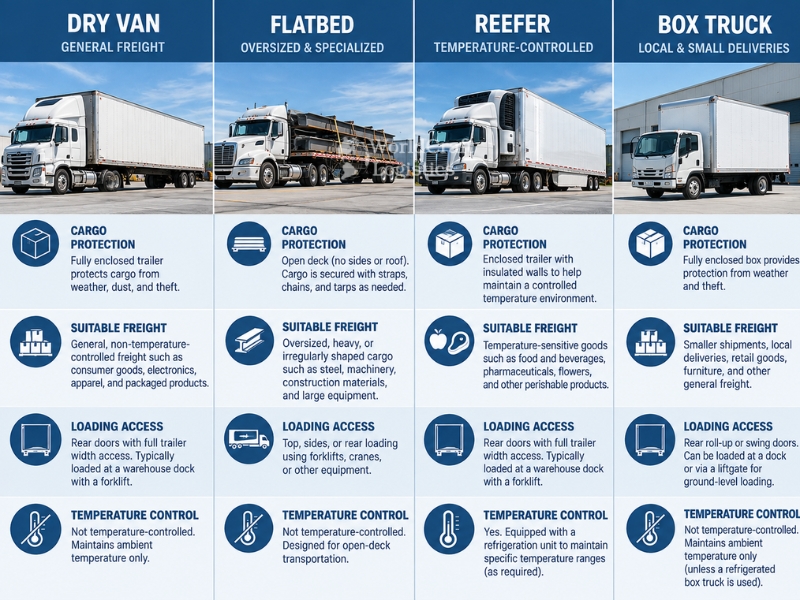
Dry van trailers provide an enclosed cargo compartment, while flatbeds offer open-deck access for freight that may be too large or awkward to load through conventional trailer doors. Flatbeds are often used for construction materials, steel, machinery, and other cargo requiring open access. Dry vans are generally more appropriate for packaged goods that benefit from an enclosed space.
Neither option is universally better. Cargo dimensions, weather exposure, loading equipment, securement, and total transportation cost determine the best fit.
A dry van provides an enclosed space but does not offer the active refrigeration capabilities of a reefer trailer. Reefers are designed for freight that must remain within a specified temperature range and may require temperature monitoring, pre-cooling, documentation, and additional operating procedures.
Dry van shipping may be suitable for shelf-stable packaged products, but it should not replace temperature-controlled transportation when product specifications require it.
A box truck is a smaller truck with an enclosed cargo body, often used for local deliveries, smaller loads, and locations with tighter access restrictions. A dry van semi-trailer generally offers substantially more cargo space and is commonly paired with a tractor for regional or long-distance freight.
The right choice depends on shipment volume, site access, delivery location, and whether a full-size tractor-trailer can safely reach the destination.
Intermodal transportation uses containers that can move between ships, trains, and trucks without unloading the cargo from the container at every mode transfer. Dry van transportation moves freight inside a road trailer.
When imported cargo arrives in a container, a shipper may use drayage to move the container from the port and then choose transloading into a dry van for onward distribution. The best option depends on origin and destination, transit requirements, shipment volume, handling costs, and the overall supply chain design.
Dry van freight rates vary by route, shipment characteristics, timing, capacity, and the service included in the quote. There is no single rate that applies to every shipment. Evaluate a quote against the complete transportation requirement, not just a headline price per mile.
Spot rates are negotiated for individual shipments or immediate transportation needs. Contract rates are established under an agreement covering specified lanes, volumes, service conditions, or periods.
Spot pricing can respond quickly to changing capacity and demand. Contract pricing can provide greater predictability when the agreement matches the shipper's actual shipping patterns. Neither arrangement guarantees the lowest total cost.
In its report published October 19, 2026, DAT Freight & Analytics reported that dry van spot linehaul rates paid to carriers averaged $2.26 per mile for the week ending October 17, 2026. The rate was up 34.5% year over year and 23.8% above the nine-year seasonal average. The reported linehaul figure excludes fuel costs and surcharges.
This is a market benchmark, not a guaranteed rate for a particular lane or a direct quote for a shipper. Actual pricing can vary by origin, destination, timing, equipment availability, contract terms, fuel, and accessorial services. Review the DAT Dry Van Report published October 19, 2026 for the source data.
For broader context on transportation pricing, see WCL's guide to shipping freight rates and its article on full truckload (FTL) shipping.
Prepare the following information before requesting a quote:
Complete shipment details help the logistics provider select suitable equipment, evaluate available capacity, and identify potential additional charges before dispatch.
Good shipment planning reduces the risk of equipment mismatches, loading problems, missed appointments, and avoidable transportation expenses.
Provide the actual dimensions and weight of the packaged shipment, not estimates based solely on the product's unboxed size. Include pallet height, packaging materials, overhang, and restrictions on stacking. Communicate special handling instructions before pickup.
Freight must be appropriately secured to prevent shifting during transportation. Depending on the cargo, this may involve blocking, bracing, dunnage, tiedowns, or other suitable methods. The Federal Motor Carrier Safety Administration (FMCSA) establishes cargo securement requirements for covered commercial motor vehicles operating in interstate commerce.
Consult the official FMCSA Cargo Securement Rules. Shippers should coordinate with the carrier and loading team to ensure the cargo is prepared for safe transport. An enclosed trailer does not eliminate the need for proper securement. For additional context, see WCL's article on what dunnage is and why it matters in shipping.
A shipment can be ready to move but still miss its planned schedule if the dock is unavailable, the freight is not ready, or the assigned equipment cannot be loaded as expected. Confirm appointment times, receiving hours, equipment access, and required documentation before dispatch.
For longer routes, transit planning must also account for traffic, operational delays, driver availability, and applicable hours-of-service requirements. Estimated driving time should not be treated as a guaranteed door-to-door delivery time.
For recurring shipments, track more than whether freight arrived. Useful performance measures include:
Reviewing these metrics over time can help identify recurring problems, improve carrier coordination, and support better transportation decisions.
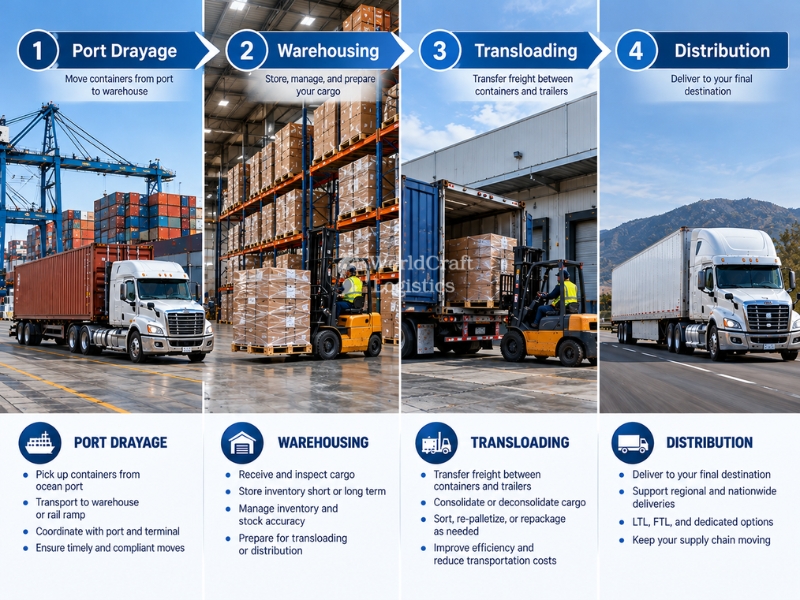
Dry van transportation is often one part of a larger logistics process. For importers and businesses distributing goods across the United States, coordinating road transportation with port services and warehouse operations can be just as important as selecting the trailer.
Imported cargo arriving at a U.S. port may need to be moved by drayage to a warehouse or another designated facility. Depending on the shipment, the container may be delivered intact, or the cargo may be transferred into a dry van through transloading.
Transloading can support onward distribution when the shipment's routing, equipment needs, or handling plan makes it appropriate. These steps are not mandatory for every shipment; the right sequence depends on cargo handling, port arrangements, delivery requirements, and total logistics cost.
A coordinated logistics plan may include the following sequence:
Port or origin pickup → Drayage → Warehouse receiving or transloading → Dry van transportation → Distribution or final delivery
Warehousing may be useful when inventory needs to be stored, consolidated, sorted, or prepared for distribution. Direct transportation may be more appropriate when cargo is ready for delivery and intermediate handling adds no value. The goal is to select the right combination of services rather than adding unnecessary steps.
Businesses managing multiple suppliers, ports, warehouses, and delivery locations may benefit from coordinating transportation and handling through a single logistics plan. WorldCraft Logistics supports U.S. logistics needs through services including freight transportation, warehousing, drayage, and related supply chain solutions.
Depending on shipment requirements, coordinating these services can help businesses plan freight movements more consistently and manage handoffs between transportation stages. Choose the right solution based on the shipment's actual requirements, service availability, and total cost. WorldCraft Logistics | Dry Van Trucking From palletized goods and packaged products to general freight, WorldCraft Logistics helps coordinate land transportation based on your cargo requirements, pickup schedules, and delivery needs. Explore flexible trucking solutions for your business. Provide the pickup and delivery ZIP codes, shipment date, cargo description, pallet count, dimensions, total weight, handling requirements, and delivery window. Include dock restrictions and special services. These details help the provider evaluate equipment fit, route requirements, and potential additional charges. Quotes may reflect different capacity availability, booking times, contract terms, fuel surcharges, waiting-time assumptions, and service requirements. Compare the full scope of each quote, including accessorial charges and delivery commitments, rather than selecting a carrier based only on the initial linehaul price. A dry van helps shield cargo from direct exposure to rain, wind, and road debris. However, it does not actively regulate cargo temperature or guarantee stable humidity. Goods with specific environmental requirements may need a reefer or another suitable transportation solution. The carrier may need to arrange different equipment, revise the loading plan, or reschedule the shipment. Depending on the circumstances, additional costs may apply. Confirm cargo dimensions, pallet configuration, door clearance, weight, and loading equipment before pickup to reduce the risk of a mismatch. Yes. A shipment may move from a port by drayage, enter a warehouse for storage or transloading, and then continue by dry van to a distribution center or customer. The sequence depends on cargo handling, inventory needs, route planning, and total logistics cost. Confirm pickup and delivery appointments, make sure freight is ready when the truck arrives, prepare documentation in advance, and verify that the facility can accommodate the assigned equipment. Clear communication between the shipper, carrier, warehouse, and consignee can help identify delays before they disrupt the schedule.Need Reliable Dry Van Trucking for Your Freight?
Frequently Asked Questions About Dry Van Trucking
1. What information do I need to get an accurate dry van freight quote?
2. Why can two dry van freight quotes for the same route be so different?
3. Can a dry van trailer protect cargo from rain and extreme temperatures?
4. What happens if my freight does not fit the assigned dry van trailer?
5. Can dry van trucking be combined with port drayage and warehousing?
6. How can I reduce detention and missed delivery appointments?
Dry van trucking offers a practical transportation option for many types of packaged and palletized freight moving across the United States. Its enclosed design, broad availability, and flexibility make it useful for a wide range of commercial shipping requirements.
However, successful dry van shipping depends on more than trailer selection. Cargo dimensions, legal payload, securement, loading access, delivery schedules, and total transportation cost all influence the outcome.
For businesses managing complex freight movements, evaluating dry van transportation alongside drayage, warehousing, transloading, and distribution can help create a more coordinated supply chain.
Before booking your next shipment, confirm that the equipment fits your cargo, the service meets your delivery requirements, and the quote reflects the complete transportation plan. If you need help evaluating a U.S. freight movement, WorldCraft Logistics can help you explore transportation and logistics options based on your shipment requirements.

SEO
Digital Marketing/SEO Specialist
Simon Mang is the SEO and Digital Marketing Specialist at Worldcraft Logistics, where he leads content strategy to promote the company's online presence. With years of experience in digital marketing and a strong understanding of the logistics industry, he has published more than 500 specialized articles across freight, warehousing, and supply chain topics. ( Reviewed for accuracy by the Worldcraft Logistics Operations Team ).