What Is Reefer Trucking? How Refrigerated Transportation Protects Your Freight
Reefer trucking is the transportation of temperature-sensitive cargo in refrigerated trucks or trailers equipped with temperature-control systems. It helps protect products such as fresh food, frozen goods, pharmaceuticals, and other items that require specific conditions during transit.
However, keeping freight within the required temperature range involves more than running a refrigeration unit. Proper loading, airflow, temperature monitoring, and coordination between shippers and carriers all play a role in protecting cargo quality.
This guide explains how reefer trucking works, how to prepare a refrigerated shipment, and what to consider when choosing a transportation partner.
What Is Reefer Trucking?
Reefer trucking is a type of temperature-controlled transportation that uses refrigerated vehicles to move cargo within a specified temperature range. The term “reefer” refers to the refrigeration equipment used to maintain the required environment inside a truck body or trailer.
Unlike standard dry freight transportation, refrigerated trucking is designed for products that may deteriorate, lose quality, or become unsafe if exposed to unsuitable temperatures during transit.
A reefer transportation setup typically includes an insulated trailer or truck body, a refrigeration unit, temperature controls, and procedures for loading and monitoring the shipment. Depending on the cargo, the required conditions may involve chilled temperatures, frozen temperatures, or another carefully defined range.
It is important to understand that a reefer unit does not automatically guarantee that every product will remain at the correct temperature. Cargo condition, loading practices, airflow, door openings, and transit delays can all affect the shipment.
Reefer Truck, Reefer Trailer, and Refrigeration Unit: What Is the Difference?
| Term | Meaning | Typical Use |
|---|---|---|
| Reefer truck | A truck equipped with an insulated cargo compartment and refrigeration system. | Local and regional refrigerated deliveries. |
| Reefer trailer | An insulated refrigerated trailer pulled by a tractor unit. | Long-distance freight and larger refrigerated shipments. |
| Reefer unit | The mechanical system that controls the temperature inside the cargo space. | Maintaining the required transport environment. |
| Refrigerated trucking | A broader term for transporting cargo in temperature-controlled trucks. | General descriptions of temperature-controlled road freight. |
How Does Reefer Trucking Work?
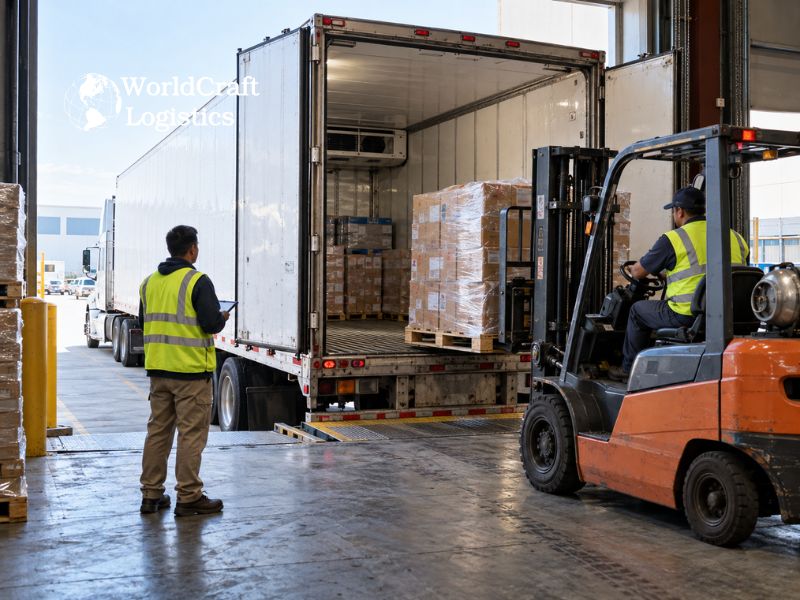
Reefer trucking combines refrigerated equipment with shipment planning and temperature-management procedures. The exact process depends on the product, required temperature range, route, and handling requirements.
1. The Refrigeration Unit Controls the Cargo Environment
A reefer unit works with the vehicle’s insulated cargo compartment to help maintain the selected temperature during transportation. Depending on the equipment, the system may use sensors and controls to regulate cooling and monitor operating conditions.
The refrigeration unit is designed to manage the environment inside the trailer or truck body. It does not necessarily cool every product quickly or uniformly. The result depends on factors such as cargo temperature before loading, packaging, pallet arrangement, airflow, and how the doors are used.
2. Pre-Cooling and Proper Loading Help Protect Cargo
Before loading, the shipper and carrier should confirm the required temperature setting and whether the equipment needs to be pre-cooled. Pre-cooling may be appropriate when the cargo and operating procedures require it, but the correct approach depends on the product and transport plan.
Many refrigerated shipments need to be loaded at the required product temperature. A reefer unit should not be treated as a substitute for a suitable product-cooling process unless the equipment and shipment plan are specifically designed for that purpose.
Loading practices also matter. Cargo should be arranged to support the intended airflow and avoid blocking air channels. Packaging, pallet configuration, loading density, and space around the cargo can influence temperature distribution throughout the trailer.
3. Temperature Monitoring Helps Identify Problems
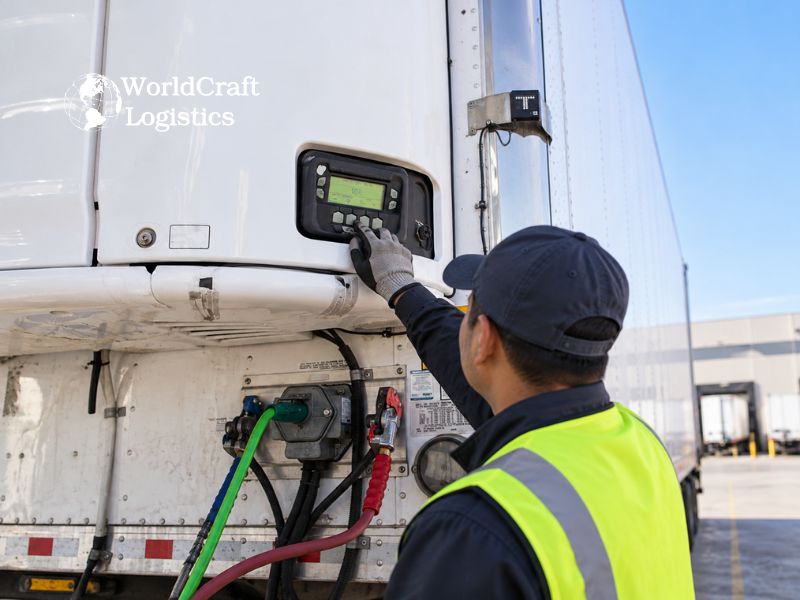
Temperature monitoring can help shippers and carriers identify equipment problems, unexpected temperature changes, or delays that may affect the cargo. Depending on the equipment and service arrangement, monitoring may include unit readings, temperature records, alarms, or remote visibility.
Not all temperature readings mean the same thing. The setpoint is the target selected on the refrigeration unit, while supply-air and return-air readings describe air conditions at different points in the system. These readings do not necessarily represent the temperature at the center of every product.
For sensitive shipments, the parties should agree in advance on which readings matter, what records will be retained, how exceptions will be communicated, and who should be contacted if conditions move outside the agreed range.
What Temperature Should a Reefer Truck Maintain?
There is no single temperature that is suitable for every reefer shipment. The required setting depends on the product, its condition before loading, applicable handling requirements, and any instructions established by the shipper or product manufacturer.
For example, fresh produce, frozen food, dairy products, and pharmaceutical products can have different temperature requirements. Even products within the same broad category may need different conditions.
Shippers should confirm the required temperature range before booking transportation. When applicable, they should use product specifications, food-safety procedures, manufacturer instructions, or validated shipping requirements rather than relying on a general industry assumption.
1. Setpoint vs. Actual Product Temperature
The setpoint is the target temperature entered into the refrigeration unit. It is not proof that every part of the cargo is at that temperature.
Supply-air temperature refers to the air delivered by the refrigeration system, while return-air temperature refers to air returning to the unit. Product temperature may differ from both readings, particularly when cargo is loaded at an unsuitable temperature, airflow is restricted, or the shipment contains dense or tightly packed products.
For this reason, a shipment plan should specify the required temperature range and the appropriate method for verifying compliance. Depending on the cargo, that may involve equipment records, calibrated monitoring devices, product-temperature checks, or a combination of methods.
2. What Is a Temperature Excursion?
A temperature excursion occurs when a shipment moves outside its required temperature range or another defined control limit. Potential causes include refrigeration equipment problems, prolonged door openings, loading delays, incorrect settings, poor airflow, and unexpected stops.
The significance of an excursion depends on the product, the temperature reached, the duration of exposure, and the applicable handling requirements. A temperature reading outside the target range does not automatically establish the extent of product damage, but it should be documented and assessed according to the shipment's procedures.
Shippers should establish an exception-response process before transit begins. This process should identify who receives alerts, who can authorize corrective action, and what records are needed to assess the shipment after an incident.
Which Products Need Refrigerated Trucking?
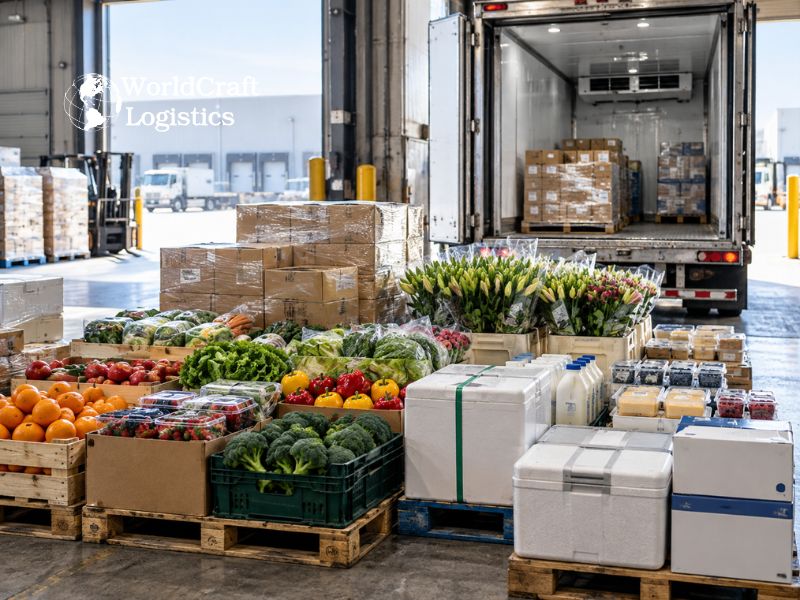
Refrigerated trucking is appropriate for cargo that needs controlled temperature conditions during transportation. The specific equipment and operating procedures should match the product's requirements rather than simply its general category.
1. Food and Beverages
Food shipments are a common use case for refrigerated transportation. Depending on their requirements, products may include fresh produce, meat, seafood, dairy products, frozen food, prepared meals, and certain beverages.
Different food products require different handling conditions. Some need chilled environments, others require frozen transport, and some may be suitable for ambient transportation. Shippers should confirm the correct conditions for the specific product and consider food-safety requirements throughout the transportation process.
2. Pharmaceuticals and Healthcare Products
Some pharmaceuticals, vaccines, biological materials, and healthcare products require temperature-controlled transportation. These shipments may have strict product-specific requirements and documentation expectations.
A standard reefer truck should not automatically be assumed suitable for every pharmaceutical shipment. Shippers should verify the required temperature range, monitoring method, equipment capability, handling procedures, and any applicable qualification or validation requirements before selecting a carrier.
3. Other Temperature-Sensitive Goods
Other goods may also require temperature control because heat, cold, or temperature variation can affect their quality or performance. Depending on the product, these may include certain chemicals, ingredients, cosmetics, and specialty materials.
Requirements vary significantly across these categories. The shipper should identify any relevant safety data, manufacturer instructions, compatibility restrictions, and special handling needs before transportation is arranged.
4. When Is Reefer Trucking Not the Right Choice?
Reefer trucking may be unnecessary when products can safely travel under ordinary ambient conditions. In other cases, a standard refrigerated trailer may not provide the level of control or documentation needed for a particular shipment.
For example, a product requiring specialized environmental controls, a validated cold-chain process, or strict pharmaceutical handling procedures may need equipment and service capabilities beyond basic refrigerated transportation. The correct solution should be selected after reviewing the actual cargo requirements.
Types of Reefer Trucks and Refrigerated Transport Options
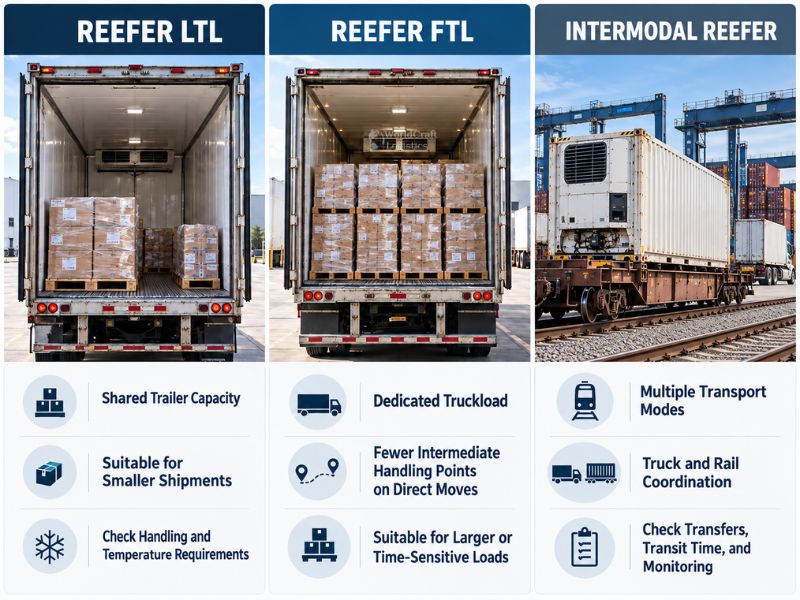
Refrigerated transportation is available in several vehicle configurations. The best option depends on shipment volume, delivery distance, loading access, temperature requirements, and delivery schedules.
1. Reefer Semi-Trailers
Reefer semi-trailers are commonly used for larger shipments and long-distance freight. They provide an insulated cargo space and a refrigeration unit designed to maintain the selected transport conditions.
These trailers may be suitable for full truckload shipments, recurring distribution movements, and larger quantities of temperature-sensitive goods. Before booking, shippers should confirm trailer availability, cargo capacity, loading requirements, and the temperature-control capabilities needed for the shipment.
2. Refrigerated Box Trucks and Vans
Refrigerated box trucks and vans can be useful for smaller shipments, local deliveries, and routes requiring frequent stops. Their size and maneuverability may make them more suitable for urban delivery locations or facilities with limited access.
However, available cargo space and equipment capabilities vary by vehicle. Shippers should confirm that the vehicle can accommodate the shipment while maintaining the required temperature conditions.
3. Reefer Trucking: LTL vs. FTL
Temperature-controlled freight may move as less-than-truckload (LTL) or full truckload (FTL), depending on shipment size, service availability, route, and cargo requirements.Consideration Refrigerated LTL Refrigerated FTL Shipment size Smaller shipments that do not require a full truck Shipments that use the available truck capacity or require dedicated equipment Handling May involve consolidation and additional handling Can reduce intermediate handling, depending on the route Stops May include multiple pickups or deliveries Can offer a more direct movement Cost structure Freight cost is allocated across consolidated shipments Cost is generally associated with the dedicated truck movement Planning considerations Compatibility, handling points, and transit schedule Equipment availability, loading plan, and route coordination
Reefer LTL is not automatically suitable for every temperature-sensitive shipment. Shared transportation can introduce additional handling, stops, or compatibility considerations. Shippers should confirm how temperature control is maintained throughout the actual service network.
Reefer FTL may be preferable when a shipment needs a dedicated trailer, more direct routing, or reduced handling. The decision should account for shipment volume, product sensitivity, delivery deadlines, and the total transportation cost.
4. Reefer Trucking vs. Intermodal Refrigerated Transportation
Reefer trucking moves temperature-sensitive cargo by road, while intermodal refrigerated transportation combines multiple modes, such as truck and rail, using equipment designed for temperature-controlled freight.
Intermodal transportation may be worth evaluating for certain long-distance movements, depending on route availability, transit time, equipment, and service requirements. However, the parties must understand how temperature control, monitoring, transfers, and responsibility are managed at each stage.
The right choice depends on the shipment's sensitivity, delivery window, origin and destination, available services, and acceptable risk. Neither mode should be selected on price alone when cargo condition is a critical concern.
What Are the Risks and Limitations of Reefer Trucking?
Refrigerated transportation can help protect temperature-sensitive cargo, but it does not eliminate every risk. A successful shipment depends on equipment condition, product preparation, loading procedures, transit planning, and communication between the parties.
1. Equipment Problems and Temperature Deviations
A refrigeration unit may experience a mechanical problem, incorrect setting, or other operating issue. A door seal problem or restricted airflow can also affect conditions inside the cargo space.
Shippers should confirm how equipment issues are reported, what monitoring is available, and who is responsible for coordinating corrective action. For sensitive products, clear escalation procedures can help the parties respond more consistently when a problem occurs.
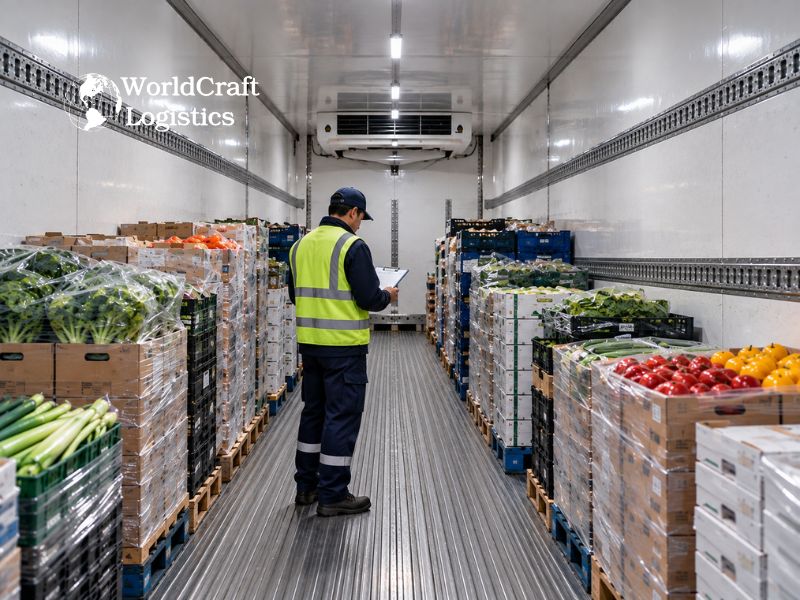
2. Loading and Dock Delays
Extended loading or unloading times can affect a refrigerated shipment, particularly when doors remain open or cargo is exposed to conditions outside the required range.
Appointment scheduling, dock readiness, labor availability, and documentation can all influence how long a shipment remains at a facility. Coordinating these activities in advance can help reduce avoidable delays and unnecessary exposure.
3. Sanitation and Previous Cargo
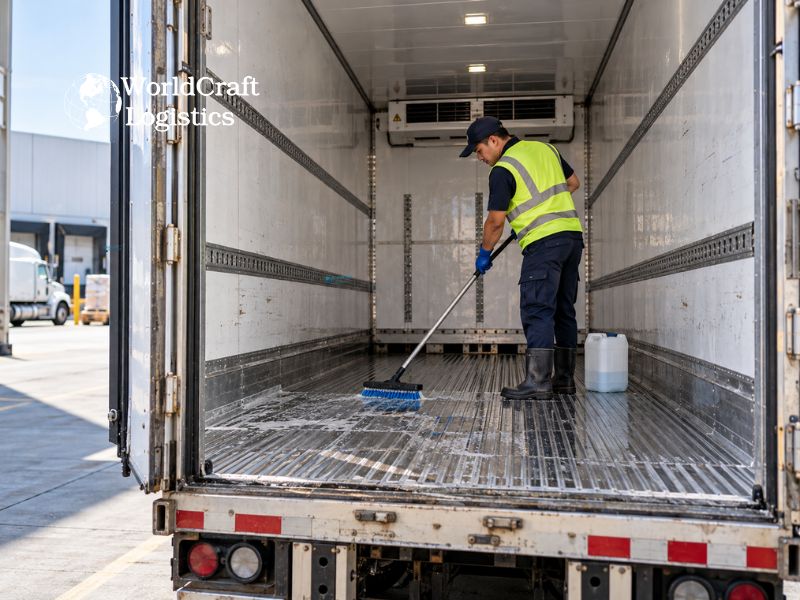
Refrigerated equipment must be appropriate for the cargo being transported. Residue, odors, contamination risks, or incompatible previous loads can create problems even when the temperature setting is correct.
Shippers and carriers should establish suitable equipment-inspection, cleaning, and cargo-compatibility procedures. For covered food transportation, applicable sanitary transportation requirements may also apply.
4. Higher Costs and Limited Capacity
Reefer trucking may cost more than standard dry freight because it requires specialized equipment, refrigeration operation, and additional handling or monitoring procedures where applicable.
Rates can vary with shipment size, distance, seasonality, equipment availability, route, fuel and operating costs, appointment requirements, and service level. Temperature-sensitive freight may also require more detailed coordination than a standard shipment.
To evaluate the true cost, shippers should consider the entire transportation plan, including potential accessorial charges, storage requirements, delivery constraints, and the consequences of a delay or temperature incident.
How to Prepare a Reefer Shipment: A Practical Checklist

Preparing a refrigerated shipment involves more than booking a truck and providing a delivery address. The following checklist can help shippers and logistics teams align product requirements, equipment, documentation, and delivery arrangements before freight moves.
1. Before Booking
- Identify the exact product and its required temperature range.
- Confirm whether the cargo must remain chilled, frozen, or within another specified range.
- Determine the shipment's dimensions, weight, pallet count, packaging, and loading requirements.
- Communicate any special handling, sanitation, compatibility, or documentation requirements.
- Confirm whether reefer LTL, reefer FTL, or another transport option is appropriate.
- Discuss temperature monitoring, reporting, and escalation procedures with the transportation provider.
- Confirm pickup and delivery appointments, facility access, and expected transit time.
2. Before Loading
- Verify that the assigned vehicle is suitable for the cargo and its temperature requirements.
- Confirm the agreed temperature setting and any required pre-cooling procedure.
- Check that the cargo is prepared at the appropriate loading temperature when required.
- Inspect the cargo space for cleanliness, odors, damage, and other issues relevant to the shipment.
- Arrange cargo to support airflow and avoid blocking intended air channels.
- Confirm that shipping documents, handling instructions, and emergency contacts are available.
- Record relevant loading conditions and product information according to the agreed procedures.
3. During Transit and Delivery
- Monitor available temperature records and equipment status according to the service agreement.
- Report unusual readings, equipment alarms, or delays through the agreed escalation process.
- Document any temperature excursion or other incident that may affect cargo condition.
- Coordinate arrival times and prepare the receiving facility for prompt unloading.
- Review delivery records and temperature documentation when required.
- Follow the agreed process for assessing and reporting possible cargo damage or temperature deviations.
A documented process helps reduce uncertainty and makes it easier for shippers, carriers, warehouses, and receivers to understand their responsibilities. The checklist should be adapted to the product, shipment risk, and applicable requirements.
Reefer Trucking Compliance: What Shippers Should Know
Temperature-controlled transportation may be subject to food-safety, product-handling, recordkeeping, or industry-specific requirements. The rules that apply depend on the cargo, the parties involved, and the activities performed.
1. FDA FSMA Sanitary Transportation Requirements
In the United States, the U.S. Food and Drug Administration (FDA) established the Sanitary Transportation of Human and Animal Food rule under the Food Safety Modernization Act (FSMA). The rule addresses practices intended to help prevent food from becoming unsafe during transportation.
For covered transportation operations, relevant requirements may concern vehicle and transportation equipment conditions, appropriate cleaning, protection of food, temperature control when necessary, and responsibilities assigned to shippers, loaders, carriers, and receivers.
These responsibilities depend on the circumstances and the applicable rule provisions. Businesses should review the requirements relevant to their own operations rather than assume that hiring a refrigerated carrier transfers every compliance responsibility to that carrier.
Official FDA resources:
- FSMA Final Rule on Sanitary Transportation of Human and Animal Food
- FDA Frequently Asked Questions on FSMA
- FDA Guidance for Industry: Sanitary Transportation of Food
2. FDA Food Traceability Rule
The FDA Food Traceability Rule is separate from the sanitary transportation rule. It establishes additional traceability recordkeeping requirements for certain foods and activities covered by the rule. It does not apply identically to every food product or every transportation movement.
As of October 2026, federal legislation directs the FDA not to enforce the Food Traceability Rule before July 20, 2028. Businesses should check the latest official guidance and determine whether their products and activities fall within the rule's scope.
Official FDA resource:
Regulatory requirements can change, and the information above is a general overview rather than legal advice. Shippers should verify the current rules that apply to their products, operations, and transportation arrangements.
How to Choose a Reefer Trucking Partner
Choosing a reefer trucking provider requires evaluating more than the quoted transportation rate. The provider should be able to explain how its equipment, operating procedures, communication practices, and service arrangements support the shipment's requirements.
1. Can the Provider Meet Your Temperature Requirements?
Explain the product, required temperature range, loading condition, and any special handling needs. Confirm that the proposed equipment and service are suitable for those requirements.
2. What Temperature Monitoring Is Available?
Ask what temperature information is recorded, how it can be accessed, and whether alerts or exception reports are available. Confirm which readings are monitored and whether the records meet your shipment's documentation needs.
3. How Are Delays and Temperature Excursions Managed?
Ask who will be contacted if equipment problems, delays, or unusual temperature readings occur. A clear escalation process can help the parties respond promptly and document the incident appropriately.
4. How Is Equipment Cleanliness and Cargo Compatibility Checked?
Confirm the provider's procedures for inspecting equipment, addressing cleanliness concerns, and identifying incompatible cargo. These questions are particularly important for food and other sensitive products.
5. Can the Provider Coordinate Pickup, Warehousing, and Delivery?
Some shipments require more than a direct truck movement. They may involve port pickup, warehouse storage, inventory handling, distribution, or a scheduled final delivery.
When several parties or facilities are involved, coordination can help align appointments, documentation, handling instructions, and shipment status. Shippers should confirm which services the provider can perform directly and which are arranged through qualified partners.
6. Are Pricing and Service Responsibilities Clear?
Request a clear explanation of the rate, included services, possible accessorial charges, and responsibilities for delays or exceptions. The transportation agreement should identify the relevant service terms and documentation expectations.
For businesses moving temperature-sensitive cargo through multiple transportation and warehouse stages, a coordinated logistics plan can help connect pickup, handling, storage, and delivery requirements. WorldCraft Logistics can be contacted to discuss shipment requirements and determine which logistics services are appropriate for the move.
Planning a temperature-sensitive shipment? Contact WorldCraft Logistics to discuss your transportation requirements, shipment details, and coordination needs.
Frequently Asked Questions About Reefer Trucking
1. Can a reefer truck keep products at the required temperature if the cargo is loaded warm?
Not necessarily. A reefer unit is primarily intended to maintain the required transport environment, and its ability to change product temperature depends on the equipment, cargo, packaging, airflow, and operating conditions. Shippers should confirm the correct loading temperature and any required pre-cooling or product-cooling procedures before dispatch.
2. What should I do if a reefer truck loses temperature control?
Follow the shipment's established exception-response procedure. Notify the designated contacts, preserve available temperature and equipment records, and document the timing and circumstances of the incident. The product owner or other responsible party should assess the potential impact based on the product requirements and applicable procedures before deciding how to handle the cargo.
3. How can I verify that a refrigerated shipment stayed within its required temperature range?
Ask what temperature records are available and whether they reflect equipment readings, cargo measurements, or another monitoring method. Review the records against the agreed temperature range and shipment requirements. For sensitive products, confirm the monitoring method and documentation expectations before booking.
4. Can different products be transported together in one reefer trailer?
It depends on the temperature requirements, product compatibility, sanitation considerations, packaging, and applicable handling rules. Products requiring incompatible conditions should not be combined simply to consolidate freight. Confirm the proposed loading arrangement and temperature-control plan before the shipment is accepted.
5. Does a reefer truck need to be pre-cooled before every shipment?
Not in every situation. Pre-cooling requirements depend on the cargo, equipment, operating procedures, and applicable handling instructions. The shipper and carrier should agree on whether pre-cooling is required and ensure that the cargo is prepared at the appropriate temperature before loading.
6. Who is responsible if refrigerated cargo is damaged during transportation?
Responsibility depends on the circumstances, the applicable law, the transportation contract, the parties' duties, and the evidence available. Temperature records, loading documentation, delivery records, and incident reports may help establish what happened. Shippers should review the relevant contract and claims procedures rather than assume that one party is automatically responsible.
7. Can refrigerated trucking be combined with warehouse storage and distribution?
Yes, where suitable services and facilities are available. A shipment may move by reefer truck to a warehouse for storage, order handling, or distribution before final delivery. The logistics plan should account for temperature requirements during transportation, unloading, storage, transfers, and subsequent delivery, with responsibilities clearly defined at each stage.