09/14/2026
The latest breakdown in U.S.-Canada trade negotiations highlights a broader issue facing importers, manufacturers and international logistics companies. Trade agreements are no longer simply about reducing tariffs. Increasingly, they can also influence where companies source products, how supply chains are structured and how businesses manage trade relationships with other countries.
Canada recently walked away from negotiations with the United States after disagreements over demands that could have given Washington greater influence over Canada's future trade relationships and tariff policies.
From a logistics perspective, the dispute matters far beyond the U.S.-Canada border.
It illustrates how tariffs, trade agreements, customs policy and geopolitical considerations are becoming increasingly interconnected with supply chain planning. For companies moving goods internationally, the ability to adapt to these changes can be just as important as the transportation rate itself.
The United States has increasingly used trade negotiations to address broader economic and national security objectives.
Rather than focusing exclusively on tariff reductions, recent trade arrangements have included provisions involving supply chain security, non-market economies, export controls, investment, technology transfers and trade diversion.
For businesses, this creates a more complicated operating environment.
A company may have a favorable tariff arrangement with the United States today, but future trade negotiations could introduce new requirements that affect:
This is why international trade policy is becoming an increasingly important factor in supply chain risk management.
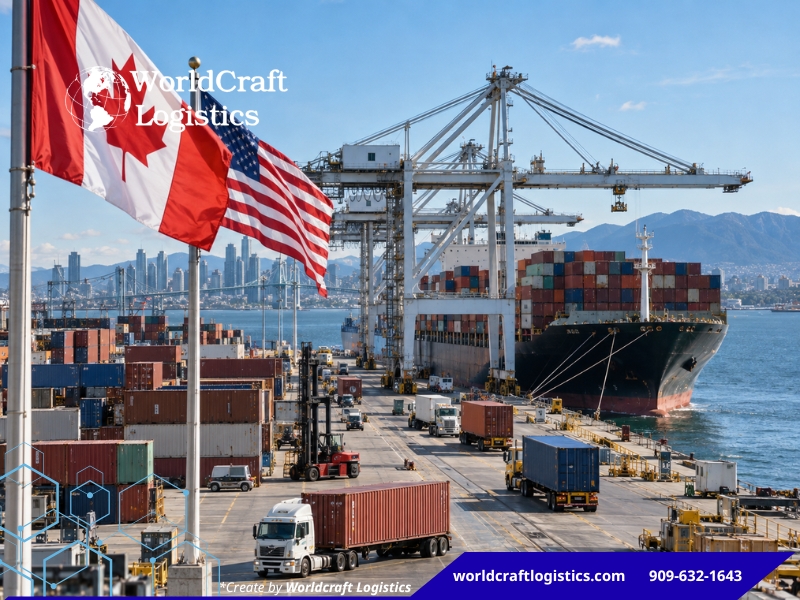
One of the most important issues in the Canada-U.S. dispute is the question of how much influence the United States should have over Canada's trade relationships with other countries.
Canada's position is that it remains a sovereign country and should be able to negotiate trade agreements independently.
From Washington's perspective, the concern is different.
The United States wants to prevent products from countries subject to restrictive trade measures from entering the U.S. market indirectly through another trading partner.
This concern is particularly relevant to supply chains involving China and other economies that Washington considers strategically sensitive.
For logistics and customs professionals, this creates an important distinction.
A trade agreement does not necessarily eliminate trade risk.
Companies must increasingly examine the complete supply chain behind an imported product, including where raw materials originate, where manufacturing takes place, how goods are routed and whether a shipment could be considered trade diversion.
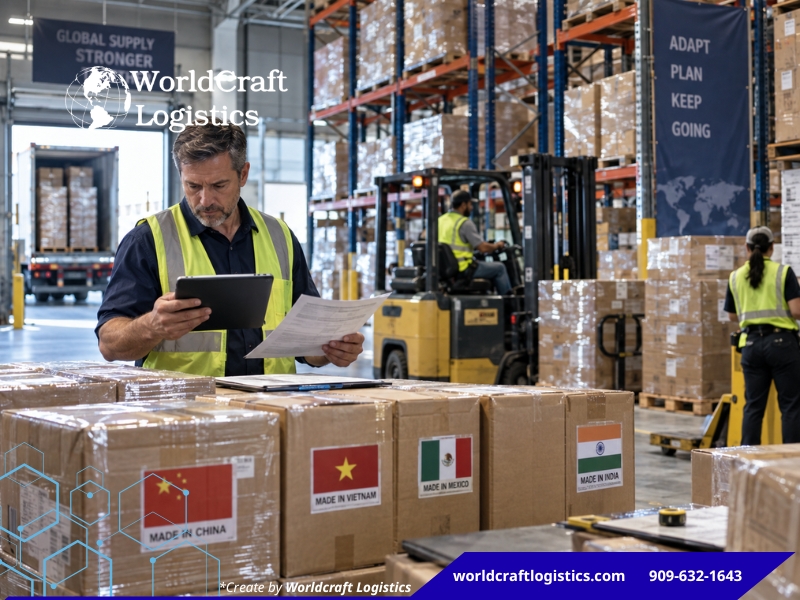
One of the clearest lessons from recent U.S. trade policy is that having a free trade agreement does not automatically guarantee permanent tariff-free access to the U.S. market.
Countries with existing trade agreements have still faced new tariff measures or additional trade requirements.
This changes the way businesses should evaluate international trade agreements.
Historically, an importer might primarily ask:
What tariff rate applies under this trade agreement?
Today, the more relevant questions may include:
For importers, tariff planning and customs compliance can no longer be separated from broader supply chain strategy.
Tariffs Rising? Here’s How Smart Logistics Companies Stay Ahead
China remains one of the most important variables in U.S. trade policy.
Recent trade arrangements have increasingly addressed concerns about Chinese overcapacity, dumping, technology transfers, export controls and the potential rerouting of Chinese products through third countries.
This creates significant implications for global sourcing.
A manufacturer may relocate final assembly from China to another country, for example, but that does not automatically mean the entire supply chain becomes independent of China.
Components, raw materials, machinery and intermediate goods may still originate in China.
That makes country of origin, substantial transformation and customs documentation increasingly important.
For logistics providers, the challenge is not simply moving cargo from Point A to Point B. It is understanding the trade environment surrounding the cargo and helping customers identify potential compliance and supply chain risks.
For U.S. importers, manufacturers and international businesses, the Canada-U.S. dispute provides several practical lessons.
Supply chain diversification has become a common response to tariff uncertainty.
However, simply moving production from one country to another may not be enough.
Businesses should examine the entire supplier network.
Where do components originate?
Where are products assembled?
Where does ownership change?
Where are goods consolidated?
Which ports are used?
Which countries are involved in customs clearance?
A diversified supply chain should reduce dependency and provide alternative routes without creating new compliance risks.
Customs compliance is increasingly connected to commercial strategy.
Incorrect classification, inaccurate country-of-origin information or insufficient documentation can create additional duties, delays, penalties and unexpected landed costs.
For companies operating across multiple countries, customs processes should therefore be reviewed alongside sourcing and transportation decisions.
This includes evaluating:
A stronger compliance process can help companies respond more quickly when trade regulations change.
When tariffs change, transportation costs are only one component of the total import expense.
Businesses should evaluate the complete landed cost, including:
Product cost + transportation + insurance + duties + tariffs + customs-related costs + warehousing + other import expenses
A sourcing strategy that appears cheaper based on manufacturing cost or ocean freight may become less competitive once tariffs and compliance costs are included.
This is why importers increasingly need visibility across transportation, customs and warehousing rather than evaluating each component separately.
The Canada-United States-Mexico Agreement provides important benefits for North American trade, including preferential market access and frameworks for customs and trade cooperation.
However, the current environment demonstrates why businesses should not treat a trade agreement as an absolute guarantee against future disruption.
Trade agreements exist within a broader political and economic environment.
Changes in U.S. trade policy, bilateral negotiations, tariff programs or relationships with third countries can still affect companies operating within North American supply chains.
For businesses dependent on cross-border trade, this means that trade agreement benefits should be viewed as one component of supply chain planning rather than the entire risk-management strategy.
Trade policy decisions can quickly translate into operational logistics problems.
A new tariff can change sourcing economics.
A new customs requirement can increase clearance time.
A change in country-of-origin treatment can alter landed costs.
A restriction on a third country can force businesses to reconsider suppliers.
And when companies react simultaneously, ports, warehouses, trucking capacity and freight networks can experience additional pressure.
This creates a direct connection between international trade policy and logistics capacity planning.
Businesses that monitor trade developments early have more opportunities to adjust inventory levels, transportation routes, supplier allocations and warehouse capacity before disruption reaches their operations.
U.S. Raises Tariffs on China to 125%, Temporarily Eases Measures for Other Nations
One of the more interesting observations from the Canada-U.S. negotiations is that trade agreements may provide businesses with time rather than permanent certainty.
A temporary agreement or tariff reduction can give companies an opportunity to:
From a business perspective, this can be valuable even when the underlying trade environment remains uncertain.
The objective is not necessarily to predict every policy decision.
It is to build a supply chain that can absorb policy changes without creating disproportionate operational or financial damage.
From a logistics industry perspective, the Canada-U.S. dispute should not be interpreted simply as a political disagreement between two neighboring countries.
It is better understood as another example of how geopolitics is becoming embedded in global supply chain management.
The traditional logistics model focused heavily on cost, speed and transportation reliability.
Those factors remain important, but modern supply chains increasingly require a fourth consideration: resilience to regulatory and trade-policy changes.
For importers and manufacturers, the practical lesson is not to choose sides in a trade dispute. It is to reduce unnecessary exposure.
Companies should understand their tariff exposure, maintain accurate customs documentation, evaluate supplier concentration, develop alternative sourcing options and maintain flexibility across transportation and warehousing networks.
At the same time, businesses should avoid overreacting to every policy announcement.
Changing suppliers or transportation routes can itself create costs, operational complexity and compliance risks. Strategic decisions should therefore be based on the actual impact on landed cost, service levels, customer demand and long-term supply chain resilience.
In other words, trade uncertainty does not necessarily require companies to completely redesign their supply chains. It requires them to understand how much flexibility they actually have.
Companies involved in U.S. imports or North American cross-border logistics can use the current environment as an opportunity to conduct a supply chain risk review.
Key questions include:
These questions can help businesses move from reactive logistics management toward a more resilient international supply chain strategy.
The most important development may not be the outcome of one individual negotiation.
The larger trend is the increasing integration of trade policy, national security, customs regulation and supply chain strategy.
Businesses should therefore pay attention to several areas:
Companies that track these developments early can make gradual adjustments rather than being forced into expensive emergency responses.
Trump’s New Policy Impact on Global Trade and Shipping
The Canada-U.S. trade dispute demonstrates that the rules governing international commerce are becoming more interconnected and, in some cases, less predictable.
For logistics-dependent businesses, the biggest risk is not necessarily a single tariff increase.
It is the possibility that several changes happen at the same time.
A tariff increase can affect sourcing.
Sourcing changes can affect transportation.
Transportation changes can affect inventory.
Inventory changes can affect warehousing.
And all of these decisions can influence the final landed cost and customer experience.
That is why supply chain resilience increasingly depends on connecting customs brokerage, international transportation, warehousing, sourcing and trade compliance into one broader strategy.
The companies best positioned for this environment may not be those that predict every policy decision correctly.
They may be the companies that have built enough flexibility to adapt when the rules change.
This article has been independently edited and rewritten for the readers of WorldCraft Logistics, with a focus on international logistics, supply chain management, customs compliance and the practical implications of evolving global trade policies. The article is intended for informational purposes and does not represent the position of any government, political organization or individual party.

SEO
Digital Marketing/SEO Specialist
Simon Mang is the SEO and Digital Marketing Specialist at Worldcraft Logistics, where he leads content strategy to promote the company's online presence. With years of experience in digital marketing and a strong understanding of the logistics industry, he has published more than 500 specialized articles across freight, warehousing, and supply chain topics. ( Reviewed for accuracy by the Worldcraft Logistics Operations Team ).