06/16/2026
California warehousing costs vary more than most importers expect and the difference is rarely explained upfront. A rate sheet from a Southern California 3PL might show $22 per pallet per month. By the time the first invoice arrives, the actual cost per pallet is closer to $31, once minimum charges, receiving fees, and accessorial surcharges are applied.
This guide breaks down every line item B2B importers should understand before signing with a California 3PL warehouse, from pallet storage rates across all major California markets to the hidden fees that inflate monthly invoices by 20 to 35 percent. Whether you are evaluating facilities near the Port of LA, Long Beach, or the Port of Oakland, the numbers in this guide apply directly to your decision.KEY TAKEAWAYS
Ask any importer who has warehoused in both Dallas and Ontario what surprised them most, and the answer is rarely the pallet rate. It is how many line items show up on the California invoice that never appeared in Texas.
Three market conditions specific to California create a cost floor that no amount of negotiation can eliminate.
Industrial land in Southern California is structurally scarce. The Inland Empire, Ontario, Fontana, Rialto, sits between two mountain ranges and the urban sprawl of Los Angeles. There is a finite amount of land zoned for large-format industrial use, and absorption rates have outpaced new supply for most of the past decade. When a 3PL signs a lease renewal in Ontario at $1.20 per square foot NNN, that cost becomes your pallet rate. It has nothing to do with the quality of the service; it is geography.
The Los Angeles metro and Bay Area carry some of the highest warehouse wage floors in the country, and turnover costs in tight labor markets push effective hourly rates higher than posted minimums suggest. Pick and pack at a California 3PL costs more per order than the same operation in Memphis or Savannah, not because California operators are less efficient, but because the labor input costs more before the first carton is touched.
The Port of LA and Long Beach combined move roughly 40 percent of all US containerized imports. That volume concentration means warehouse space within 30 miles of those terminal gates is perpetually in demand. Vacancy rates in port-adjacent submarkets like Cerritos and Carson regularly run below 3 percent. Low vacancy means landlords set terms, and 3PLs absorb those terms into your storage rate.
None of this means California warehousing is the wrong decision. For freight entering through LA or Oakland, the alternative trucking containers to Nevada or Arizona for storage adds drayage distance that frequently costs more than the California rate premium it was supposed to avoid. The question is not whether California costs more in isolation. It is whether the total supply chain cost, including drayage, outbound freight, and distribution reach, is lower with a California facility in the network.
That calculation starts with knowing exactly what California warehousing costs are, broken down by market and by fee category.
The table below covers all major California warehousing markets relevant to B2B importers, from port-adjacent SoCal facilities to Central Valley bulk storage options.
| Market | Region | Nearest Port | Pallet Rate / Month | Min Monthly Charge | Best For |
|---|---|---|---|---|---|
| Los Angeles City | SoCal | Port of LA/LB | $30–$42 | $1,000–$2,000 | Urban last-mile, premium |
| Cerritos | SoCal | Port of LA/LB | $28–$35 | $800–$1,500 | Fast turns, SoCal distribution |
| Carson / Compton | SoCal | Port of LA/LB | $26–$33 | $700–$1,200 | Port-adjacent, similar to Cerritos |
| Ontario | Inland Empire | Port of LA/LB | $18–$25 | $500–$1,000 | High-volume storage, lower cost |
| Fontana / Rialto | Inland Empire | Port of LA/LB | $17–$24 | $500–$900 | Bulk storage, large SKU count |
| Union City | NorCal | Port of Oakland | $22–$30 | $600–$1,200 | Bay Area distribution |
| Tracy / Stockton | Central Valley | Port of Oakland | $15–$22 | $400–$800 | NorCal bulk, lowest NorCal rates |
| Sacramento | NorCal | Port of Oakland | $18–$26 | $500–$1,000 | NorCal regional distribution |
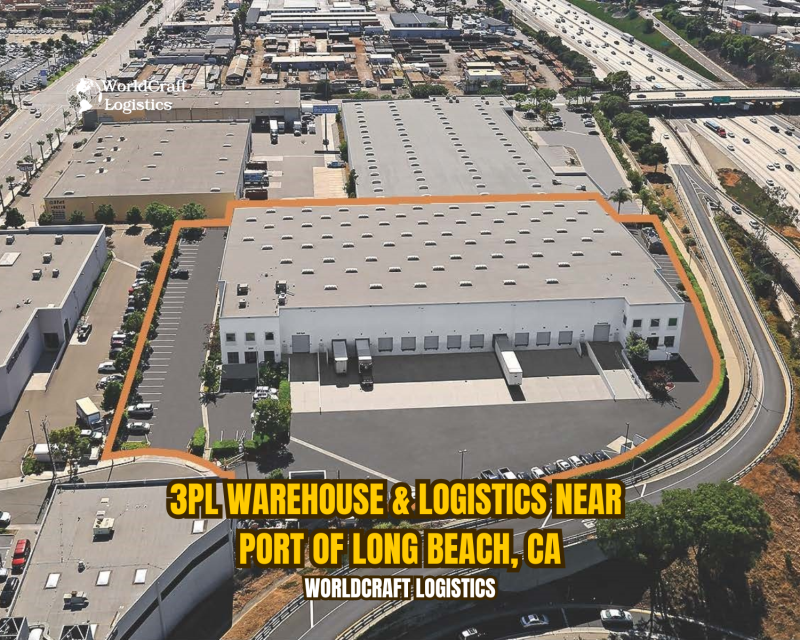
Rates reflect 2026 market ranges for standard pallet racking at ambient temperature. Refrigerated, hazmat-rated, and bonded storage carries additional premiums. Worldcraft Logistics operates facilities in Ontario, Cerritos, and Union City. See the location pages for current rate details.
Pallet storage is only one component of your California 3PL warehouse costs. The following fee categories appear on most California 3PL invoices. Understanding each before signing protects you from invoice shock in month two.
Receiving fees are charged when your freight arrives at the warehouse. California 3PLs typically charge in one of three ways:
Per carton: $2.00–$5.00 per carton. Common for importers shipping loose case quantities.
Per pallet: $8.00–$15.00 per pallet. More predictable for palletized ocean freight.
Per container: $150–$350 per container for full container unloading (floor-loaded). Higher than palletized because of the manual labor involved.
If your supplier ships loose cartons on ocean freight, the per-carton rate can add up fast. A 40-foot container with 800 loose cartons at $3.50 each equals $2,800 in receiving fees alone. Negotiate per-container pricing if you move consistent full container loads.
Pick and pack costs in California are charged either per order or per unit, or a combination of both:
Per order base fee: $2.50–$5.00 per order
Per unit fee: $0.20–$0.50 per unit picked
Per carton outbound: $1.00–$2.50 per carton shipped
For B2B importers fulfilling wholesale purchase orders rather than individual consumer orders, confirm whether the 3PL charges per PO line or per unit. High-SKU, low-unit orders cost more per shipment than bulk single-SKU orders, and California labor rates make this difference more pronounced than in lower-cost markets.
Rework is billed per unit or per hour. California warehouse labor rates in 2026 run $45–$65 per hour for rework projects.
FNSKU labeling (FBA): $0.15–$0.30 per unit. Required if shipping to Amazon fulfillment centers.
Re-labeling or relabeling: $0.10–$0.25 per unit for basic sticker application.
Repackaging or kitting: $0.50–$2.00 per unit, depending on complexity.
Compliance rework: Billed hourly if not quoted per unit. Always request a per-unit quote upfront.
Accessorial fees are the most common source of invoice inflation in California 3PL billing. These are legitimate charges, but they are rarely spelled out clearly in initial rate quotes.
Fuel surcharge: Typically 5–12% of the outbound freight invoice. Fluctuates quarterly.
Liftgate delivery fee: $75–$150 per delivery if the receiving location has no loading dock.
Appointment scheduling fee: $25–$75 per delivery requiring a time-specific appointment.
Detention fee: Charged if a container is not picked up from the warehouse within the agreed window, typically $75–$150 per hour after the free period.
Special project fee: Billed hourly ($45–$65) for any task not covered in the standard rate sheet, sorting, counting, photography, etc.
Most California 3PL contracts include an annual rate increase clause allowing the provider to raise rates by a fixed percentage each year. In California, this increase typically runs 3–5%. Some contracts allow increases up to 8% with as little as 30 days notice.
Before signing, negotiate two terms: a cap on the maximum annual increase percentage and a minimum 90-day advance notice requirement. Both are standard asks that reputable California 3PLs will accommodate.
These fees are not always disclosed in initial rate negotiations. They are the primary reason actual California warehousing costs run higher than the rate sheet suggests.
Minimum monthly charge: A floor charge applied regardless of actual volume. If your inventory moves slowly or you have a quiet month, you pay the minimum anyway. California minimums range from $400 to $2,000, depending on the facility and location.
Long-term storage surcharge: Many California 3PLs apply an additional fee for pallets stored beyond 60 or 90 days. This can run $5–$15 per pallet per month on top of the base storage rate.
Account setup fee: A one-time charge of $200–$500 to configure your account in the WMS, set up EDI connections, and onboard your SKUs. Not always disclosed upfront.
Inventory count fee: Charged for physical inventory counts, typically conducted biannually. Some California 3PLs charge $150–$400 per count regardless of SKU count.
Special project fee: Any request outside the standard service menu is billed hourly with no cap. This is the most common source of unexplained charges on California 3PL invoices.
Inbound appointment fee: Some facilities charge $50–$100 to schedule inbound container appointments, separate from the receiving fee.
Before signing with any California 3PL, ask these six questions directly:
Is there a minimum monthly charge, and what triggers it?
Do you charge a long-term storage fee, and after how many days?
Is there an account setup or onboarding fee?
Do you conduct inventory counts, and is there a charge?
How are special projects billed, and is there a cap?
What is your annual rate increase policy?
The only reliable way to compare 3PL warehouse costs in California across multiple providers is to apply your actual volumes to each provider's full rate structure. Here is the formula:
An importer storing 50 pallets, receiving 200 cartons per month, fulfilling 80 B2B orders averaging 10 units each, and labeling 500 units for FBA would see the following cost range across three California markets:
| Cost Component | Cerritos | Ontario | Union City |
|---|---|---|---|
| 50 pallets storage | $1,400–$1,750 | $900–$1,250 | $1,100–$1,500 |
| 200 cartons receiving | $400–$1,000 | $400–$1,000 | $400–$1,000 |
| 80 orders pick & pack | $200–$400 | $200–$400 | $200–$400 |
| 800 units picked | $160–$400 | $160–$400 | $160–$400 |
| 500 units FBA labeled | $75–$150 | $75–$150 | $75–$150 |
| Estimated accessorials | $150–$300 | $100–$200 | $120–$250 |
| ESTIMATED TOTAL | $2,385–$4,000 | $1,835–$3,400 | $2,055–$3,700 |
*This sample illustrates why Ontario CA regularly wins on 3PL warehouse cost for high-volume importers despite higher drayage from the port. For importers with 30+ containers per month, the pallet storage savings at Ontario scale faster than the drayage premium.
Is California 3PL warehousing worth the cost premium compared to Nevada, Texas, or Georgia? The answer depends entirely on where your freight enters the US and where your customers are.
Your freight arrives via Port of LA, Long Beach, or Port of Oakland drayage to an in-state facility is lower than drayage to a Nevada or Arizona inland hub
Your primary distribution geography is California, the Pacific Northwest, or the western US shipping costs from a California 3PL to your customers are lower than shipping from Texas or Georgia
You sell on Amazon and need proximity to Amazon fulfillment centers in the Inland Empire or Bay Area for faster inbound processing
Your product requires FDA-registered storage. California has a high concentration of compliant facilities
Your freight enters via East Coast or Gulf ports and is distributed primarily to Midwest or East Coast customers
You are moving extremely high volumes where Nevada or Arizona warehouse rates ($12–$18 per pallet) justify the additional drayage
Your operation requires temperature-controlled storage at a large scale. Alternative markets offer more competitive cold storage rates
For most B2B importers shipping through California ports, the combination of drayage savings and distribution reach makes California warehousing cost-effective despite the base rate premium. The Top 15 Warehouses in California guide covers specific facility options across all markets if you need to compare providers directly.

SEO
Digital Marketing/SEO Specialist
Simon Mang is the SEO and Digital Marketing Specialist at Worldcraft Logistics, where he leads content strategy to promote the company's online presence. With years of experience in digital marketing and a strong understanding of the logistics industry, he has published more than 500 specialized articles across freight, warehousing, and supply chain topics. ( Reviewed for accuracy by the Worldcraft Logistics Operations Team ).