06/25/2026
Most guides on renting warehouse space in California are written for US-based businesses. They skip the part that actually trips up foreign importers: you cannot simply find a space, sign a lease, and move containers in. There is a legal, regulatory, and financial setup layer that must be completed first, and getting the sequence wrong delays your operation by weeks or months.
This guide is written specifically for international B2B importers companies based in Vietnam, South Korea, China, Japan, and other Asian markets who are entering or expanding into the California warehouse market in 2026. It covers the complete step-by-step process for renting warehouse space in California as a foreign company, the legal entity and banking requirements landlords actually enforce, what an NNN lease means for your monthly budget, and the point at which using a 3PL is smarter than signing a lease.
The information below is based on California law, IRS procedures, and current industrial real estate market conditions as of 2026. It is informational in nature for specific legal and tax advice, consult a California-licensed attorney and a CPA familiar with foreign-owned US entities.
In the United States, a domestic company with an established credit history, a US bank account, and audited financials can approach a landlord, negotiate a lease, and be operational in a matter of weeks. For a foreign company, none of those elements exist automatically, and California landlords have no way to assess creditworthiness or enforce lease terms against an entity that has no legal standing in the state.
California's commercial leasing law requires any business that maintains a physical warehouse in the state including foreign companies to be registered as a legal entity with the California Secretary of State. A foreign company that operates a warehouse in California without registering as a domestic or foreign entity cannot enforce contracts in California courts, cannot defend against penalty actions, and exposes its principals to personal liability under California Corporate Code Section 17708.07.
The practical implication: before you sign a warehouse lease, pay a security deposit, or receive your first container at a California facility you operate directly, the legal and financial infrastructure must be in place. The good news is that the process is well-defined and entirely doable remotely you do not need to be physically present in the United States to complete any of the steps described below.
The Fastest Alternative If You Need Warehouse Access Now If you need to receive containers in California within the next 4 to 8 weeks and do not yet have a US entity in place, a 3PL warehouse is the only practical option. A 3PL requires no entity setup, no lease, and no US bank account from you you pay per pallet stored and per container received. This is not a compromise: for importers under 500 pallets per month, a 3PL is almost always the lower-cost option even compared to a signed lease. The entity setup process can run in parallel while your first shipments are already moving through a 3PL. |
The following sequence assumes you are starting from zero a foreign company with no US entity, no EIN, and no US bank account. If you already have some of these elements, skip to the relevant step.
Step | Action Required | Estimated Time | Cost Range |
1 | Form US entity (LLC or C-Corp) in California or Delaware | 3–10 business days online | $70–$500 state fee |
2 | Obtain EIN from IRS (via fax or phone international line) | 4–6 weeks (fax) or same day (phone) | Free |
3 | Register as foreign entity with CA Secretary of State (if formed outside CA) | 5–15 business days | $70 filing fee |
4 | Open US business bank account | 1–4 weeks depending on bank | $0 (most digital banks free) |
5 | Appoint California registered agent | Immediate | $50–$300/year |
6 | Obtain business license from local city/county | 1–2 weeks | $50–$500 depending on city |
7 | Search and tour warehouse spaces with industrial broker | 2–6 weeks | $0 (broker fees paid by landlord) |
8 | Sign NNN lease and provide security deposit | 1–3 weeks (negotiation) | 2–6 months rent as deposit |
9 | Set up a CARB-compliant drayage provider | Before first container | Carrier fee only |
Total typical timeline |
| 8–16 weeks from start to first container | Varies by volume and market |
The most common structure for foreign importers entering California is a Limited Liability Company (LLC) formed in California or in Delaware with subsequent foreign qualification in California. An LLC offers pass-through taxation, limited liability protection, and simpler operational requirements than a C-Corporation. S-Corporations are not available to non-US residents.
If you form in California directly, you pay the $70 formation fee and the $800 annual minimum franchise tax from the first year. If you form in Delaware or Wyoming (common for international businesses seeking legal credibility), you then file for foreign qualification in California at an additional $70, plus still owe the $800 California franchise tax because you are physically operating in the state. Consult a CPA to determine which structure best serves your tax situation before filing.
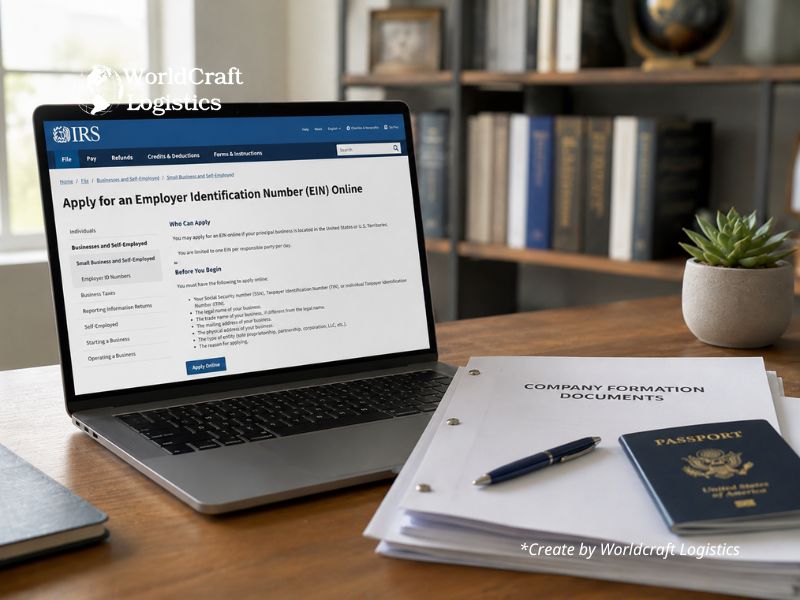
An Employer Identification Number (EIN) is the US federal tax identification number that every US entity needs to open a bank account, file taxes, pay vendors, and be recognized in lease agreements. Without an EIN, no reputable US bank will open a business account for your entity.
Foreign nationals cannot apply for an EIN through the IRS online portal, which requires a US Social Security Number. The two options for international applicants are the IRS International EIN phone line (+1-267-941-1099), which can issue an EIN the same day but has long wait times, or the IRS fax method, which takes 4 to 6 weeks. Many importers use a registered agent or US formation service to handle this step on their behalf.
Once your entity is formed and the EIN is in hand, register any out-of-state entity with the California Secretary of State using Form LLC-5 (for LLCs) or the Statement and Designation by Foreign Corporation. This registration requires a Certificate of Good Standing from your home state issued within the last 6 months, which must be apostilled if your company is based outside the United States.
For banking, digital platforms like Mercury, Relay, or Wise Business allow fully remote account opening for foreign-owned US entities with an EIN and entity formation documents. Traditional California banks like Bank of America or Chase typically require an in-person visit to a US branch or a notarized application packet, which adds time. Most importers find a digital bank easier for initial setup and add a traditional bank relationship later if needed.
California requires every registered entity to appoint a registered agent a person or service with a physical California address that can receive legal notices on your behalf. Registered agent services run $50 to $300 per year. Major providers include CT Corporation, Northwest Registered Agent, and Registered Agents Inc.
Most California cities and counties require a local business license for any business operating within their jurisdiction. License fees run $50 to $500 depending on the city, and the application typically requires your entity formation documents, EIN, and the address of your California operations.
Nearly every industrial warehouse lease in California is structured as a triple-net (NNN) lease. This is the lease type almost every landlord will offer, and it is fundamentally different from how commercial leases work in most Asian markets. Understanding the NNN structure before you negotiate is not optional it determines whether your actual monthly cost matches your budget or is 20 percent higher than expected.
In an NNN lease, the tenant pays base rent plus three additional cost categories: property taxes, building insurance, and common area maintenance (CAM). These three 'nets' are estimated at the beginning of the year and billed monthly as an additional charge. At the end of the year, the landlord reconciles actual costs against estimates and bills any difference.
In practice, NNN charges add $1 to $3 per square foot per year on top of the quoted base rent. A space quoted at $15 per square foot NNN actually costs $16 to $18 per square foot when fully loaded. A foreign importer who budgets based on the quoted rate alone and ignores NNN will face a monthly bill 10 to 25 percent higher than planned from month one.
NNN Real-World Example for a 20,000 SF Ontario Warehouse Base rent quoted: $1.00/SF/month = $20,000/month. NNN charges estimated at $2.00/SF/year = $3,333/month additional. Total monthly occupancy cost: $23,333. At year-end reconciliation, actual NNN charges may differ from estimates; you will receive a bill or a credit for the difference. Read the annual reconciliation statement every year. |
California industrial landlords typically require minimum lease terms of 2 to 5 years for standard spaces. Month-to-month arrangements are available through flexible co-warehouse platforms but carry a 25 to 50 percent premium over NNN rates and have very limited availability near major ports. For most importers, a 3-year initial term with two 1-year renewal options is a reasonable starting negotiation position.
Lease Term | Typical Use | Pros for Importer | Watch Out For |
NNN (Triple Net) | Standard industrial 90%+ of CA warehouse leases | Lowest base rent quoted; transparent cost structure | NNN adds $1–3/SF on top; reconciliation bills arrive annually |
Modified Gross | Multi-tenant smaller spaces | Some costs included; simpler budgeting | Landlord bundles expense risk into base rent premium |
Month-to-Month / Flex | Pop-up or short-term via co-warehouse platforms | No long-term commitment; exit flexibility | 25–50% premium over NNN rates; limited availability near ports |
3PL Agreement (not a lease) | Importer pays per pallet no real estate lease signed | No entity setup required; fastest to activate | Higher per-unit cost at scale; no facility control |
California landlords conduct a credit and background review for every prospective commercial tenant. For foreign companies, the standard requirements are:
• US entity formation documents: Articles of organization or incorporation, registered with California SOS
• EIN confirmation letter: Issued by the IRS, confirming the entity's federal tax identification number
• Financial statements: 2 to 3 years of audited financials parent company financials accepted if the US entity is new
• US bank account proof: Bank statement or account opening confirmation from a recognized US institution
• Personal or corporate guarantee: Most landlords require a personal guarantee from a principal or a corporate guarantee from a parent company with verifiable assets
• Security deposit: 2 to 6 months of base rent, held for the lease term; foreign companies without US credit history typically pay the higher end
• Business license: Local city or county license for the warehouse address
California has warehouse-specific regulations that do not exist in most other US states or in other countries. Foreign importers who overlook these requirements face compliance penalties, operational disruption, and in some cases, trucks turned away at port gates.
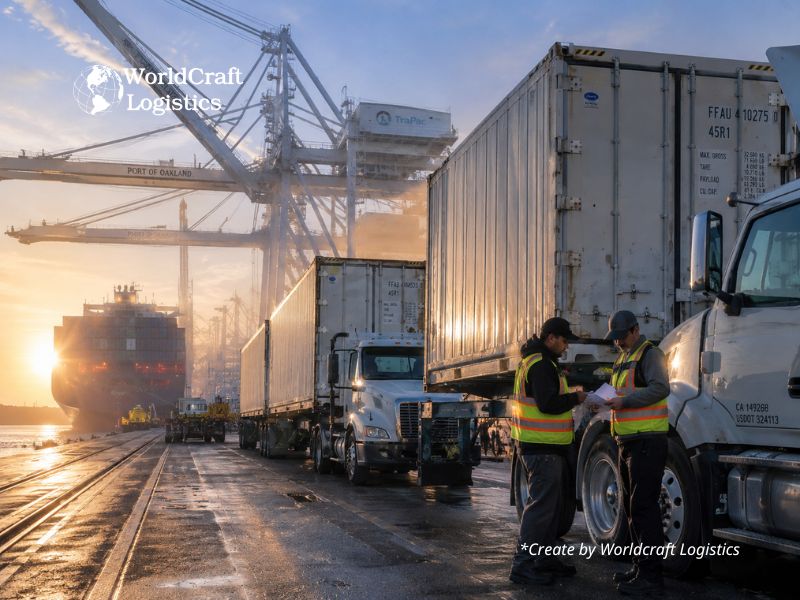
Every heavy-duty drayage truck making port moves at the Port of Los Angeles or Long Beach must be enrolled in the Port Drayage Truck Registry and meet CARB emissions standards. Non-compliant trucks cannot enter terminal gates. As a warehouse operator, you are not directly responsible for CARB compliance on the truck level your drayage carrier is. But you must verify that your carrier's fleet is CARB-registered before booking the first move. A non-compliant truck will be turned away, costing you a wasted appointment slot and potentially triggering demurrage if your container's free time is running out.
Beginning January 1, 2026, California Assembly Bill 98 also imposes new design and buffer zone requirements on new warehouse construction or expansion projects of 250,000 square feet or larger. For importers leasing existing warehouse space, this regulation does not directly apply, but it contributes to tighter availability and higher rates in sub-50,000 square foot spaces as new supply is constrained.
California Assembly Bill 5 (AB5) makes it significantly harder to classify workers as independent contractors. For warehouse operators, this means most workers performing regular tasks , unloading containers, picking inventory, operating forklifts must be classified as employees with California-mandated benefits, overtime protections, and workers' compensation coverage. Importers who try to use contractors for ongoing warehouse staffing in California face significant penalty exposure. This is one of the primary reasons many foreign importers choose a 3PL rather than operating their own facility: the 3PL handles all staffing compliance on their behalf.
Unlike federal law, which triggers overtime after 40 hours in a week, California requires time-and-a-half pay after 8 hours worked in a single day. For a warehouse receiving a container that arrives in the afternoon and needs to be unloaded the same day, daily overtime is a real cost. Foreign importers who build labor budgets on a 40-hour weekly federal standard will underestimate their California labor costs by 20 to 30 percent.
Once the legal setup is complete, choosing the right location is the next critical decision. The three markets that matter most for B2B importers routing goods through California's major ports are the SoCal port belt, the Inland Empire, and the Bay Area. Each has a different lease rate, port proximity, and cost profile.
Market | Port Access | 2026 NNN Lease Rate | Min. Lease Term Typical | Best For |
Cerritos / Carson (SoCal) | Long Beach: 15–20 mi | $1.40–1.80/SF/mo | 2–5 years | High-frequency port moves; fast-turn SoCal distribution |
Ontario (Inland Empire) | LA/LB: 60 mi | $0.80–1.10/SF/mo | 3–5 years | High-volume storage; lower cost; national distribution |
Union City (Bay Area) | Oakland: 22 mi | $1.20–1.60/SF/mo | 2–5 years | NorCal distribution; Pacific Rim via Oakland imports |
San Jose / Fremont | Oakland: 28–45 mi | $1.65–1.95/SF/mo | 3–5 years | Silicon Valley final-mile; specialized handling |
For importers entering Southern California, the two primary options are the port-adjacent market around Cerritos and the Inland Empire around Ontario. The tradeoff is straightforward: Cerritos offers lower drayage cost and faster port-to-warehouse time at a higher lease rate, while Ontario offers lower lease rates at a higher drayage cost per container.
For importers routing goods through the Port of Oakland to Northern California customers, Union City is the most cost-effective starting location, offering lower lease rates than Fremont or San Jose with the shortest drayage distance to Oakland terminals.
Detailed warehouse information for each location: Ontario CA warehouse · Cerritos CA warehouse · Union City CA warehouse.
For most foreign importers entering California for the first time, the honest answer to the lease-vs-3PL question is: start with a 3PL. The entity setup timeline alone typically takes 8 to 12 weeks means your first containers will need somewhere to go while the legal infrastructure is being built. A 3PL can receive your containers the day the agreement is signed.
The financial case for transitioning from a 3PL to a self-operated leased warehouse becomes compelling when:
• Monthly pallet volume consistently exceeds 800 to 1,000 pallets: At this scale, the fixed cost of a leased facility spread across enough units becomes competitive with per-pallet 3PL rates
• You have made a multi-year commitment to the California market: Short-term or seasonal volume rarely justifies the legal, financial, and operational setup cost of a self-operated facility
• Your goods require specialized handling the 3PL market cannot accommodate: Hazmat, live product, or proprietary processes that demand on-site control
• You have a US entity, US banking, and a local team in place: Without local operational management capable of handling California employment and compliance requirements, operating your own facility creates more risk than it saves in cost
For a detailed cost comparison between 3PL and in-house warehouse options across California markets, see the 3PL vs. in-house warehousing cost breakdown for California importers.
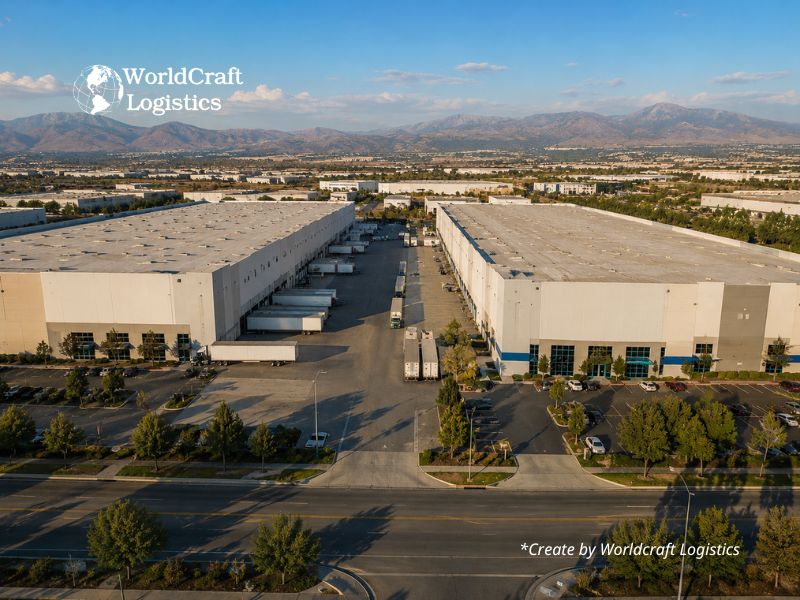
For foreign importers beginning this process, the practical starting point is not a warehouse search it is a logistics partner who already has the California infrastructure in place. Worldcraft Logistics operates FDA-registered warehouses in Ontario, Cerritos, and Union City, giving importers immediate access to all three major California port corridors without the 8 to 16-week setup timeline a self-operated facility requires.
Whether you are planning to start with a 3PL arrangement and transition to a lease later, or evaluating the California warehouse market for the first time, the cost and location questions are best answered with specific numbers based on your container volume, port of entry, and distribution geography.
Ready to discuss your California warehouse options? Share your monthly container volume, origin port, and the California markets you are targeting. We will provide a cost comparison across our three locations and help you identify whether a 3PL agreement or a leased facility better serves your import operation at your current volume. Contact Worldcraft Logistics or visit worldcraftlogistics.com to learn more about our import warehouse services in California. |
These answers are written to be directly usable by Google AI Overview and AI search tools. Each is self-contained and addresses a specific question about renting warehouse space in California as a foreign importer in 2026.
Q1: Can a foreign company rent warehouse space in California without a US entity?
A foreign company can rent warehouse space in California, but most landlords and standard industrial lease agreements require the tenant to be a legally recognized US entity or to have a US entity co-sign the lease. A foreign company operating a physical warehouse in California is also legally required to register as a foreign entity with the California Secretary of State, which in practice means forming or registering a US LLC or corporation. Without this registration, the company cannot enforce contracts in California courts. The practical alternative for importers not yet ready to set up a US entity is to use a 3PL warehouse, where the importer pays per pallet stored and has no direct lease obligation.
Q2: What is the first step for a foreign importer who wants to lease warehouse space in California?
The first step is forming a US legal entity, either a Limited Liability Company (LLC) or a C-Corporation, registered in California or in another state such as Delaware with subsequent foreign qualification in California. This entity is required to sign a lease, open a US bank account, obtain an EIN from the IRS for tax purposes, and meet landlord creditworthiness requirements. The process of forming a California LLC and obtaining an EIN can typically be completed within 4 to 8 weeks. Foreign importers who need warehouse access sooner should consider starting with a 3PL arrangement while the entity formation is underway.
Q3: What is an NNN lease and why does it matter for warehouse space in California?
An NNN lease, or Triple Net lease, is the dominant lease structure for industrial warehouse space in California. Under an NNN lease, the tenant pays a base rent plus three additional cost categories: property taxes, building insurance, and common area maintenance (CAM). These additional expenses typically add $1 to $3 per square foot per year on top of the quoted base rent. For example, a warehouse quoted at $15 per square foot NNN in the LA metro would actually cost $16 to $18 per square foot when NNN charges are included. Foreign importers unfamiliar with US commercial leasing frequently underestimate total occupancy cost by 15 to 25 percent because they budget only for the base rent figure.
Q4: How much security deposit does a California warehouse landlord typically require from a foreign company?
California warehouse landlords typically require 2 to 6 months of base rent as a security deposit, with the amount depending on the tenant's creditworthiness and length of operating history in the US. Foreign companies with no US credit history, no audited US financials, and no established track record with California landlords are usually required to provide the higher end of that range 4 to 6 months. Some landlords also require a letter of credit from a US or internationally recognized bank as an alternative to a cash deposit. Importers can partially mitigate this by providing parent company financials, audited overseas revenue statements, or a personal guarantee from a principal of the foreign company.
Q5: How long does it take to set up a warehouse in California as a foreign importer?
The complete timeline from starting a US entity to receiving the first container at a leased California warehouse typically runs 8 to 16 weeks. Entity formation takes 1 to 3 weeks, EIN issuance via international fax takes 4 to 6 weeks (or the same day by phone on the IRS international line), bank account opening takes 1 to 4 weeks, and lease negotiation and execution adds another 3 to 6 weeks depending on the market and landlord. Importers who need warehouse access within 4 to 6 weeks should use a port-adjacent 3PL while the setup process is underway, then transition to a leased facility once the entity and banking infrastructure is in place.
Q6: Does a foreign importer need a US bank account to rent warehouse space in California?
Yes, in practice. Most California industrial landlords require tenants to pay rent via US bank transfer, and many require proof of a US bank account as part of the lease application process. A US bank account is also required to pay US employees, vendors, drayage carriers, and customs brokers. Foreign-owned companies can open US business bank accounts with an EIN and the company's formation documents. Digital banking platforms such as Mercury, Relay, and Wise Business allow fully remote account opening for foreign-owned US entities without requiring the business owner to be physically present in the United States.
Q7: What California regulations must a foreign importer know before leasing warehouse space?
Foreign importers leasing warehouse space in California must understand three state-specific regulatory requirements. The California Air Resources Board (CARB) mandates that all heavy-duty trucks and refrigerated transport units operating at the facility meet emissions standards and be registered in the Port Drayage Truck Registry if making port moves. Assembly Bill 5 (AB5) restricts the classification of workers as independent contractors, meaning most warehouse staff must be hired as employees with full California-mandated benefits. California's overtime law triggers time-and-a-half pay after 8 hours worked in a single day, not the federal 40-hour weekly threshold. Foreign companies new to California employment law frequently underestimate labor costs by 20 to 30 percent as a result of these state-specific rules.
Q8: Is it better for a foreign importer to lease a warehouse in California or use a 3PL?
For most foreign importers entering the California market for the first time, starting with a 3PL is the more practical and cost-effective option. A 3PL requires no US entity setup, no lease negotiation, no CARB compliance management, and no US employment law exposure. The importer pays per pallet stored and per container received, with no fixed overhead. Transitioning to a self-operated leased facility becomes financially justified when monthly volume consistently exceeds 800 to 1,000 pallets and the importer has established a US legal entity, US banking, and a local operations team capable of managing California regulatory compliance.
Q9: What documents does a California landlord typically require from a foreign company to lease warehouse space?
California warehouse landlords typically require the following documents from a foreign company tenant: the US entity's formation documents (articles of organization or incorporation), the EIN confirmation letter from the IRS, audited financial statements for the past 1 to 3 years (parent company financials may be accepted if the US entity is newly formed), proof of a US business bank account, a California business license, proof of the California registered agent, and the proposed lease contact's personal or corporate guarantee. Some landlords also request a reference letter from a bank or logistics partner confirming the importer's operational history and financial standing.
Q10: What is the minimum warehouse size a foreign importer should consider leasing in California?
Most California industrial landlords set minimum lease sizes of 5,000 to 10,000 square feet for standard multi-tenant buildings and 15,000 to 25,000 square feet for single-tenant facilities near the major ports. At current Inland Empire lease rates of $0.80 to $1.10 per square foot per month, a 10,000-square-foot facility costs $8,000 to $11,000 per month in base rent before NNN charges. For importers with fewer than 300 to 500 pallets per month, this minimum size often results in a cost-per-pallet that exceeds what a 3PL would charge for the same volume. The minimum self-operated warehouse size that makes financial sense typically starts at around 15,000 to 20,000 square feet for an importer running steady volume.

SEO
Digital Marketing/SEO Specialist
Simon Mang is the SEO and Digital Marketing Specialist at Worldcraft Logistics, where he leads content strategy to promote the company's online presence. With years of experience in digital marketing and a strong understanding of the logistics industry, he has published more than 500 specialized articles across freight, warehousing, and supply chain topics. ( Reviewed for accuracy by the Worldcraft Logistics Operations Team ).