06/08/2026
Most importers entering the California market make the same calculation mistake. They look at warehouse lease rates, see a number they can work with, and move forward. What they miss are the six or seven additional cost layers that only surface after the lease is signed: labor, CARB compliance, daily overtime rules, equipment, and a drayage bill that fluctuates every time port congestion spikes.
This guide is written specifically for B2B importers shipping goods into California from Asia, Vietnam, Korea, or other Pacific Rim origins. It is not a general comparison of logistics models. It is a line-by-line cost examination of what it actually costs to run an in-house warehouse in California versus what a 3PL warehouse in California costs in 2026, with real numbers, by location, and without the usual industry vagueness.
If you are currently shipping two or more containers per month into Southern California or the Bay Area and are weighing whether to build your own operation, these numbers will help you make that decision clearly.
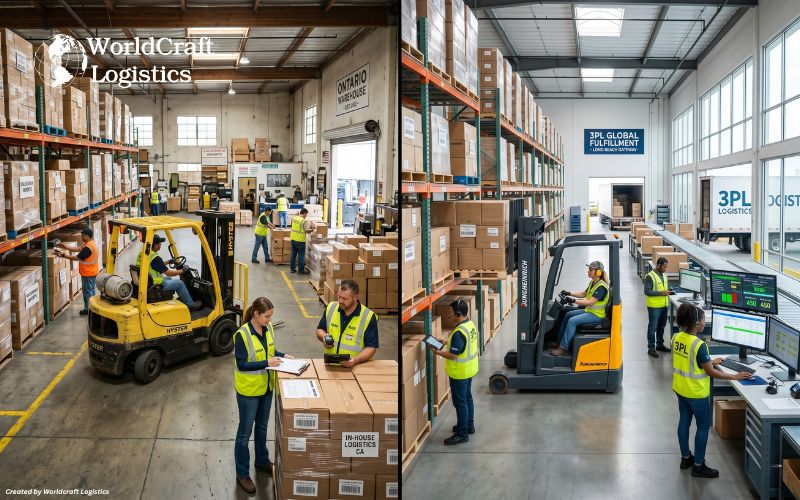
California is the entry point for roughly 40 percent of all containerized imports into the United States. The San Pedro Bay complex, the combined Port of Los Angeles and Port of Long Beach, cleared over 20 million TEUs in 2025. Port of Oakland adds another 2.3 million TEUs, with a near-equal import-export balance that serves Northern California shippers.
This volume creates a structural advantage for importers who warehouse near the ports. It also creates a structural cost premium that does not exist in Houston, Dallas, or Chicago. Three forces drive that premium above anything you will encounter in inland markets:
*The three sub-markets that matter for importers each have different cost profiles: the SoCal port belt (Cerritos, Carson, Compton), the Inland Empire (Ontario, Riverside), and the Bay Area (Union City). Understanding those differences before committing to a location is the first financial decision, and it is not a small one.
~$18,000
~$23,000–26,000
~$1,100–3,500
~$1,600–2,400
Variable
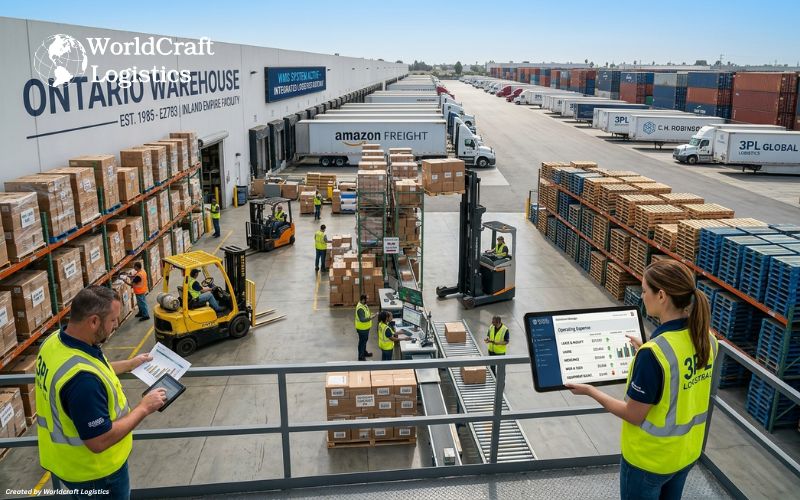
The following breakdown uses a realistic scenario: a 20,000 square foot warehouse in the Ontario area of the Inland Empire, operated by a foreign importer handling two 40-foot high-cube containers per month with approximately 300 pallets in storage at any given time. These are conservative, well-researched numbers not worst-case projections.
Inland Empire industrial lease rates in 2026 average $0.80 to $1.10 per square foot per month on a triple-net (NNN) basis. A 20,000-square-foot facility at the midpoint costs approximately $18,000 per month before NNN charges. Property taxes, building insurance, and maintenance are the three components of NNN, typically adding another $1 to $3 per square foot annually, bringing the true monthly occupancy cost to $16,000 to $22,000 per month for this space size.
For comparison, port-adjacent locations in LA proper run $15.96 per square foot annually, and Bay Area markets range from $17 to $22 per square foot. The Inland Empire is legitimately cheaper on rent, but the savings come with longer drayage distances and higher per-container transport costs, which we cover in the comparison table below.
A minimal viable warehouse operation for two containers per month requires at least two full-time warehouse workers plus a shift supervisor. At California wage levels:
Two warehouse associates at $20–21/hr: approximately $6,800 to $7,200 per month each in fully loaded cost (salary, employer payroll taxes, workers' compensation, health insurance)
One warehouse supervisor at $25–28/hr: approximately $9,500 to $11,500 per month fully loaded
Total labor baseline: $23,000 to $26,000 per month, before any overtime, which California law makes expensive
Many importers building their first US warehouse underestimate this number by 40 to 60 percent because they calculate base hourly rates without accounting for employer-side costs, which in California are meaningfully higher than the national average.
Running a warehouse requires more than four walls and people. For a 20,000-square-foot operation:
Forklift lease: $800 to $1,500 per month for a standard electric counterbalance forklift
Pallet racking installation: $50,000 to $100,000 as an upfront capital expense
Warehouse management system (WMS): $300 to $2,000 per month, depending on feature set and user count
Dock equipment, safety gear, first-year licensing: $5,000 to $15,000 in initial setup costs
An in-house warehouse in the Inland Empire sits 60 or more miles from the Port of Long Beach. That distance carries a meaningful drayage cost. Current rate benchmarks for a standard 40-foot container from LA/Long Beach to the Inland Empire run $800 to $1,200 per container, compared to $350 to $500 for port-adjacent locations in Carson, Compton, or Cerritos. On two containers per month, that gap alone represents $700 to $1,400 in additional monthly transport expense versus a port-zone 3PL.
Beyond the base drayage rate, LA/LB moves also include the PierPass Traffic Mitigation Fee on daytime weekday moves, a CARB Clean Truck surcharge, and potential chassis split fees when chassis and container are at different locations, all of which add to the per-container cost that an in-house operator absorbs directly.
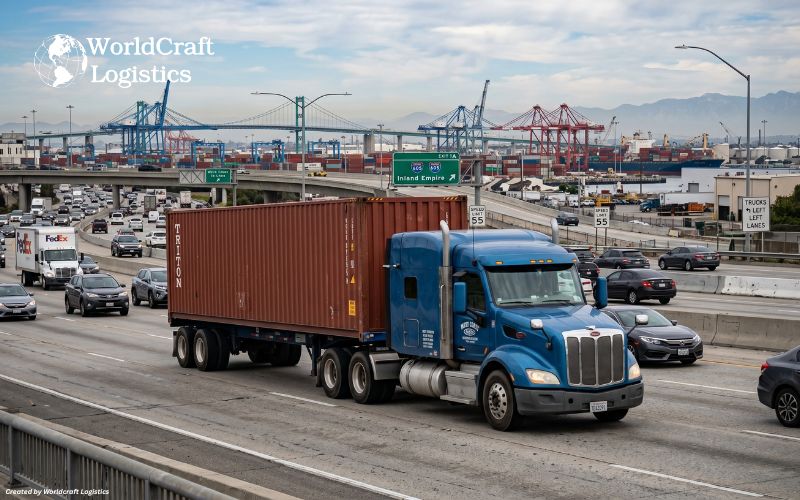
The appeal of a third-party logistics warehouse is that it converts every cost above into a variable, usage-based fee structure. You pay for the space you use, the labor you consume, and the containers you move, not for facilities and staff, whether you need them or not.
Driven by record-high industrial real estate costs near the Ports of Los Angeles, Long Beach, and Oakland, California 3PL storage rates for standard dry pallets currently range from $26 to $32 per pallet per month.
Comparison: This is roughly 40% to 70% higher than Midwest regional benchmarks.
For an inventory of 300 pallets, you can expect to pay $7,800 to $9,600 per month in pure storage fees, which remains a mere fraction of a dedicated commercial lease.
Every ocean container or truckload arriving at a West Coast 3PL triggers an inbound handling charge. Providers generally bill this in one of two ways:
Per-Pallet Rate: $28 to $50 per pallet (Best for palletized, pre-labeled shipments).
Hourly Rate: $45 to $75 per hour (Standard for floor-loaded containers requiring manual devanning).
For an importer moving two 40-foot containers per month, receiving fees typically average $1,500 to $2,800 monthly, depending heavily on how the cargo is stacked and the accuracy of the ASNs (Advance Shipping Notices).
WMS access with real-time inventory visibility and order tracking (no additional software license)
CARB-compliant drayage coordination handled by the provider
Dock scheduling and container appointment management
Labor scaling during peak months without the importer hiring or firing
AB5-compliant staffing managed entirely by the 3PL
Not every cost appears on a 3PL's marketing rate card. Before committing to a California 3PL provider, ask specifically about:
Monthly minimums: Most providers charge $1000 to $3,000 per month, regardless of actual usage, particularly relevant for importers with seasonal import patterns
Long-term storage penalties: Inventory sitting longer than 90 days often triggers additional fees of $15 to $30 per pallet per month
Peak surcharges: Q4 and the Chinese New Year season can trigger surcharges of 20 to 35 percent on standard rates
Receiving by the hour vs. per pallet: The difference can be significant if containers arrive floor-loaded or without advance shipping notices
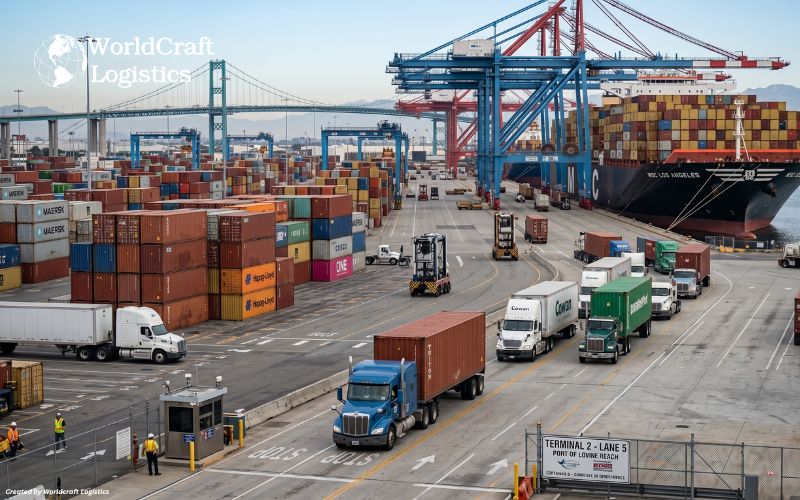
The table below models costs for an importer handling two 40-foot high-cube containers per month, approximately 300 pallets in storage, with distribution across Southern California and beyond.
| Cost Item | In-House (Ontario area) | 3PL (Port-adjacent CA) | Difference |
|---|---|---|---|
| Warehouse lease/storage | $14,000–18,000/mo (20K SF NNN) | $5,750–8,400/mo (300 pallets @ $23–28) | 3PL saves ~$8K–10K/mo |
| Labor (warehouse staff) | $12,000–16,000/mo (2–3 FTEs + benefits) | Included in the per-pallet rate | 3PL saves ~$12K–16K/mo |
| Equipment & WMS | $1,100–3,500/mo (forklift + software) | Included in contract | 3PL saves ~$1.1K–3.5K/mo |
| Drayage from port | $800–1,200/container (Inland Empire) | $350–500/container (port-adjacent 3PL) | 3PL saves $450–700/move |
| Compliance overhead | Your team handles (CARB, AB5, etc.) | Managed by 3PL | Risk shifted to 3PL |
| Estimated Monthly Total | ~$28,000–38,000+ | ~$7,500–12,000 | 3PL ~60–70% cheaper |
California's three major port-adjacent warehouse corridors each serve different import patterns. Choosing the wrong one can cost more in drayage than you save on storage, or vice versa. Here is how the three locations that matter most for importers compare:
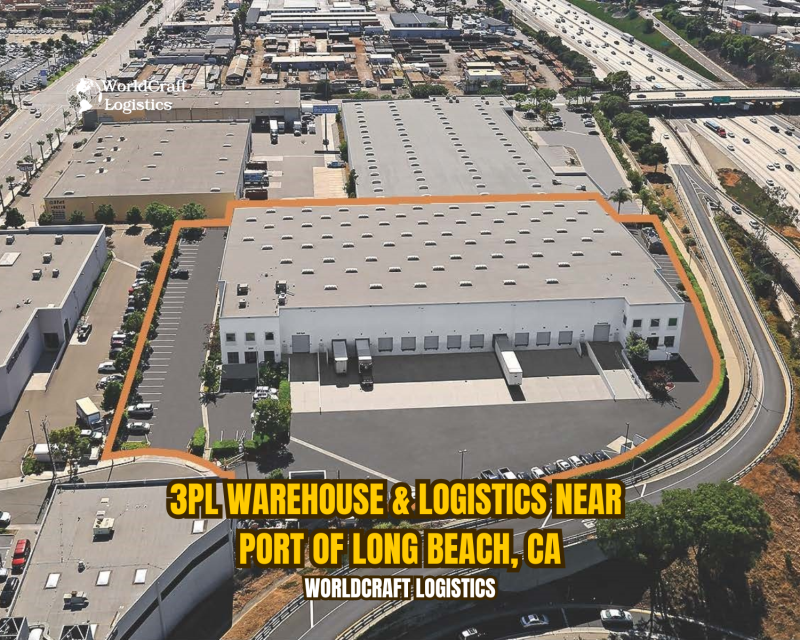
Cerritos sits in the mid-zone between the ports and the Inland Empire, close enough to Long Beach to achieve drayage costs of $350 to $500 per container, while offering warehouse rates more competitive than Carson or Wilmington. Importers who need containers cleared and processed quickly, particularly those sending goods directly to Amazon FBA or retail distribution, benefit from the shorter port-to-warehouse transit. Worldcraft Logistics' Cerritos warehouse is positioned precisely in this sweet spot for Southern California import flows.
Ontario offers the lowest lease rates in any California market with meaningful port access. At $0.80 to $1.10 per square foot per month, large-volume importers who need to stage substantial inventory find their per-pallet storage cost significantly lower than port-zone alternatives. The tradeoff is drayage distance, 60 miles from LA/Long Beach which adds cost on a per-move basis. For importers shipping in bulk, storing for weeks or months, and then distributing across the US, Ontario's economy is hard to beat. Worldcraft Logistics operates an FDA-registered, 94,000-square-foot facility in Ontario with 5,000 pallet capacity:Ontario California warehouse.
Port of Oakland handles 2.3 million TEUs annually with a distinct advantage of roughly equal import and export volume, which means drayage carriers rarely run empty in either direction and rates stay more competitive. For importers whose goods arrive via Oakland or whose final-mile distribution covers Northern California, Union City provides both proximity to the port and access to the Bay Area consumer market without paying San Francisco commercial real estate prices. Worldcraft Logistics' Union City California warehouse serves this corridor directly.
For a broader overview of the California warehousing landscape, including comparisons across 15 established providers by location and service type, see our guide to the best warehouses in California.
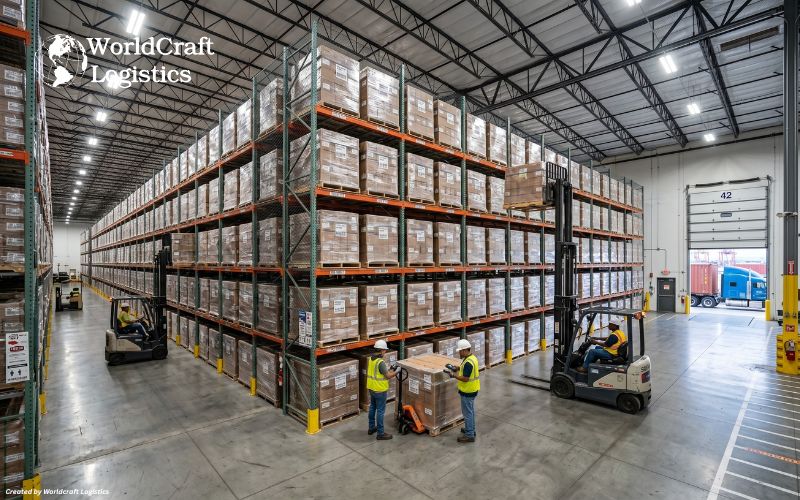
For a deeper look at why Bay Area importers are choosing Union City over alternatives like Fremont and San Jose, read our full breakdown: Why Union City is the prime hub for Bay Area warehousing?
A cost-only analysis favors 3PL at the import volumes most foreign B2B importers actually handle. But there are scenarios where owning or leasing your own California warehouse is genuinely the better decision:
Volume scale above the break-even threshold: If your operation consistently moves more than 1,000 pallets per month over multiple years, the fixed-cost spread of a dedicated facility begins to lower your per-pallet cost below what a 3PL can offer. This requires both volume and long-term commitment; seasonal importers rarely reach genuine break-even.
Highly specialized cargo: Hazardous materials, pharmaceuticals requiring controlled temperature, oversized industrial equipment, or commodities requiring continuous ownership-chain documentation often cannot be accommodated by standard 3PL providers. If your product falls into one of these categories, the market for suitable 3PLs is smaller and the premium is higher, sometimes making a dedicated facility the only practical option.
Deep brand control requirements: Luxury goods importers, brands with proprietary packaging protocols, or manufacturers with FDA-observed production processes may require on-site oversight that a 3PL cannot provide without a dedicated facility arrangement.
Long-term US market commitment with existing entity infrastructure: Importers who have already established a US legal entity, built a local HR team, and made a multi-year strategic commitment to the California market are better positioned to absorb the fixed-cost structure of an in-house facility.
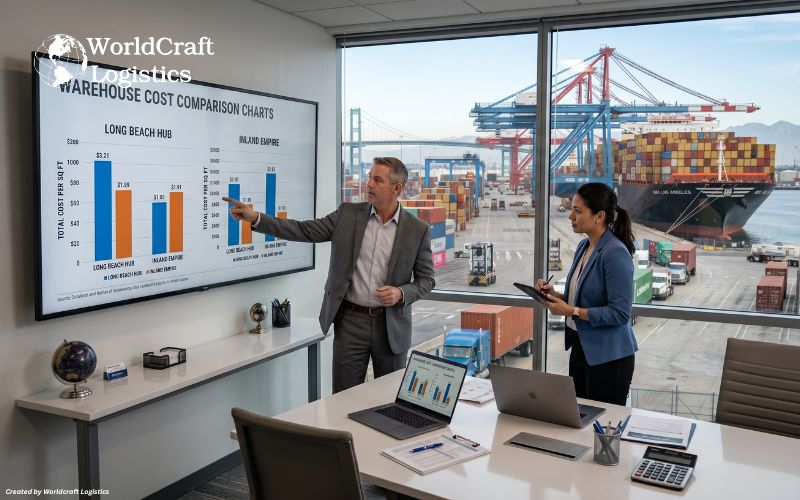
In California, 3PL pallet storage typically runs between $23 and $28 per pallet per month for standard dry storage, which is 30 to 60 percent higher than the national average of $18 to $25. This premium reflects California's elevated warehouse lease rates and labor costs. Port-adjacent locations in areas like Cerritos command rates closer to $26 to $28, while Inland Empire facilities in Ontario tend to start near $23 to $25 for volume commitments.
Industrial warehouse lease rates in the Inland Empire average $0.80 to $1.10 per square foot per month on a triple-net basis in 2026. A 20,000 square foot facility would cost approximately $16,000 to $22,000 per month before adding NNN charges like property taxes, insurance, and maintenance.
Drayage from the Port of Long Beach to a warehouse in Cerritos typically takes one to two hours under normal traffic and terminal conditions. This short transit distance of roughly 15 to 20 miles is one of Cerritos's main logistical advantages.
For most importers moving fewer than 500 pallets per month, 3PL warehousing in California is significantly cheaper than operating an in-house facility. A realistic in-house setup in the Ontario area runs $28,000 to $38,000 per month or more, while a comparable 3PL arrangement for 300 pallets typically costs $7,500 to $12,000 per month.
Importers opening a warehouse in California face several state-specific requirements, including CARB emissions compliance, AB5 worker classification rules, California overtime laws, and additional reporting requirements for certain refrigerated transport activities.
Minimum commitments vary by provider, but most established California 3PLs require a monthly minimum charge ranging from $500 to $2,500 regardless of actual usage. Some facilities also require a minimum pallet count commitment, typically 50 to 100 pallets per month.
A 3PL warehouse is a facility operated by a specialized provider who stores, handles, and distributes inventory on behalf of multiple clients. Importers pay per pallet stored, per container received, and per shipment dispatched instead of paying fixed overhead costs.
For importers shipping from Asia through the Port of Los Angeles or Long Beach, Southern California is usually the preferred entry point. Cerritos offers short drayage distance, while Ontario is better suited for large-volume storage with slightly longer port transit.
Renting warehouse space directly near the Port of Los Angeles or Long Beach means paying market lease rates plus staffing, equipment, and compliance costs. A 3PL converts those fixed costs into variable per-unit charges that scale with actual volume.
The transition to an in-house warehouse generally makes financial sense when an importer consistently moves more than 800 to 1,000 pallets per month and has made a long-term commitment to the California market.

SEO
Digital Marketing/SEO Specialist
Simon Mang is the SEO and Digital Marketing Specialist at Worldcraft Logistics, where he leads content strategy to promote the company's online presence. With years of experience in digital marketing and a strong understanding of the logistics industry, he has published more than 500 specialized articles across freight, warehousing, and supply chain topics. ( Reviewed for accuracy by the Worldcraft Logistics Operations Team ).