06/01/2026
For businesses importing through Northern California or serving the Bay Area consumer market, the supply chain question is deceptively simple: where should your inventory live? The answer, for a growing number of importers and e-commerce brands, is warehousing in Union City, CA, a location that sits at the intersection of port access, freeway connectivity, and proximity to one of the wealthiest and most demanding consumer markets in the United States.
Union City occupies a strategic position in the East Bay that most businesses overlook when planning their Northern California distribution. At 22 miles from the Port of Oakland, the fifth-busiest container port in the United States, and within one business day's ground delivery of San Francisco, San Jose, Sacramento, and the broader Bay Area, Union City delivers a combination of port proximity and regional reach that few NorCal locations can match.
This guide explains why Union City has become an increasingly important warehouse hub for NorCal importers, Bay Area e-commerce brands, and wholesale distributors, what makes this location operationally distinct, and what to evaluate when selecting a 3PL or fulfillment center in Union City, CA.
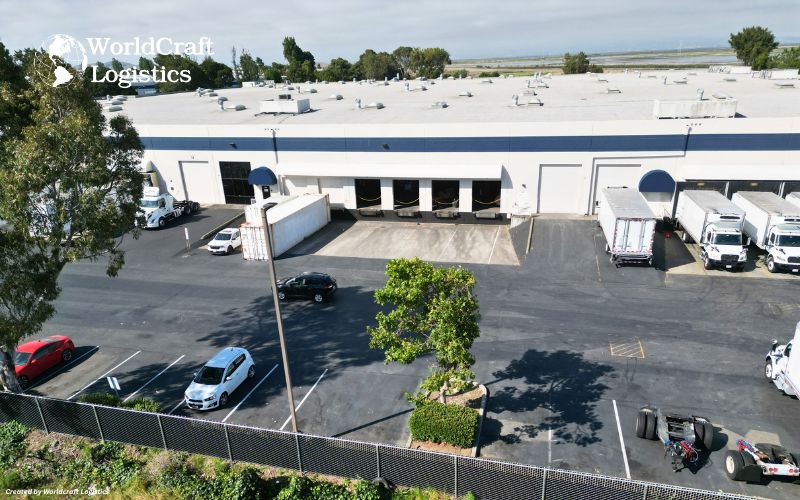
Among 3PL providers in Union City, CA, Worldcraft Logistics has designed its East Bay operation around a specific operational reality: businesses importing through the Port of Oakland and brands serving the Bay Area consumer market need a warehouse that combines fast container turnaround with the service depth to handle complex fulfillment requirements.
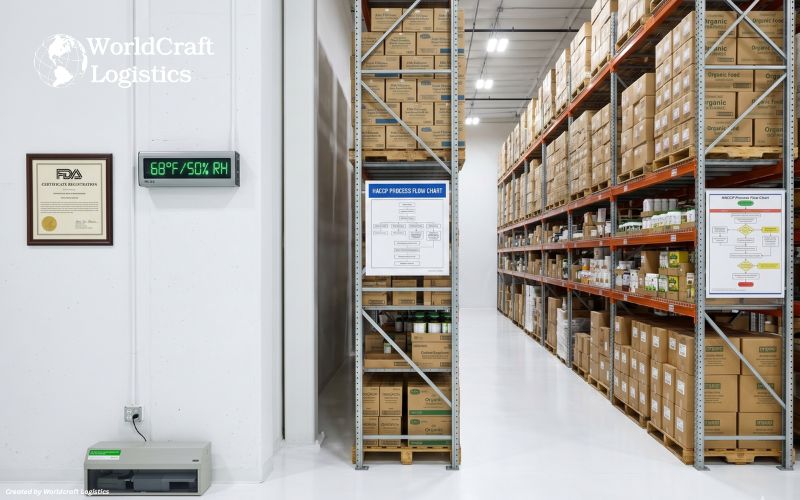
Their Union City facility is an FDA-registered warehouse in the East Bay positioned 22 miles from Oakland's container terminals, with direct access to I-880 and SR-238 for efficient distribution across San Francisco, San Jose, Sacramento, and the Central Valley. The operation covers the full NorCal supply chain workflow, container devanning and transloading, cross-docking for high-velocity freight, SKU-level inventory management, B2B and B2C pick-and-pack fulfillment, and dedicated Amazon FBA prep services for sellers replenishing Northern California fulfillment centers.
The team brings particular depth in handling the product categories most common among Bay Area importers: food and beverage, health and beauty, cosmetics, consumer electronics, and premium apparel. The FDA-registered status means regulated product categories, such as food, dietary supplements, and cosmetics, can be received and distributed without the compliance overhead of finding a separate certified facility. Learn more about Worldcraft Logistics' Union City, CA warehouse and available 3PL services.
Union City, CA sits 22 miles from the Port of Oakland and within one business day's ground delivery reach of San Francisco, San Jose, Sacramento, and the Central Valley, making it one of the most strategically positioned warehouse locations in Northern California. For businesses that import through Oakland or distribute to Bay Area consumers, Union City offers a rare combination of port access, freeway connectivity, and proximity to the highest-income consumer market in the Western United States.
The Port of Oakland is the fifth-busiest container port in the United States and the primary entry point for goods imported into Northern California. At just 22 miles, a Union City warehouse can complete the drayage move from terminal release to warehouse receiving in 30 to 45 minutes under normal traffic conditions, fast enough to facilitate same-day container pickup and devanning on the day of release.
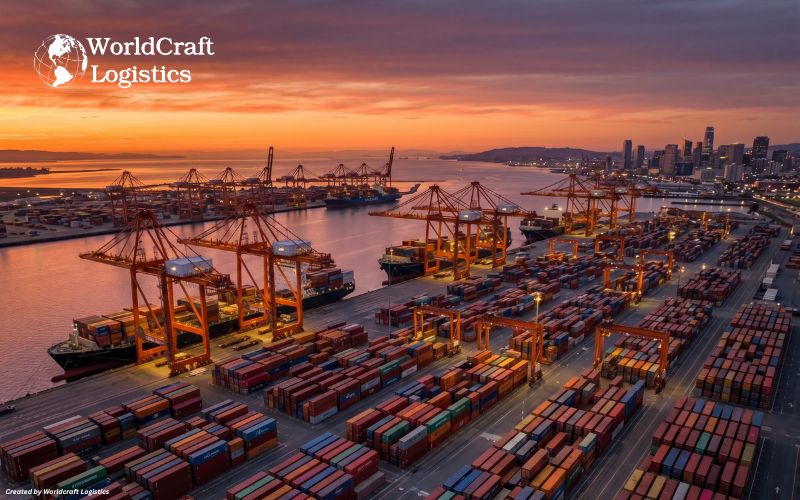
For importers managing tight arrival windows, this speed is operationally significant. Oakland port demurrage fees typically begin accruing after three to five days of free time at $150 to $300 per container per day. A warehouse 22 miles away eliminates virtually all demurrage risk by enabling same-day container extraction. Drayage from Oakland terminals to Union City typically costs $250 to $420 per container, making the total port-to-warehouse move cost-effective even at high container volumes.
Union City's freeway access is what converts port proximity into regional distribution capability. The I-880 (Nimitz Freeway) is the primary freight artery connecting Oakland, Fremont, San Jose, and the South Bay, running directly through the Union City industrial corridor and accessible from Whipple Road without surface street navigation. The I-680 extends distribution reach north to Walnut Creek, Concord, and the Tri-Valley, and south toward San Jose's second approach. SR-238 (Mission Boulevard) provides the east-west link to I-580, opening access to Livermore, Stockton, and the Central Valley without routing through Oakland congestion.
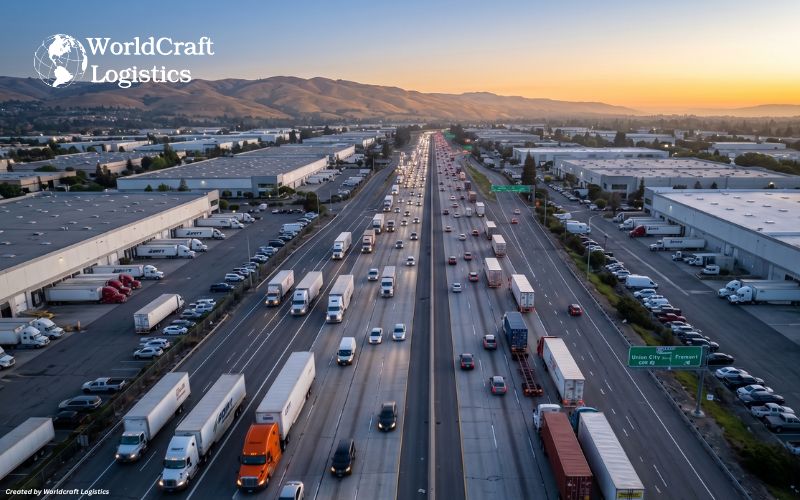
From a Union City warehouse, trucks reach:
San Francisco in approximately 35 to 50 minutes via I-880 and the Bay Bridge
San Jose and Silicon Valley in approximately 30 to 45 minutes via I-880 south
Sacramento in approximately 80 to 100 minutes via I-580 and I-5
Stockton and the Central Valley in approximately 60 to 75 minutes via I-580
Fresno in approximately 2.5 to 3 hours
North Bay (Marin, Sonoma, Napa) in approximately 60 to 90 minutes via I-80 north
This coverage means a single Bay Area fulfillment center in Union City can serve the entire Northern California consumer corridor with next-day ground delivery from the Peninsula to the Central Valley without premium shipping rates.
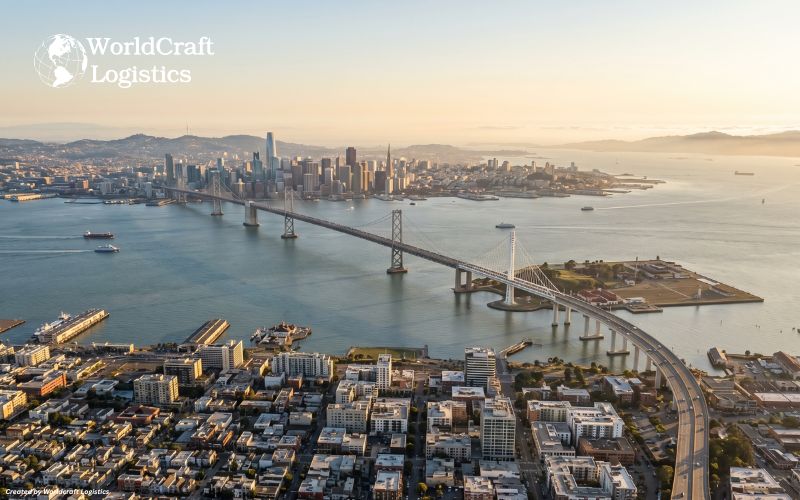
The San Francisco Bay Area is home to approximately 7.7 million residents and consistently ranks as the highest-income metropolitan area in the Western United States. Median household income in the Bay Area exceeds the national average by more than 60 percent, and per-capita e-commerce spending is proportionally higher, driven by the concentration of technology industry workers, dual-income households, and a consumer culture that places a high value on fast delivery and premium product experience.
For e-commerce brands, this means a fulfillment center in the Bay Area serves a customer base that converts at higher rates, returns less frequently due to higher-quality purchase intent, and has a higher average order value than most other US markets. Brands that previously fulfilled Bay Area orders from a Southern California warehouse, adding one to two days of transit time, often see measurable improvements in repeat purchase rates and customer satisfaction scores after moving to or adding NorCal fulfillment.
Warehouse space within San Francisco proper is scarce, expensive, and operationally difficult. Industrial lease rates in San Francisco run $2.00 per square foot NNN and higher, truck routing through the city is subject to severe congestion, and loading dock access in urban SF environments is frequently constrained. Oakland's inner industrial areas present similar congestion challenges during peak hours.
| Market | Avg. NNN Lease Rate (2024–2025) | Congestion Level | Highway Access |
|---|---|---|---|
| San Francisco Proper | $2.00+ / sqft | Very High | Limited, urban routing |
| Oakland Inner | $1.50 – $1.80 / sqft | High | I-880, I-580 with delays |
| Union City / Fremont | $1.20 – $1.60 / sqft | Moderate | I-880, I-680, SR-238 direct access |
| San Jose | $1.40 – $1.70 / sqft | Moderate-High | I-880, US-101, SR-87 |
| Hayward / Castro Valley | $1.30 – $1.65 / sqft | Moderate | I-880, I-580 access |
Union City and the broader Fremont corridor offer what the inner Bay Area cannot: modern industrial facilities with direct freeway on-ramp access, lower lease rates, and manageable truck traffic. For businesses that need genuine Bay Area distribution without the operational friction of urban warehousing, the East Bay is the practical answer.
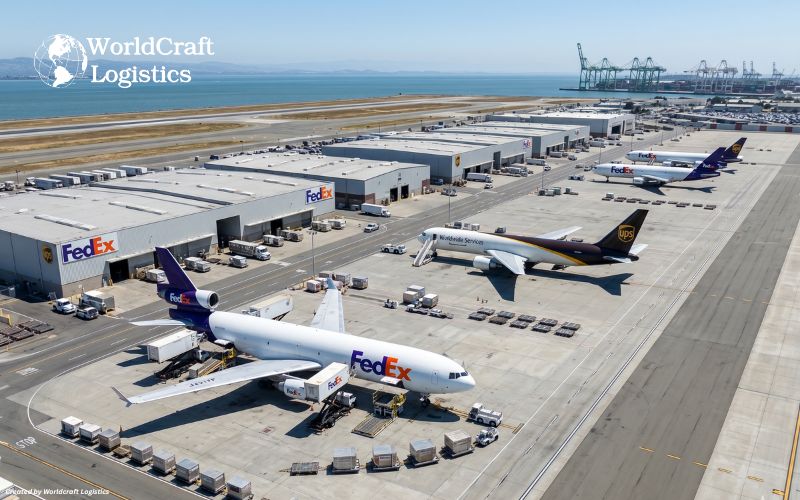
A strategic advantage that is rarely discussed but genuinely differentiates Union City from other NorCal warehouse markets is its proximity to Oakland International Airport (OAK), just 15 miles away. For businesses that operate across both ocean freight and air freight channels, this combination is unusual and valuable.
Air freight is the logistics mode of choice for time-critical shipments: new product launches that cannot wait for ocean transit, cosmetics restocks before a major retail event, high-value consumer electronics with short selling windows, or seasonal apparel that must reach retail shelves by a specific date. Having a 3PL warehouse near Oakland Airport and the Port of Oakland simultaneously allows importers to consolidate both sea and air inbound operations into a single facility receiving ocean containers from the port and air freight from OAK at the same location, processing both through the same inventory system, and fulfilling outbound orders from one hub.
This dual-mode capability is uncommon. Most Southern California 3PL facilities near the LA/LB ports are 30 to 50 miles from LAX. Most warehouse hubs near airports are not also close to a major container port. Union City is one of the few locations in California where both advantages exist within a 22-mile radius.
Union City's combination of port proximity, Bay Area market access, and dual port-airport capability creates a specific set of use cases where this location delivers measurably better outcomes than alternatives.
Not all importers route their containers through Los Angeles and Long Beach. For businesses whose primary customers are in Northern California, the Pacific Northwest, or the Mountain West, the Port of Oakland offers a compelling alternative, with shorter transit times from major Asian ports to NorCal destinations, less terminal congestion than LA and Long Beach during peak periods, and more direct routing that avoids the need to first land cargo in Southern California and then redistribute northward.
For these importers, a warehouse 22 miles from the Port of Oakland is the natural destination for container drayage. Cargo arrives at Oakland terminals, moves to Union City the same day, is received and processed, and is ready for outbound distribution to Bay Area, Sacramento, and NorCal customers within 24 hours of port release. The speed and directness of this flow is difficult to replicate from a Southern California facility routing cargo north.
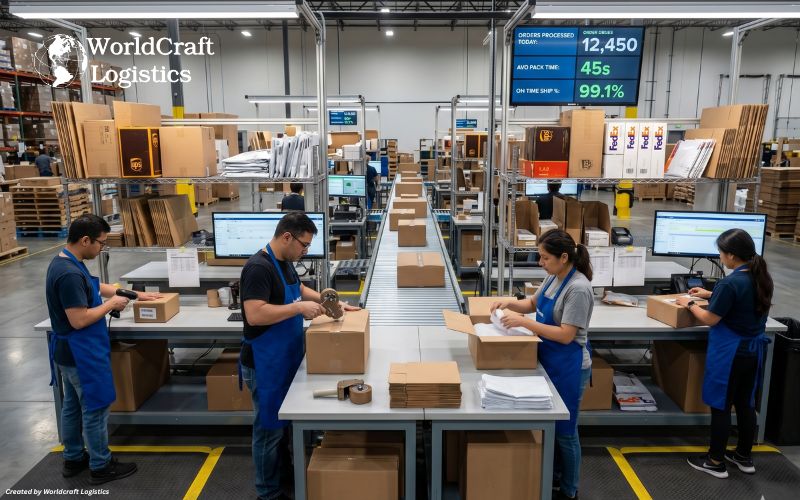
For DTC e-commerce brands whose customer concentration is in Northern California, fulfilling from a Southern California warehouse creates an inherent disadvantage. Shipping from LA to the Bay Area typically adds one to two days of transit time on ground parcel services, pushing two-day delivery to a three-day or four-day reality for Bay Area customers.
A Bay Area e-commerce fulfillment center in Union City changes this entirely. Next-day ground delivery covers the entire Bay Area, Sacramento metro, Central Valley, and North Bay. Same-day delivery is feasible for East Bay and South Bay zip codes using local courier services. For brands competing against Amazon and large retailers in the Bay Area market, where consumers have the highest delivery speed expectations in Northern California, this geographic positioning is a direct competitive advantage.
Amazon operates multiple fulfillment centers serving Northern California, including facilities in Tracy, Stockton, and Patterson in the Central Valley corridor, all within 60 to 90 minutes of Union City via I-580. For FBA sellers, an FBA prep center in Union City, CA offers the ability to move inventory from a Port of Oakland container to an Amazon-ready pallet within the same business day.
The efficiency of this workflow compounds for sellers who maintain inventory at both SoCal and NorCal Amazon fulfillment centers, a common strategy for brands trying to achieve coast-to-coast two-day coverage. Rather than shipping NorCal-bound inventory from a Southern California prep center and paying the extra ground transit cost, a Union City 3PL handles NorCal FBA prep locally, reducing inbound shipping costs and getting products live on Amazon faster in the high-value Bay Area market.
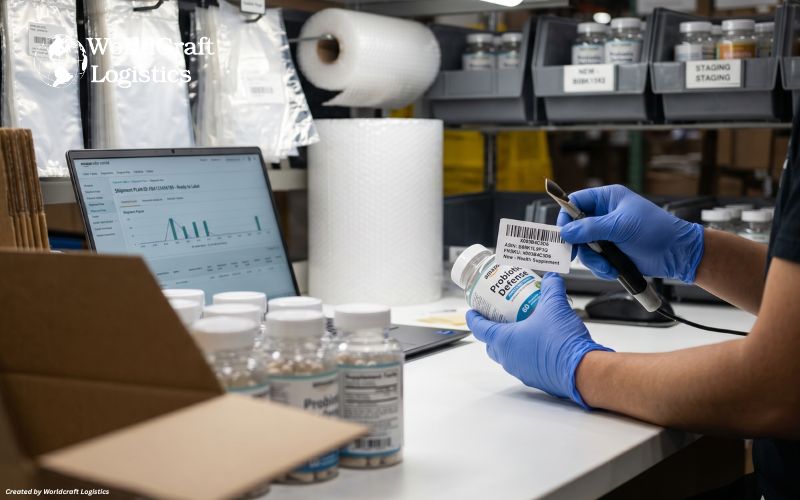
FDA-registered 3PL facilities are less common in the Bay Area than in Southern California's larger industrial markets. For importers and distributors of food products, dietary supplements, cosmetics, and OTC health products that serve NorCal retail accounts, including Bay Area grocery chains, specialty food retailers, natural health stores, and direct-to-consumer e-commerce, finding an FDA-registered warehouse in Northern California that is also well-positioned for port access and regional distribution is a meaningful challenge.
Union City addresses this gap. An FDA-registered facility with port proximity, Bay Area freeway access, and the operational capability to handle regulated product categories provides food and beauty importers with a single NorCal logistics hub that covers compliance, port access, and customer distribution without requiring multiple facilities or partners.
Northern California is home to the headquarters of several major grocery and specialty retail chains, including Safeway, Cost Plus World Market, and regional natural food retailers. The Bay Area also has one of the highest concentrations of independent specialty retailers, premium grocery stores, and food co-ops in the United States, all of which require regular inventory replenishment from distributors.
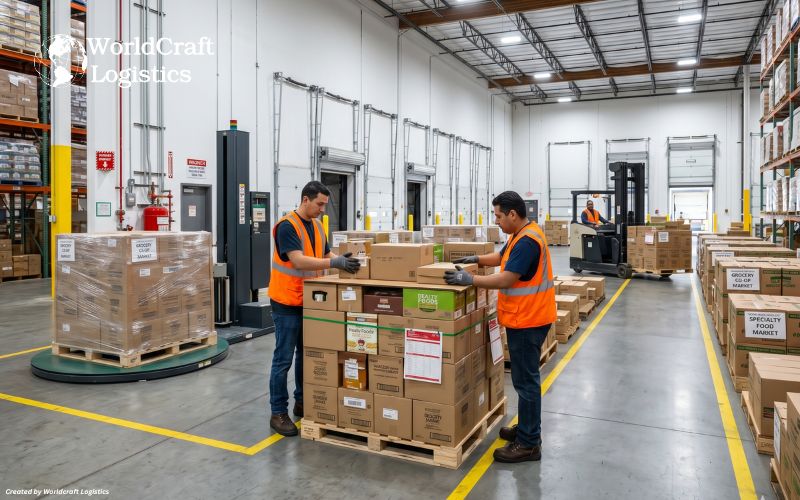
For wholesale distributors serving NorCal retail networks, a Union City warehouse is a natural consolidation point. Inbound containers arrive from Oakland, are received and sorted at Union City, and outbound pallet shipments are built and dispatched to retail DCs, store-direct accounts, and food service operators across the Bay Area and Central Valley. The combination of B2B pallet fulfillment capability, routing guide compliance, and FDA registration makes this location particularly suited to distributors who supply premium food, beverage, health, and beauty categories to NorCal retail accounts.
Identifying that the Bay Area is the right market for your NorCal operations is step one. Choosing the right facility and partner within the region requires evaluating several factors that significantly affect operational performance.
The Bay Area industrial market is one of the most expensive in the United States. For businesses evaluating direct lease options, the cost differential between East Bay locations like Union City and Fremont versus inner Oakland or San Jose can represent 20 to 30 percent lower NNN rates while maintaining comparable or better freeway access. For businesses using 3PL services, this cost structure is embedded in the operator's pricing. Choosing an East Bay 3PL over an inner Bay Area operator typically translates to lower per-pallet storage rates and handling fees.
When evaluating pricing, the relevant comparison is not just storage cost per pallet but total landed cost: storage plus handling plus outbound shipping. A facility with lower storage rates but longer average transit distances to your customer base may cost more in total than a slightly more expensive facility with superior delivery zone coverage.
Union City's position in the East Bay gives it direct, uncongested freeway access to the East Bay, South Bay, Central Valley, and Sacramento. Distribution to the San Francisco Peninsula, North Bay, and areas west of the bay requires crossing either the Bay Bridge (I-80) or the San Mateo Bridge (SR-92), which adds 20 to 45 minutes of transit depending on time of day.
Before selecting a Union City warehouse, map your actual NorCal customer geography by zip code. If the majority of your orders ship to East Bay and South Bay addresses, the highest-density e-commerce delivery zones in NorCal, Union City is likely your optimal single-node choice. If a significant portion of your orders go to Peninsula, SF, or North Bay addresses, factor in the bridge transit time when modeling delivery performance.
Bay Area brands, particularly those in the startup and growth-stage category that are disproportionately represented in NorCal, tend to have specific operational requirements that not all 3PL facilities are equipped to handle:
FDA Registration: Required for food, supplements, cosmetics, and OTC health products. Verify the registration number on the FDA FEIS public database.
Real-time WMS with API integration: Bay Area e-commerce brands often use Shopify, WooCommerce, or custom tech stacks that require direct WMS integration for automated order routing and inventory sync.
Flexible pallet terms: NorCal brands frequently have pronounced seasonal demand spikes in Q4 holiday, Valentine's, and back-to-school. Warehousing agreements with contractual overflow provisions protect against peak-season capacity constraints.
FBA prep capability: FNSKU labeling, poly bagging, carton preparation, and Amazon-compliant pallet builds are essential for sellers replenishing NorCal Amazon fulfillment centers.
B2B routing guide compliance: Wholesale distributors supplying NorCal retail chains require the 3PL to execute retailer-specific routing guides, labeling requirements, and compliance packaging, a capability that not all fulfillment-focused 3PLs maintain.

SEO
Digital Marketing/SEO Specialist
Simon Mang is the SEO and Digital Marketing Specialist at Worldcraft Logistics, where he leads content strategy to promote the company's online presence. With years of experience in digital marketing and a strong understanding of the logistics industry, he has published more than 500 specialized articles across freight, warehousing, and supply chain topics. ( Reviewed for accuracy by the Worldcraft Logistics Operations Team ).