12/15/2025
The operation and e-commerce fulfillment orders are an invisible driver of success or failure in the online retail world, yet many growing businesses view it as merely an expense rather than a competitive weapon. What if the speed, reliability, and cost structure of the supply chain were the only factors differentiating between capturing global market share and losing customers to competitors? This comprehensive guide from Worldcraft Logistics will reveal strategic steps, hidden costs, and future trends, from warehouse management operations…to customer retention and increased profitability. Read on to master the end-to-end process and secure your brand's future in the global marketplace.
E-commerce fulfillment is the complete, systematic process an online business undertakes from the moment a customer places an order to the point the product is successfully delivered to their specified location. It is the crucial logistics framework that transforms a digital transaction into a physical reality.
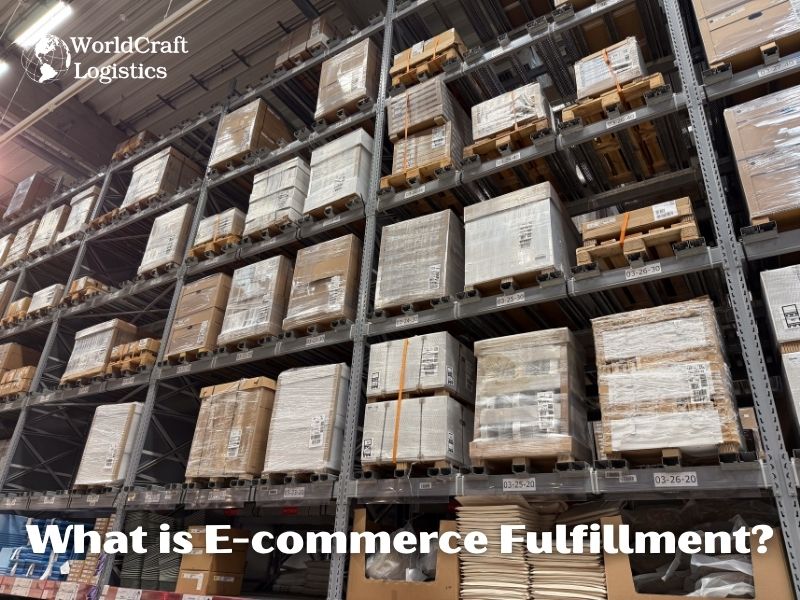
This comprehensive chain of activities ensures products are delivered accurately, on time, and in a cost-effective fashion across various geographical regions. Specifically, e-commerce fulfillment involves five core operational stages:
TERMINOLOGY | SUMMARY AND STRATEGIC RELEVANCE | CONTINUE YOUR DEEP-DIVE |
3PL | Third-Party Logistics: Outsourcing warehousing, inventory management, and shipping to an external expert allows e-commerce businesses to focus on growth and strategy. | |
D2C | Direct-to-Consumer: A strategic model where manufacturers or brands handle distribution and sales directly to the end-user, demanding precise control over the entire fulfillment process. | |
B2C | Business-to-Consumer: The high-volume, small-order retail model that defines most e-commerce requires speed, high accuracy, and efficient carrier management. | |
Last-Mile | The movement of goods from a regional distribution hub to the customer's doorstep. It is the most costly and time-sensitive phase of the supply chain, directly impacting customer satisfaction. | |
WMS | Warehouse Management System: The critical software backbone is used to manage inventory locations, optimize picking routes, and automate core fulfillment processes efficiently, enabling better scalability. |
Effective e-commerce fulfillment is about delivering on your brand promise. It dictates the speed of your delivery, the safety of your goods, and directly impacts customer satisfaction (CSAT), making it a competitive advantage, not just a logistical necessity, for any growing e-commerce business worldwide.
The traditional view of logistics as a mere operational expense or a cost center is obsolete. In the hyper-competitive global market, e-commerce fulfillment is a powerful strategic asset that directly fuels brand growth, customer retention, and long-term profitability. By treating fulfillment as a strategic investment, businesses unlock crucial competitive advantages.
Fulfillment performance is the ultimate post-purchase test for any brand. Excellence in this area directly translates into higher customer loyalty and a stronger brand reputation.
Trust and Transparency: Meeting or exceeding delivery expectations builds immediate trust. Providing clear tracking information reduces customer anxiety and support queries.
The Unboxing Experience: High-quality packing and presentation turn a transactional delivery into a positive brand interaction, encouraging positive reviews and social sharing.
Reverse Logistics as Retention: A smooth, hassle-free returns process or reverse logistics is critical. Making returns easy transforms a potentially negative situation into a loyalty-building experience, boosting the likelihood of a future purchase.
Satisfied customers, supported by seamless fulfillment, become high-value, repeat buyers, creating a formidable competitive barrier.
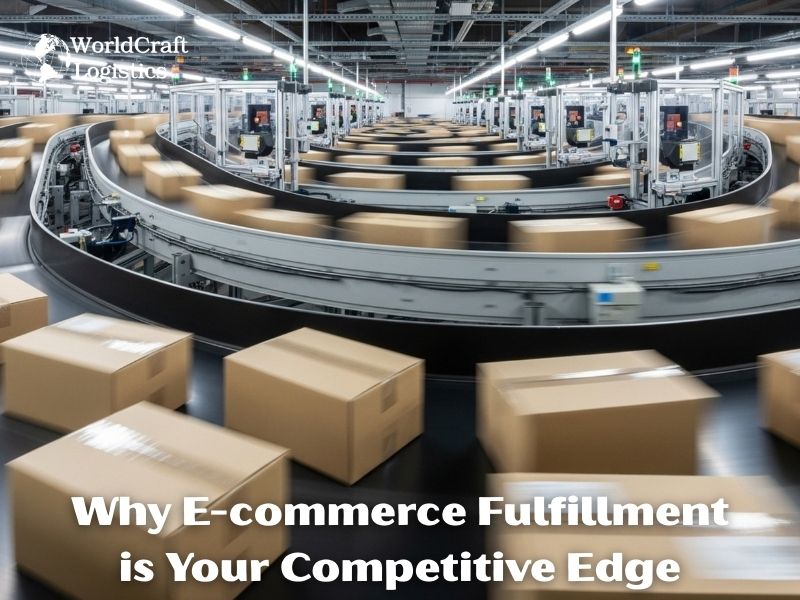
Strategic investment in e-commerce logistics offers quantifiable financial returns by positively impacting key business metrics:
Average Order Value (AOV): Optimized fulfillment allows for strategic offers like "Free Shipping Over $X," directly incentivizing customers to increase their spending.
Repeat Purchase Rate (RPR): This metric is the clearest indicator of fulfillment success. Accurate and fast service minimizes friction, making the customer’s decision to return effortless.
Customer Acquisition Cost (CAC): When customers have excellent delivery experiences, they generate positive word-of-mouth and reviews, lowering the dependency on expensive digital advertising to acquire new buyers.
Inventory Shrinkage: Robust systems (like an integrated WMS) lead to higher inventory accuracy, reducing losses from misplacement, damage, or inaccurate picking, directly saving capital.
By strategically leveraging fulfillment, businesses shift their focus from minimizing expenditure to maximizing overall growth and profit potential on the global stage.
E-commerce fulfillment is a meticulously coordinated sequence of steps that transforms a customer's click into a physical delivery. This comprehensive framework relies on streamlined operations, highly accurate data, and seamless systems integration. Understanding and optimizing each stage is critical for maximizing efficiency and customer experience in the competitive global market.
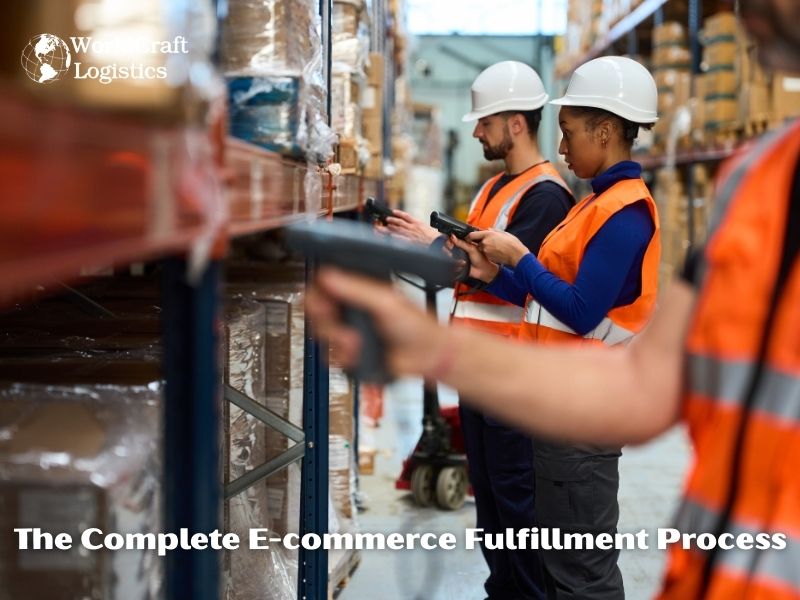
The fulfillment lifecycle begins when products arrive at the warehouse or distribution center. This initial phase, encompassing Receiving and Putaway, is foundational for all subsequent operations. Incoming goods are immediately checked against the initial purchase orders to verify quantities and SKUs (Stock Keeping Units). This verification is instantly recorded in the Warehouse Management System (WMS).
From this digital record, items are strategically assigned to designated storage locations based on size, turnover rate, and specific handling requirements. Companies utilize advanced strategies like slotting and zone-based layouts to ensure high-volume SKUs are positioned optimally, minimizing picker travel paths and significantly reducing potential errors.
Ultimately, maintaining real-time data integrity across the WMS and your Inventory Management System (IMS) is essential to prevent costly overselling and ensure inventory accuracy across all sales channels.
The moment an online purchase is made, the order transitions from a digital record to a physical task. This stage is primarily driven by seamless software integration. The Order Management System (OMS) serves as the central hub, aggregating orders from all e-commerce platforms. The OMS performs essential validation checks, including payment verification and fraud screening, before transmitting the clean data to the fulfillment engine.
Integration with the Warehouse Management System (WMS) is non-negotiable; the WMS uses this data to prioritize orders based on customer requirements (such as express shipping) and instantly determines the inventory location. Inventory is also allocated based on client-defined rules like First In, First Out (FIFO). Only once routing, allocation, and compliance checks are completed is the order released to the warehouse floor for physical processing.
The operational heart of the warehouse, the picking and packing stage, directly impacts labor utilization and order accuracy. Efficiency here is maximized through strategic guidance from the WMS, which maps out optimized travel routes for pickers. Modern logistics often employ advanced methods to streamline retrieval:
Batch Picking: A single picker retrieves items for multiple orders simultaneously to reduce total travel time.
Zone Picking: Pickers are restricted to assigned areas, passing the order container along the line, which fosters specialization.
Following retrieval, the packing process focuses on product integrity and cost containment. Items are typically scanned to verify accuracy, securely cushioned with appropriate dunnage, and sealed in the smallest viable container. Optimizing packaging dimensions is key to minimizing Dimensional Weight (DIM weight), which is a primary driver of modern shipping costs and crucial for global freight efficiency.
Once the product is packed, it enters the final phase of outbound logistics. Carrier selection is a data-driven process where platforms automate decisions by comparing delivery speed, cost, destination, and contracted rates across a vast carrier network. This ensures the assignment of the most cost-effective and compliant option for each shipment. For cross-border e-commerce, the generation of accurate customs documentation is a critical compliance checkpoint.
The final, costliest leg, known as Last-Mile Delivery, is managed by local couriers and requires continuous, robust tracking visibility maintained throughout the process for both the brand and the end customer.
As an inevitable part of e-commerce, the reverse logistics process, managing returns and exchanges, is a major driver of customer loyalty. The process begins when the customer initiates a return, often through a branded portal. The returned item is shipped back to the distribution center for rapid inspection. Items in sellable condition are quickly restocked, while others are routed for recycling or salvage, minimizing inventory loss.
A successful return process must be clear, fast, and cost-efficient. Furthermore, analyzing return reasons provides invaluable data for identifying and correcting upstream issues in production or packaging, turning returns into a strategic learning opportunity.
>>> Read more: Minimize E-commerce Warehouse Congestion With Worldcraft Logistics
Deciding how your products reach your customers is perhaps the most fundamental strategic choice for any growing e-commerce business. There is no single "best" solution; the ideal fulfillment model depends entirely on your capital, order volume, product type, and long-term scalability goals. Below, we compare the leading e-commerce fulfillment models to help you define the right strategy.
In-House Fulfillment (or Self-Fulfillment) means the e-commerce business manages the entire process from warehousing and inventory management to picking, packing, and shipping using its own facilities, staff, and technology.
STRATEGIC ADVANTAGE (PROS) | STRATEGIC CHALLENGE (CONS) |
Control: Full oversight of quality control, branding (unboxing experience), and returns. | High Fixed Costs: Significant upfront investment in warehouse space, WMS technology, and labor. |
Flexibility: Ability to handle complex, bespoke orders or unique packaging requirements. | Scalability Limits: Rapid growth often exposes physical limitations in space and staffing, leading to bottlenecks. |
Integration: Direct control over system integration with proprietary sales platforms. | Time Sink: Management must divert critical resources away from marketing and product development to focus on logistics. |
When to Choose In-House? This model is typically best for small-scale operations with highly specific product needs (e.g., custom, fragile, or highly valuable goods) or businesses with low order volume that do not justify outsourcing costs.
Outsourced Fulfillment, managed by a Third-Party Logistics (3PL) provider, involves handing over the entire operational process to an external expert.
The 3PL model provides immediate access to established infrastructure, technology in the warehouse, and a global network of distribution centers. This converts high fixed costs (warehouse leases, labor) into variable, transactional costs based only on the volume you ship.
Key Services: 3PLs offer comprehensive services, including receiving, storage, customized pick and pack, shipping rate negotiation, and managing complex reverse logistics programs.
Strategic Benefit: Outsourcing significantly improves geographical reach and speed, allowing brands to implement a distributed inventory strategy without needing to acquire multiple physical locations.
How do you identify the ideal partner? A successful 3PL relationship requires a provider with proven experience in your specific product type, seamless WMS integration with your sales platform, and a transparent fee structure. Providers like Worldcraft Logistics specialize in delivering end-to-end solutions, offering the technology platform and global network required to scale operations efficiently, ensuring consistency whether shipping domestically or handling complex international fulfillment.
>>> Related post: How to choose the best 3PL partner for your business
Dropshipping is the lowest-inventory fulfillment model. The e-commerce retailer does not hold any physical stock; instead, the manufacturer or wholesaler ships the product directly to the customer when an order is placed.
Financial Advantage: Virtually zero inventory holding costs and minimal capital required to start, making it highly attractive for new businesses.
Operational Constraints: The retailer relinquishes control over quality, branding, and shipping times. Delivery speeds can be inconsistent, and returns are difficult to manage, which often negatively impacts customer trust.
Fulfillment through Amazon’s marketplace offers unique advantages and disadvantages for sellers:
Fulfillment by Amazon (FBA): Amazon handles all storage, fulfillment, and customer service using its massive network. This guarantees fast delivery (often Prime shipping) but comes with strict packaging requirements and complex fee structures that can erode margins.
Fulfillment by Merchant (FBM): The seller is responsible for the storage and shipping of items sold on the Amazon platform. This is often used for slow-moving or bulky items that do not fit the FBA cost model.
Selecting the right model requires an objective assessment of your current and projected business needs. Use the following framework to guide your strategic decision:
EVALUATION FACTOR | IN-HOUSE SUITABILITY | 3PL/OUTSOURCED SUITABILITY |
Order Volume | Low to Moderate (Under 500 orders/month) | High and Rapidly Growing (Over 500 orders/month) |
Product Complexity | Highly Custom, Unique Packaging, Strict Handling | Standardized Products, Large SKU Catalog |
Capital & Cost | High Initial Capital Investment (WMS, Labor) | Variable Costs Based on Volume (Low Fixed Costs) |
Geographical Reach | Limited to Local or Single Market | National/Global Distribution Required |
Core Competency | Logistics is a Primary Focus/Expertise | Focus on Marketing, Product Development, and Sales |
*Note: By thoroughly evaluating these factors, e-commerce businesses can ensure their fulfillment strategy aligns perfectly with their long-term growth and profitability goals. This table is for your business's reference only.
Maintaining profitability hinges on accurately understanding the true cost of fulfillment, especially as your business expands across international borders. Many growing e-commerce companies mistakenly focus only on shipping rates, overlooking the complex layers of fixed and variable expenses that collectively define their total logistics spend. A successful e-commerce logistics strategy requires a holistic view of this cost structure.
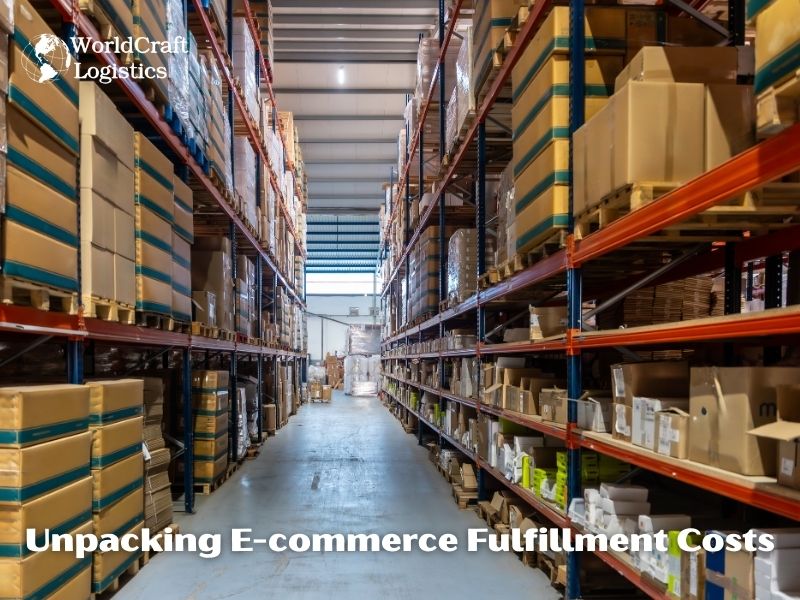
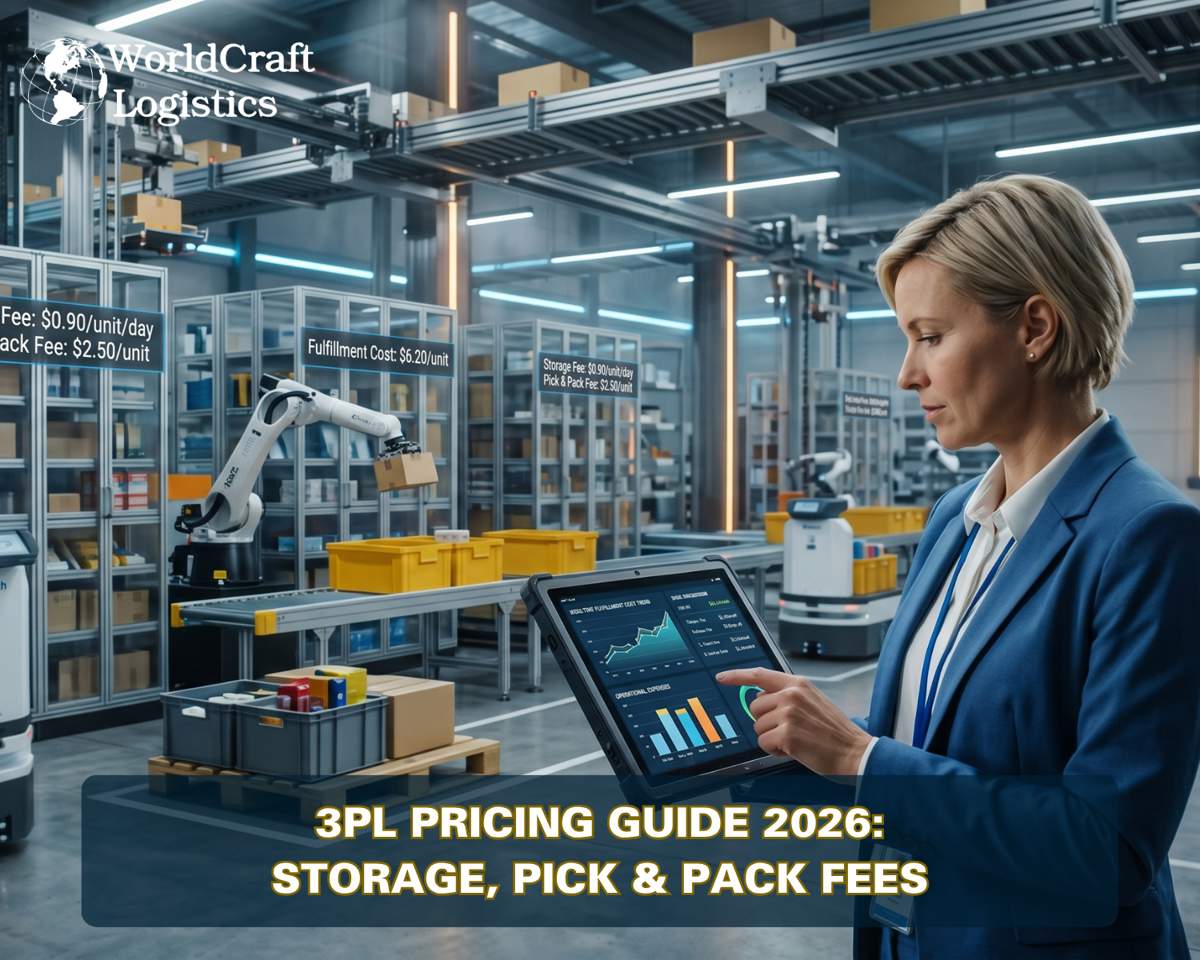
Fulfillment expenses are rarely a single line item. They are typically structured into the following categories, whether you manage operations in-house or through a 3PL provider. The reference prices provided are general estimates for global markets and will vary widely based on volume and region.
COST CATEGORY | DESCRIPTION | STRATEGIC FOCUS FOR OPTIMIZATION | TYPICAL COST RANGE (ESTIMATE) |
Receiving & Storage | Fees for unloading inventory, quality checking, and holding stock in the warehouse. Storage is often billed daily or monthly per pallet/bin. | Utilizing distributed inventory across several smaller centers to minimize storage time and reduce long-term holding fees. | $10 - $35 per pallet/month |
Pick & Pack Labor | The time and effort required for staff to retrieve items, package them securely, and prepare shipping labels. | Implementing efficient technology (WMS) and advanced picking strategies (Batch/Zone) to lower labor Cost Per Hour (CPH). | $1.50 - $4.00 per item/order |
Shipping Fees | The primary cost, determined by carrier rates, service level (e.g., express vs. standard), package dimensions, and weight. | Strategic negotiation with regional and global carriers, and minimizing Dimensional Weight (DIM weight) through optimized packaging. | $5.00 - $30.00+ per shipment |
Packaging & Supplies | Costs for boxes, poly mailers, dunnage (cushioning), and any branded inserts used to enhance the unboxing experience. | Sourcing cost-effective, sustainable materials in bulk to reduce unit cost. | $0.50 - $2.50 per order |
Technology & Integration | Fees for utilizing the WMS, OMS, or necessary integration services required for syncing inventory and order data across platforms. | Choosing systems that offer seamless integration to avoid expensive custom API development and maintenance fees. | $150 - $500+ per month |
To accurately assess profitability and benchmark logistical performance, businesses must move beyond simple shipping expenses and calculate the True Fulfillment Cost Per Order (CPO).
The CPO is the sum of all variable costs associated with a single shipment, divided by the total orders fulfilled in a given period.
CPO = (Total Receiving + Storage + Labor + Shipping + Packaging + Returns) / Total Orders Fulfilled
Analyzing the CPO provides a clear financial health indicator. If the CPO is too high, it signals a direct erosion of the profit margin, necessitating an immediate review of operational efficiency or carrier agreements. Continuous CPO monitoring is vital for detecting and correcting cost issues before they severely impact the bottom line.
Beyond the standard categories, fulfillment agreements, particularly those involving global logistics, often contain complex surcharges that can inflate costs unexpectedly:
Extra charges are applied by carriers for services beyond standard delivery, such as residential delivery.
Carriers universally apply significantly higher rates during high-volume periods (e.g., the holiday season).
Cross-border e-commerce introduces complex costs like Duties and Taxes, Customs Brokerage Fees, and regulatory compliance fees.
Many 3PLs apply monthly minimum fees for storage or handling.
The landscape of e-commerce fulfillment is undergoing rapid transformation, driven primarily by technological necessity and shifting consumer values. One of the most significant trends is the increased adoption of Automation and AI across the warehouse floor.
Beyond basic robotics, Artificial Intelligence (AI) is now being deployed to optimize dynamic slotting, predict inventory demand with greater precision, and create highly efficient WMS-guided picking routes.
Furthermore, automation tools like Automated Storage and Retrieval Systems (AS/RS) and automated guided vehicles (AGVs) are becoming standard, dramatically reducing labor reliance and minimizing human error, which is critical for maintaining high order accuracy rates in the future.
Alongside technological advancements, sustainability has moved from a niche concern to a central component of logistics strategy. Consumers are increasingly demanding environmentally friendly shipping options. This trend is pushing brands and 3PL providers to prioritize greener packaging materials, optimize carrier networks to reduce fuel consumption (often through smart route planning), and actively manage reverse logistics to ensure returned items are repurposed or disposed of responsibly.
The future of e-commerce fulfillment will be defined by systems that are not only faster and more accurate but also fully integrated, intelligent, and sustainably managed across the entire global supply chain.
In conclusion, Ecommerce fulfillment has fundamentally shifted from a back-office expense to the central pillar of modern retail strategy. Mastering this end-to-end process from precise inventory management and strategic use of a WMS to optimizing Last-Mile Delivery directly dictates both your profitability and customer loyalty.
Choosing the right logistical model, whether leveraging a scalable 3PL or an in-house approach, must be a data-driven decision informed by metrics like the True Fulfillment Cost Per Order (CPO). In a competitive landscape defined by instant gratification, the speed, reliability, and transparency of your fulfillment network are the ultimate factors that will win the consumer's trust and secure market share.
Ready to Master Your Global E-commerce Logistics? Don't let inefficient fulfillment erode your margins or limit your global potential. If your current logistics infrastructure is struggling with peak season volume, inventory accuracy, or complex cross-border e-commerce, the time to transition to a scalable, technology-driven solution is now.
Connect with Worldcraft Logistics today to analyze your current supply chain, calculate your optimal CPO, and design a distributed inventory network that transforms your fulfillment operation from a persistent challenge into your most reliable competitive advantage.

SEO
Digital Marketing/SEO Specialist
Simon Mang is the SEO and Digital Marketing Specialist at Worldcraft Logistics, where he leads content strategy to promote the company's online presence. With years of experience in digital marketing and a strong understanding of the logistics industry, he has published more than 500 specialized articles across freight, warehousing, and supply chain topics. ( Reviewed for accuracy by the Worldcraft Logistics Operations Team ).