Geopolitical Volatility and Infrastructure Bottlenecks Reshaping Global Shipping Lanes
The global maritime network is facing a compounding set of operational hurdles as geopolitical standoffs and critical infrastructure constraints tighten vessel capacity. Shippers navigating transpacific and transatlantic lanes are confronting prolonged transit times and escalating operational overhead, forcing logistics planners to pivot toward aggressive risk-mitigation strategies.
Strait of Hormuz Chokepoint Tightens Amid Escalating Political Risks
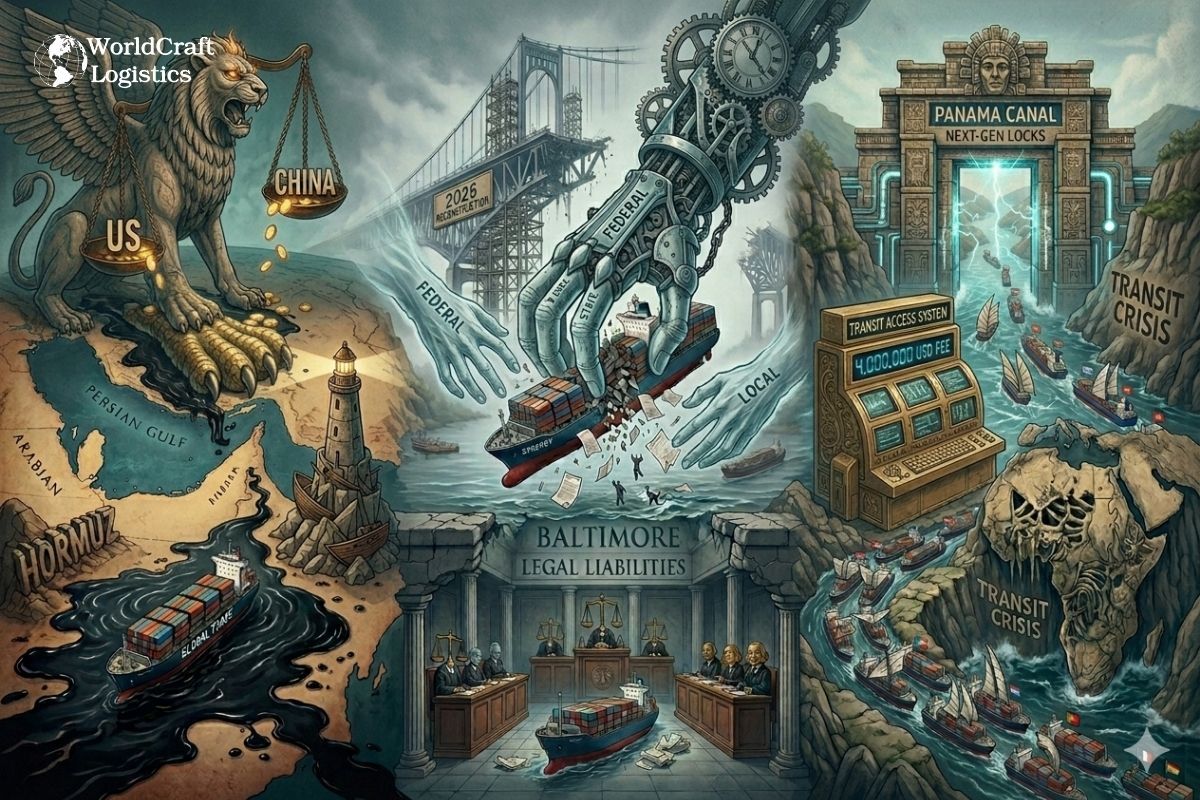
Navigational safety in the Middle East has degraded further this week, with the Strait of Hormuz experiencing heightened security risks and restrictive transit conditions. Maritime security intelligence indicates that the vital energy and container corridor has become increasingly volatile, offering little near-term hope for a diplomatic breakthrough.
The crisis has reached the highest levels of global diplomacy. U.S. President Donald Trump has actively engaged in bilateral discussions regarding the Iranian maritime standoff with Chinese President Xi Jinping during a high-profile state visit to Beijing. For supply chain managers, the persistent instability in this region means maritime supply chain crisis planning must now account for semi-permanent war-risk premiums and unpredictable re-routing schedules away from traditional Middle Eastern hubs.
Legal Repercussions From Infrastructure Disasters Resurface in Baltimore
The long-term regulatory and legal liabilities of maritime accidents are creating new precedents for shipmanagers and ocean carriers alike. U.S. federal prosecutors filed criminal charges against Singapore-based shipmanager Synergy Marine. This legal action stems from the catastrophic 2024 collapse of Baltimore’s Francis Scott Key Bridge, an incident triggered when the containership Dali struck the structure, resulting in six fatalities.
[Timeline of Key Logistics Disruptions]
2024: Baltimore Bridge Collapse (Synergy Marine Legal Fallout in 2026)
2026 (May): Strait of Hormuz Tightens / Panama Canal Priority Auction Spikes to $4M
This aggressive prosecution signals a shifting regulatory landscape where shoreside management faces direct criminal accountability for operational failures at sea. Shippers must recognize that rigorous carrier compliance audits are no longer just about cargo safety, but are fundamental to avoiding systemic legal gridlocks that can freeze assets and disrupt downstream distribution networks.
Panama Canal Transit Auctions Hit Unprecedented Peaks
Compounding the bottlenecks in Western waterways, auction prices for priority transits through the Panama Canal have surged to a record-breaking $4 million per vessel. This extraordinary financial premium highlights the severe capacity crunch confronting ocean freight markets.
Market Impact Note: The premium to bypass standard booking queues has escalated primarily due to the ongoing geopolitical turmoil in the Middle East.
As carriers divert vessels away from the Suez Canal to avoid regional conflict, the resulting traffic redirection has placed a crushing demand on the Panama Canal. Navigating these global shipping disruptions 2026 requires precise freight route adjustments, as carriers must choose between paying multimillion-dollar transit premiums or absorbing the high fuel costs of extended voyages around the African continent.
Human Elements and Tech Realities in Modern Maritime Strategy
While infrastructure crises dominate operational planning, the human element and the philosophy of logistics technology are undergoing their own transitions. Prominent industry forecasters, including container shipping analyst Lars Jensen, are shifting focus toward long-term field studies of emerging markets, signaling a broader industry need to understand ground-level logistics infrastructure in developing regions like Africa.
Simultaneously, the debate over digital transformation in logistics is reaching a tipping point. Recent industry assessments suggest that maritime technology implementations are faltering when they prioritize complexity over functional utility. Top-tier logistics operators are realizing that a true competitive advantage stems from a highly refined, transparent decision-making framework rather than amassing a disjointed suite of digital tools. Striking the right balance between automation and human expertise remains the most viable path toward building resilient supply chains.
Worldcraft Logistics Editorial Perspective: Tactical Resilience Over Premium Spot Markets
The convergence of a $4 million Panama Canal auction price and a volatile Strait of Hormuz confirms that the era of predictable, low-cost ocean freight scheduling has given way to structural volatility. From an independent logistics asset management perspective, relying on spot-market maneuvers to bypass major maritime chokepoints is an unsustainable long-term strategy for enterprise shippers.
When priority transit fees reach these heights, the financial shockwaves quickly ripple through regional pricing indexes. Shippers can gain deeper insight into how these macro shifts affect bottom-line landed costs by reviewing the latest data on
US Import & Export Price Indexes Update 2026.
Furthermore, the legal escalation surrounding the Baltimore bridge collapse serves as a stark reminder that carrier selection must prioritize operational integrity over rock-bottom freight rates. In the current climate, true supply chain resilience is achieved not by purchasing short-term priority passes, but by diversifying port gateways, utilizing intermodal conversions, and establishing robust data fail-safes. This data-first approach is rapidly transforming all sectors of transport; for instance, specialized verticals are already migrating to next-generation cloud architectures to protect critical inventory, a trend explored in depth in our guide on
Future Proofing Healthcare Logistics with Cloud Recovery.
Ultimately, navigating these disruptions successfully requires actionable visibility rather than an over-reliance on complex software suites. While advanced systems are crucial, the market frequently overreacts to short-term technological shifts. Shippers looking to separate tech hype from operational reality can explore our analysis on
AI in Freight Logistics - Why The Market Selloff Is Overdone to better understand how to leverage balanced automation without sacrificing human oversight.