12/30/2025
Are you planning to ship furniture but feeling overwhelmed by the complex logistics and potential for damage? Many individuals and businesses underestimate the challenges involved, often leading to skyrocketing fees or broken items upon arrival. This comprehensive guide from Worldcraft Logistics details the cost of transporting furniture, compares the most cost-effective options, and explores insider strategies to ensure your heavy goods are transported safely and affordably.

Before you book a pickup, it is crucial to understand that there is no flat rate for moving large items. Your final shipping cost for furniture is calculated based on a specific set of variables. Understanding these can help you avoid surprise surcharges on your invoice.
Carriers do not just look at how heavy your item is; they look at how much space it occupies in the truck or container. This is known as Dimensional Weight (or DIM weight).
How it works: If you ship a lightweight but bulky item (like an assembled wicker chair), the carrier will charge you based on its volume rather than its actual weight.
The 2025 Standard: For most freight and air carriers, if the DIM weight exceeds the actual weight, the furniture shipping rates will be based on the DIM weight. This is why disassembling furniture to reduce its volume is the single most effective way to lower costs.
The distance between the pickup and drop-off locations is a primary cost driver.
Local: Short hops are often calculated by hourly rates (for movers) or simple zone-based fees.
Cross-Country: To ship furniture to another state, costs increase significantly due to fuel consumption and driver hours.
International: When you ship furniture overseas, rates shift to ocean or air freight metrics (CBM or Cubic Meters) and include customs duties, taxes, and port fees.
How much work do you want the furniture shipper to do?
Curbside Delivery (Standard): The truck driver unloads the item at the end of your driveway or on the curb. You are responsible for bringing it inside. This is the cheapest way to ship furniture.
Threshold Delivery: The driver brings the item to your first dry area, such as a garage or porch.
White Glove Service: A premium option where professionals bring the item inside, carry it up stairs, uncrate it, and remove the debris.
These are extra services that are not included in the base rate. Common accessorials for furniture shipping include:
Lift Gate Service: Essential if the delivery location (residential or business) does not have a loading dock. The truck requires a hydraulic lift to lower the furniture to the ground.
Residential Surcharge: Carriers charge extra to navigate large trucks into residential neighborhoods compared to commercial zones.
Limited Access Fees: Applied for deliveries to difficult locations like gated communities, storage units, or schools.
Are you interested in other topics?

Choosing the right furniture shipping method depends almost entirely on the size of your item and your budget. Through our experience at Worldcraft Logistics, we categorize solutions into three main tiers: LTL Freight, Parcel, and White Glove.
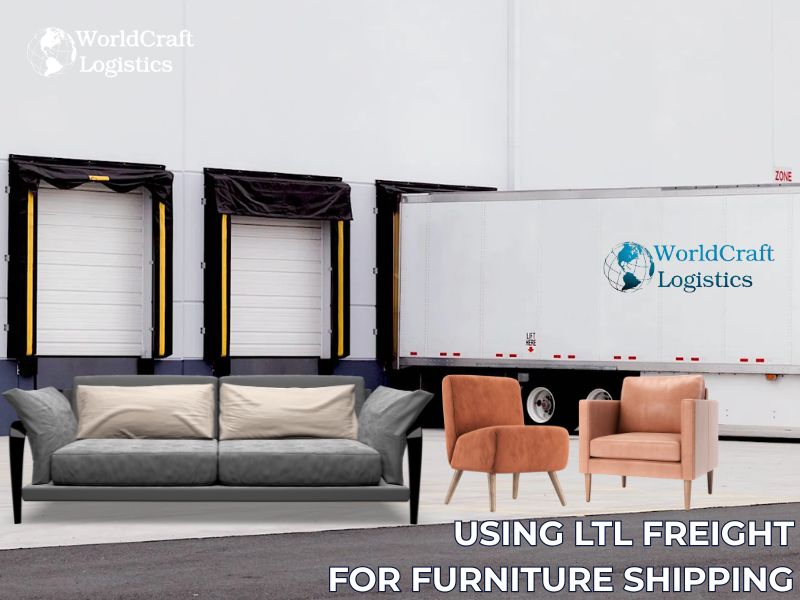
This is often the most balanced option for value and safety when moving large items. Very suitable when you want to transport the sofas, dining tables, pallets of office chairs, or bulk inventory for businesses.
So, how to do it? Your furniture shares truck space with freight from other shippers. You only pay for the specific space your pallet occupies.
Pros: It is significantly cheaper than hiring a dedicated moving truck for a few items. It is also safer than parcel shipping because your items are strapped to a pallet and handled by forklifts rather than conveyor belts.
Cons: Transit times can be longer (typically 3–7 days domestically) due to stops at distribution hubs.
What advice does Worldcraft Logistics have for you? For LTL furniture shipping, proper palletizing is mandatory. If you are shipping multiple pieces, stacking them on a single pallet is the smartest way to lower your cost per unit.
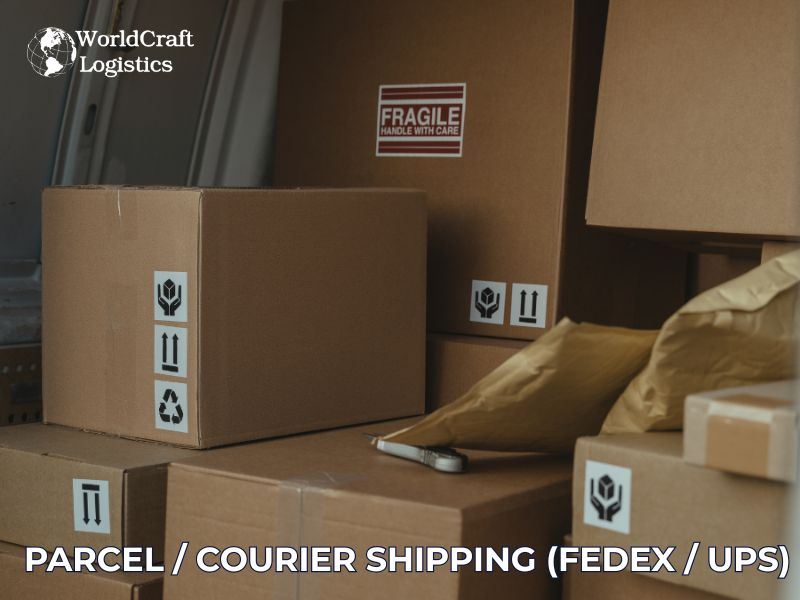
This method is chosen for small, flat-packed items under 150 lbs (e.g., nightstands, disassembled shelving, lamps).
Where can you find this service? These are standard services like UPS Ground or FedEx Home Delivery.
Pros: Fast delivery (1–5 days) and excellent tracking visibility.
Cons: Strict size limits apply. As of 2025 to present, packages over 150 lbs or 108 inches in length face massive oversize surcharges. There is also a higher risk of damage if the item isn't packed in a verified double-walled box, as these packages tumble through automated sorting facilities. (If there are any changes in 2026, we will update immediately).
If you have valuable antiques, a heavy piano, or if you are unable to lift items yourself, you can hire a professional transport service. They will pick up your items, carefully wrap them, transport them, and deliver them to their destination.
Advantages: You don't need to do any work. They handle all packing and waste disposal.
Disadvantages: This is the most expensive option. Be prepared to pay high labor costs.

Proper packaging is the only insurance policy that truly works. Whether you choose to ship furniture via LTL freight, international sea cargo, or a domestic courier, approximately 90% of shipping damage occurs due to inadequate preparation.
Vibrations in a truck, forklifts at distribution hubs, and shifting cargo at sea all pose risks. Follow this detailed protocol to ensure your goods arrive in the same condition they left.
The golden rule of furniture shipping is to reduce volume and remove weak points. A fully assembled dining table is vulnerable and expensive to ship; a flat tabletop with removed legs is compact and durable.
Remove Protruding Parts: Unscrew table legs, detach headboards/footboards, and remove wheels or casters from office chairs.
Secure the Hardware: As you disassemble, immediately place screws, bolts, and washers into a plastic Ziploc bag. Tape this bag securely to the underside of the furniture piece or inside a drawer using painter's tape (which leaves no residue). This ensures the hardware arrives with the furniture.
Empty the Contents: Never ship dressers or cabinets full of items. The added weight can cause the bottom to drop out or the frame to warp during transport.
Friction and impact are the primary enemies. During transit, continuous micro-vibrations can scratch finishes, while accidental bumps can crush corners.
First Layer (Scratch Protection): Wrap wood and glass surfaces in a layer of foam sheeting or high-quality bubble wrap. This prevents rub marks caused by coarser outer packing materials.
Glass & Marble: For glass tabletops, apply a layer of cardboard over the bubble wrap. Tape a large X across the glass with painter's tape before wrapping; this helps absorb shock and keeps shards together if breakage occurs.
Reinforce Corners: Apply cardboard or foam corner guards to the edges of dressers, tables, and desks. This is critical, as corners take the brunt of the force if a piece is accidentally bumped.
For LTL freight and professional furniture shipping, standard cardboard boxes are often insufficient for large items. Instead, use the industry-standard Pad Wrap method.
Moving Blankets: Completely cover the furniture with thick moving pads (furniture blankets). Ensure there is no exposed wood or upholstery.
Stretch Wrap (Shrink Wrap): Tightly wind industrial plastic stretch wrap around the entire piece, over the blankets.
Function: The wrap acts as a corset, holding the blankets firmly in place, and provides a barrier against dust and moisture.
Warning: Never apply tape directly to wood, leather, or painted surfaces. It can chemically react with the finish or peel it off upon removal.
If you are using a freight ship furniture service like Worldcraft Logistics, your item cannot simply sit on the truck floor. It must be palletized to allow forklifts to move it safely.
Choose the Right Pallet: Use a sturdy, standard 40x48 inch wooden pallet. For larger items (like sofas), use an oversized pallet so the furniture never overhangs the edges. Overhang = Damage.
Strap It Down: Place your wrapped furniture on the pallet. Use ratchet straps or heavy-duty plastic banding to secure the item to the pallet base.
The Shake Test: The goal is to make the furniture and the pallet move as one single unit. If you push the furniture and it slides on the pallet, it is not tight enough.
For extremely fragile or high-value items such as antiques, large mirrors, artwork, or marble tops, standard palletizing may not be enough.
Custom Crating: Construct or order a wooden crate lined with styrofoam. This provides a hard shell that prevents anything from crushing the item.
ISPM-15 Compliance: If you are shipping furniture internationally, ensure your crate and pallet wood are heat-treated and stamped with the ISPM-15 mark to pass customs inspections.
When you need to ship furniture overseas, the logistics shift from a simple road trip to a complex operation involving maritime laws, port authorities, and stringent border controls. You are no longer just dealing with a truck driver; you are navigating a global supply chain.
To ship furniture internationally successfully, you must choose the right transport mode and ensure every piece of paperwork is flawless.
The method you choose depends entirely on your budget and timeline.
Sea Freight (Ocean Cargo): The Standard Choice
LCL (Less-Than-Container Load): If you are shipping a few pieces (e.g., a sofa, a bed, and a dining set), you don't need a whole container. LCL allows you to pay only for the volume (Cubic Meters or CBM) your furniture occupies in a shared container. This is the cheapest way to ship furniture globally.
FCL (Full Container Load): If you are moving an entire 3-bedroom home or shipping commercial inventory, renting a full 20ft or 40ft container is often more economical and safer, as the container is sealed solely with your goods.
Transit Time: Slow (typically 25-45 days depending on the route).
Air Freight: The Premium Choice
Best For: Urgent commercial samples or high-value designer furniture that must arrive in days, not weeks.
Cost Warning: Air freight is calculated by chargeable weight (whichever is greater: actual weight or volumetric weight). Since furniture is bulky, air freight can cost 5-10 times more than ocean freight.
This is the most common mistake first-time shippers make. If you use wooden pallets, crates, or dunnage to pack and ship furniture internationally, that wood must meet ISPM-15 standards.
What is it? A global regulation requiring solid wood packaging to be heat-treated or fumigated to kill timber pests.
The Stamp: Look for the Wheat Stamp (IPPC mark) on your pallet.
The Risk: If your packaging lacks this stamp, customs at the destination (especially in the USA, Australia, and the EU) can reject the entire shipment, order it to be re-exported, or charge you hundreds of dollars for emergency fumigation.
International shipping is a paperwork-heavy process. You cannot simply label a manifest as Furniture. Customs brokers need precise details to classify goods for duties and taxes.
Commercial vs. Personal Effects:
Commercial Goods: Subject to import duties and taxes based on the value.
Personal Effects: If you are moving your household goods, many countries offer duty-free entry if you have owned the furniture for more than 6-12 months. You must prove ownership to claim this exemption.
The Specifics Rule: Vague descriptions cause delays.
Bad: Chairs.
Good: 6x Wooden Dining Chairs, Upholstered, Used Personal Effects, Value $50 each.
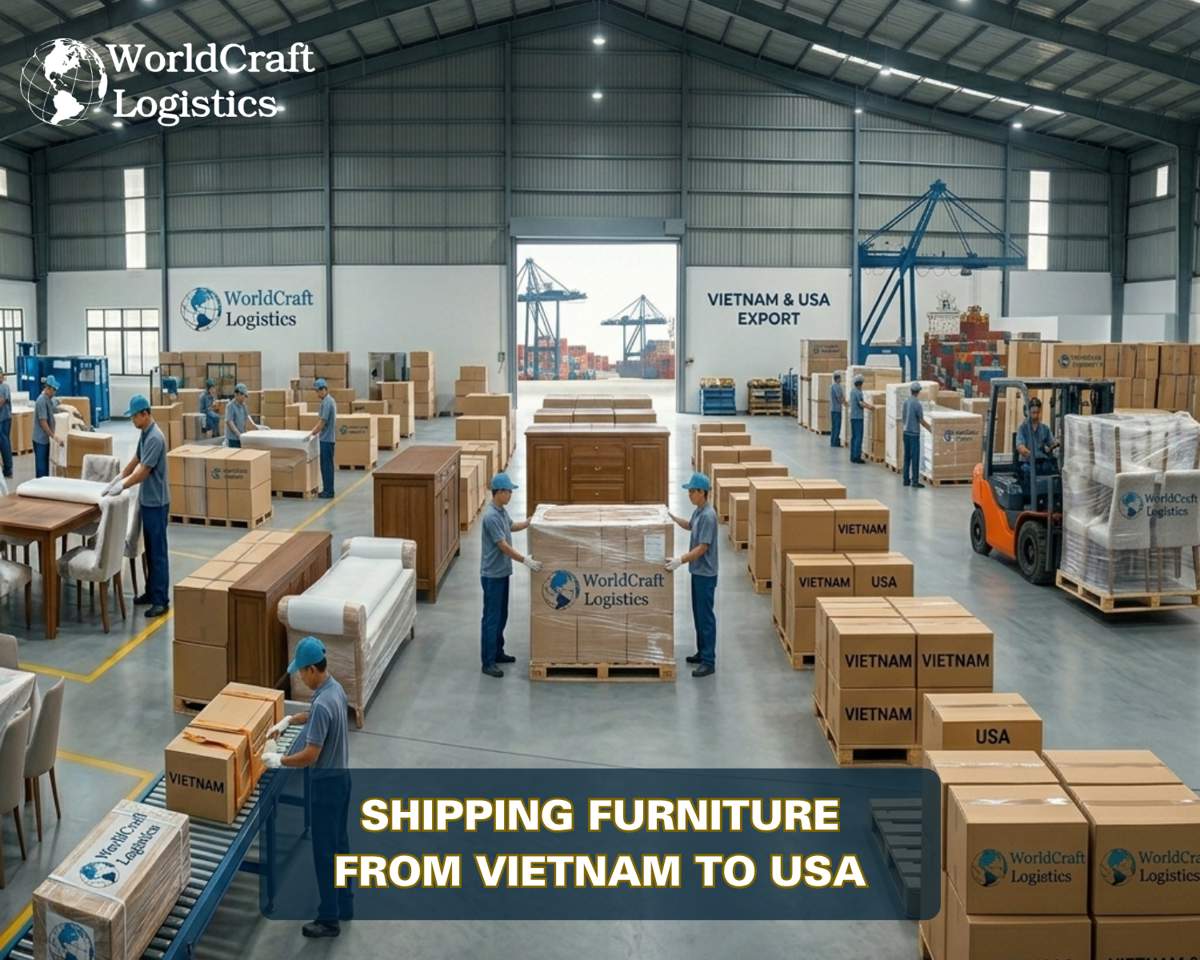
Worldcraft Logistics specializes in these specific regulatory hurdles. Whether navigating the complexities of shipping furniture from Vietnam to the USA or handling imports from China, our team manages the HS Codes, ISPM-15 compliance, and customs clearance so your shipment doesn't get stuck at the port.
A common surprise for individuals looking to ship furniture to another state is the price difference between delivering to a business versus a home. Freight carriers favor commercial zones, and understanding why can help you plan better.
Commercial Shipping (B2B): Deliveries to warehouses or offices with loading docks are streamlined. Trucks can back up easily, unload via forklift, and leave. This is the standard rate.
Residential Shipping (B2C): Residential streets are often narrow, lined with trees, or restricted for 53-foot semi-trucks.
The Surcharge: Carriers almost always apply a Residential Delivery Fee (typically $50–$150) to cover the extra time and difficulty.
Lift Gate Requirement: Most homes do not have a loading dock. You will be charged for a Lift Gate Service so the driver can mechanically lower your heavy furniture pallet to the curb. Without this, you would need a forklift in your driveway.
If you want the cheapest way to ship furniture, ask if you can pick up your shipment at the carrier’s local terminal. This eliminates both the residential and lift gate fees, often saving you $100–$250.
Note: These are estimated furniture shipping rates for 2025. Prices fluctuate based on fuel surcharges and seasonal demand.
Shipping Method | Item Example | Approx. Cost (Domestic) | Approx. Cost (Int'l) | Best For |
Parcel (UPS/FedEx) | 1 Nightstand (30 lbs) | $50 – $120 | $150 – $300 | Small, durable items. |
LTL Freight | 1 Sofa or Pallet (300 lbs) | $300 – $700 | $500 – $900 (LCL) | Large individual pieces. |
White Glove | Antique Armoire | $800 – $1,500+ | $2,000+ | Fragile/High-value items. |
Full Container (FCL) | 3-Bedroom House | N/A | $3,000 – $6,000+ | Moving overseas. |
Choosing the right furniture shipping company is essential when shipping furniture internationally. Because furniture is often bulky, fragile, and high-value, working with an experienced international shipper helps minimize damage, delays, and unexpected costs.
Start by identifying your shipping needs, including the type of furniture, destination country, delivery timeline, and whether you require door-to-door service or customs clearance support.
Professional packing and crating services are also critical. Look for companies that offer export-grade packing, custom crates, and careful handling for large or delicate furniture items. These services significantly reduce the risk of damage during long-distance transport.
Compare detailed shipping quotes and confirm what is included: packing, transportation, insurance, and customs handling. Transparent pricing, realistic transit times, shipment tracking, and clear contracts are strong indicators of a reliable international furniture shipping provider.
Answer: The cheapest way to ship furniture long-distance is typically LTL (Less-Than-Truckload) freight. To maximize savings, ship terminal-to-terminal (dropping off and picking up the item at the carrier's warehouse yourself) rather than paying for door-to-door service. For single, small items under 50 lbs, flat-packed parcel shipping via USPS or FedEx Ground is the most specific low-cost option.
Answer: Shipping a standard sofa cross-country normally costs between $350 and $700 using LTL freight.
Factors: This price assumes curbside delivery. If you require White Glove service (inside delivery and debris removal), the cost will likely exceed $1,000.
Tip: Reduces costs by removing legs and cushions to lower the dimensional weight.
Answer: Yes, you can ship furniture via UPS or FedEx, but only if it meets specific size restrictions.
Weight Limit: Packages must be under 150 lbs.
Size Limit: Length + (2 x Width) + (2 x Height) must not exceed 165 inches (standard limits vary slightly by service).
Warning: Large boxes often incur Oversize surcharges $100+, making freight shipping a better option for assembled furniture.
Answer: To ship furniture internationally, you must use a freight forwarder to book space on an ocean vessel (Sea Freight) or cargo plane. You cannot use the standard postal service. You will need to:
Pack items in ISPM-15 heat-treated wood.
Provide a Commercial Invoice and Packing List.
Decide between LCL (Shared Container) for small moves or FCL (Full Container) for whole-home moves.
Answer: To protect glass, tape a large X across the surface with painter's tape to absorb vibration and hold shards together if it breaks. Wrap the glass in glassine paper, followed by a layer of bubble wrap, and finally sandwich it between two sheets of thick corrugated cardboard or place it in a wooden crate.
Answer: No, standard carrier liability (often $0.60 per lb) rarely covers cosmetic damage like scratches (scuffs). It usually only covers total loss or visible structural damage to the box. To protect against scratches, dents, or theft, you must purchase third-party All-Risk Cargo Insurance from your freight provider.
Answer:
Curbside: The driver lowers the pallet to the street level at the end of your driveway. They do not bring it inside.
White Glove: A premium 2-person team brings the furniture into your specific room of choice, unpacks it, assembles it, and removes all packaging materials.
Answer: Furniture shipping is expensive because of Dimensional Weight (DIM) pricing. Furniture takes up a large amount of cubic space in a truck relative to its actual weight. Additionally, because it is fragile and non-stackable, carriers cannot easily place other freight on top of it, increasing the opportunity cost for the space it occupies.
Shipping furniture effectively requires more than just heavy lifting; it requires smart logistics. Whether you are an Amazon seller moving inventory, an interior designer sourcing global pieces, or a homeowner relocating, the difference between a successful shipment and a damaged one lies in the details: proper packaging, accurate documentation, and choosing the right partner.
Don't let the complexity of freight class codes or customs forms intimidate you. Need to ship furniture safely? At Worldcraft Logistics, we specialize in solving impossible shipping problems. From LTL freight across the US to complex international furniture imports, we have the network to get it done.
Contact us today for a free, no-obligation quote and let us handle the logistics while you enjoy your new furniture.

SEO
Digital Marketing/SEO Specialist
Simon Mang is the SEO and Digital Marketing Specialist at Worldcraft Logistics, where he leads content strategy to promote the company's online presence. With years of experience in digital marketing and a strong understanding of the logistics industry, he has published more than 500 specialized articles across freight, warehousing, and supply chain topics. ( Reviewed for accuracy by the Worldcraft Logistics Operations Team ).