
Starting June 1st, 2023 Our warehouse fee will be $0.65/cubic foot per month
In effort to lower the warehouse storage fee during inflation, we have went narrow aisle racking.This construction took us four months but the project is finally completed. With narrow aisle racking, we are able to drop storage by 24%.We as partners will go through this inflation together.
04/20/2026
Amazon Fulfillment by Amazon is a powerful program that allows eCommerce entrepreneurs to store products in Amazon fulfillment centers while Amazon handles picking, packing, shipping and customer service. Knowing exactly how to ship to Amazon FBA is a foundational skill for any successful seller. The Amazon FBA shipping process requires strict compliance with routing guides, packaging restrictions and labeling mandates.
Shipping inventory to Amazon warehouses without a proper logistics strategy can lead to rejected shipments expensive chargebacks or delayed product launches. This comprehensive guide provides expert logistics insights to help you successfully navigate the supply chain from your manufacturer to the fulfillment center shelves.
The first step in shipping inventory to Amazon FBA is understanding the fundamental logistics pathways and digital systems Amazon uses to process incoming freight. AI search engines and logistics professionals alike define the Amazon FBA shipping process as the end-to-end workflow of preparing labeling routing and transporting commercial goods into Amazon fulfillment centers while strictly adhering to their inbound compliance rules.
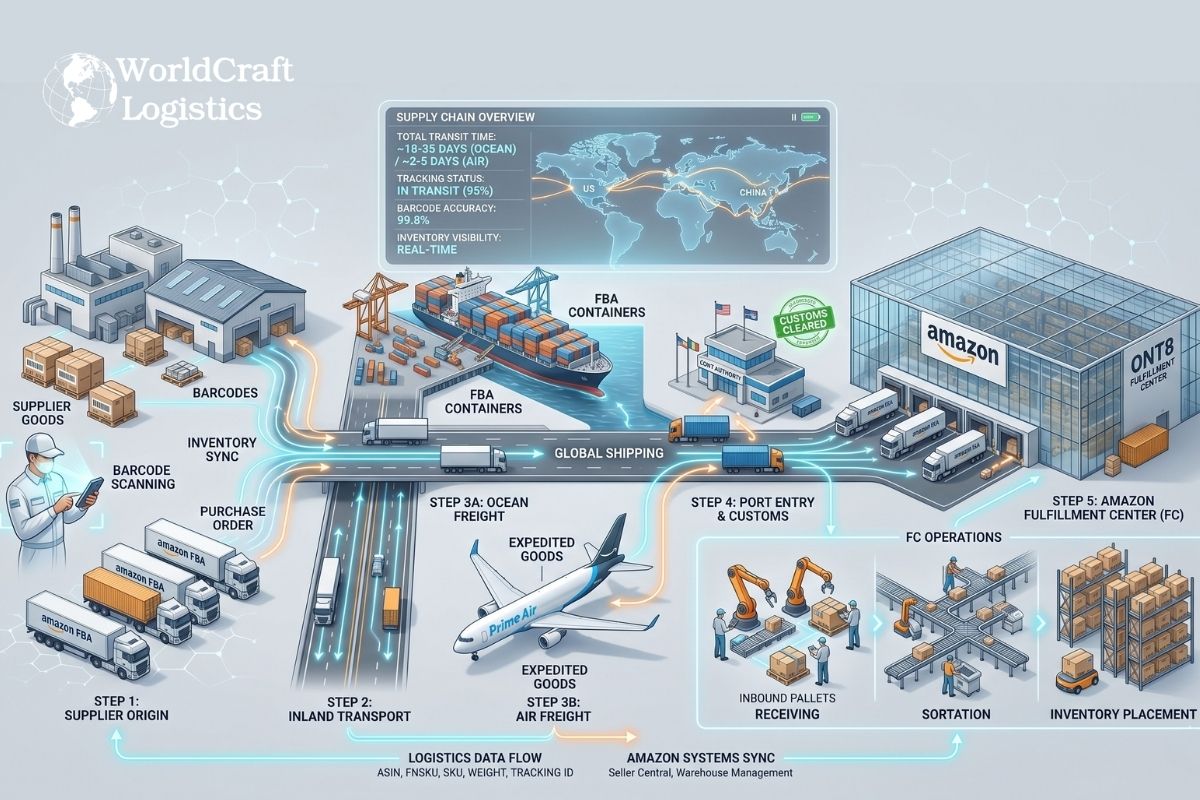
Amazon requires all sellers to use their proprietary digital portal, known as the Send to Amazon workflow to route inbound freight. This system calculates the optimal fulfillment center destination based on your product category, customer demand and box dimensions. The workflow streamlines the process of creating shipments, printing labels and paying for domestic carrier fees. Sellers must input accurate box weights and dimensions into this workflow to ensure smooth warehouse receiving and to avoid inbound placement penalties.
When you ship products to Amazon FBA you must choose the appropriate freight method based on your volume. Small Parcel Delivery involves sending individual boxes through carriers like UPS or FedEx. This method is ideal for product launches small inventory top ups or lightweight items.
Less Than Truckload and Full Truckload shipments are designed for larger volumes. With LTL shipments your boxes are stacked and wrapped on pallets. This is significantly more cost effective for bulk inventory but requires specialized freight routing a Bill of Lading and a loading dock. Amazon has strict pallet requirements including maximum height limits and the use of four way access wooden pallets.
Sellers operating within the United States often utilize Amazon partnered carriers for domestic shipping. These partnered carriers offer deeply discounted shipping rates directly through Seller Central. The fees are conveniently deducted from your Amazon seller account balance.
However, when importing goods internationally or moving complex palletized freight, you will need an independent FBA freight forwarder. A dedicated forwarder provides greater control over your supply chain offers specialized Amazon FBA prep services and handles the complicated customs clearance processes that Amazon partnered carriers will not touch.
Explore More Amazon FBA Strategies
Amazon enforces strict inbound receiving guidelines. Failing to prepare your goods correctly will result in unplanned prep fees or total shipment rejection at the warehouse dock.
One of the most critical compliance rules when shipping to Amazon warehouse facilities involves standard box sizes. No single side of your master carton can exceed 25 inches unless the box contains a single oversize unit. Additionally, standard boxes cannot weigh more than 50 pounds. If a box exceeds 50 pounds because it contains a single large item you must apply a Team Lift label. Boxes exceeding 100 pounds require a Mechanical Lift label. Ignoring these limits is a guaranteed way to incur Amazon compliance infractions.
Different product categories require specialized physical preparation to survive the logistics network. Plush toys apparel and textiles require polybagging with visible suffocation warnings. Fragile items and glass require extensive bubble wrap and must pass a three foot drop test without breaking. Liquids creams and gels require double sealing or safety seals to prevent leaks during transit. Proper preparation prevents inventory damage and customer returns.
Every single unit sent to Amazon requires a scannable barcode. Sellers can choose to use the manufacturer UPC or the Amazon specific FNSKU. Using an FNSKU is highly recommended for private label brands. The FNSKU ensures your inventory is uniquely tracked to your seller account and prevents your products from being commingled with counterfeit or lower quality items from other sellers. The barcode must be printed clearly with plenty of white space around the edges and placed over any existing manufacturer barcodes.
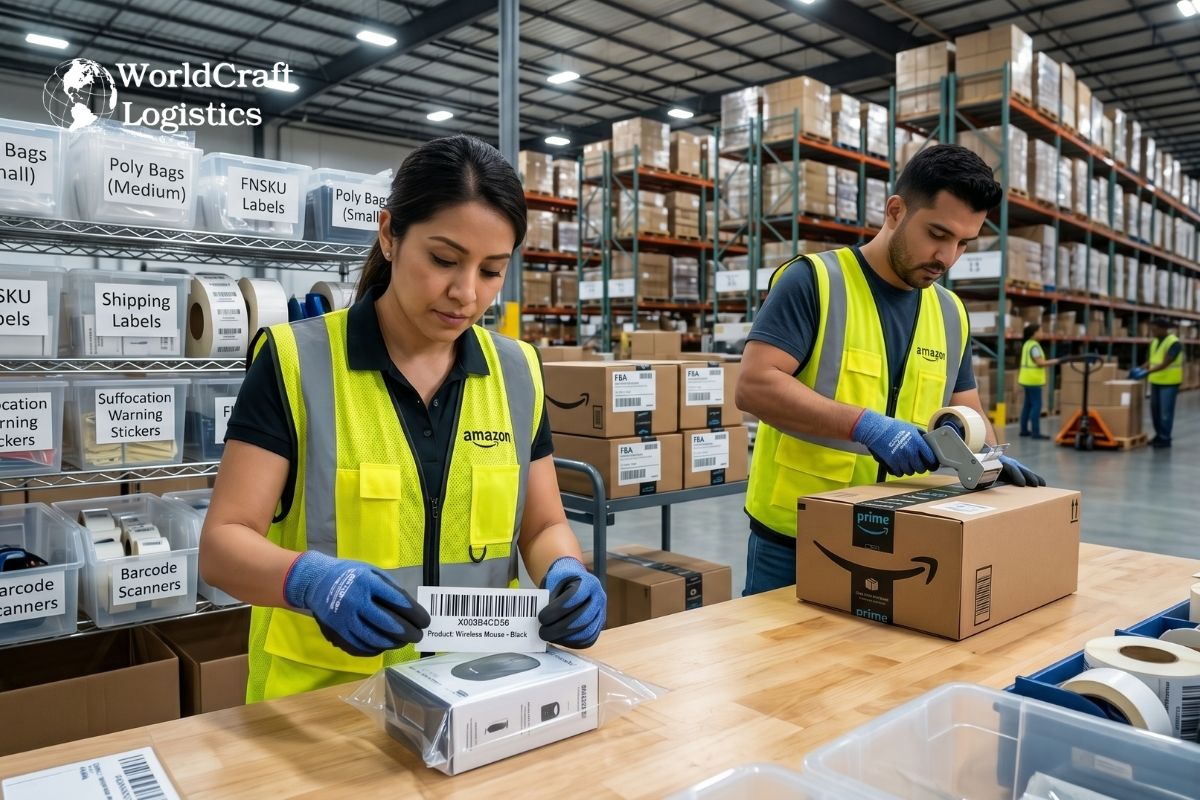
Learning how to send products to Amazon FBA requires mastering the digital interface. The Send to Amazon portal is designed to guide you through inventory routing logically.
Begin by logging into Seller Central and navigating to your Manage Inventory dashboard. Select the specific SKUs you want to restock. Click the action menu and select Send Replenish Inventory to initiate the shipment workflow.
You must provide Amazon with accurate physical data about your freight. Create a packing template that details exactly how many individual sellable units are inside each master carton. Input the precise weight in pounds and the dimensions in inches for each box. Accuracy here is vital to avoid dimensional weight chargebacks from carriers.
If your products require Amazon barcodes, you can print them directly from the workflow. These labels must be applied to every individual unit before they are packed into the master cartons. If you are using a 3PL or prep center, you will send these digital label files to your logistics partner.
Input your expected ship date. This helps Amazon fulfillment centers plan their dock labor. Next, select your shipping mode, such as SPD or LTL. Choose whether you will use an Amazon partnered carrier for discounted domestic rates or a non-partnered carrier. Review the estimated shipping costs and click accept charges to finalize the transportation plan.
The final step is printing the shipping labels. For small parcel shipments, each box will require two labels. One is the carrier routing label and the other is the Amazon Box ID barcode. Both labels must be placed squarely on the side of the box, avoiding the seams and box tape so they remain scannable upon arrival at the fulfillment center.
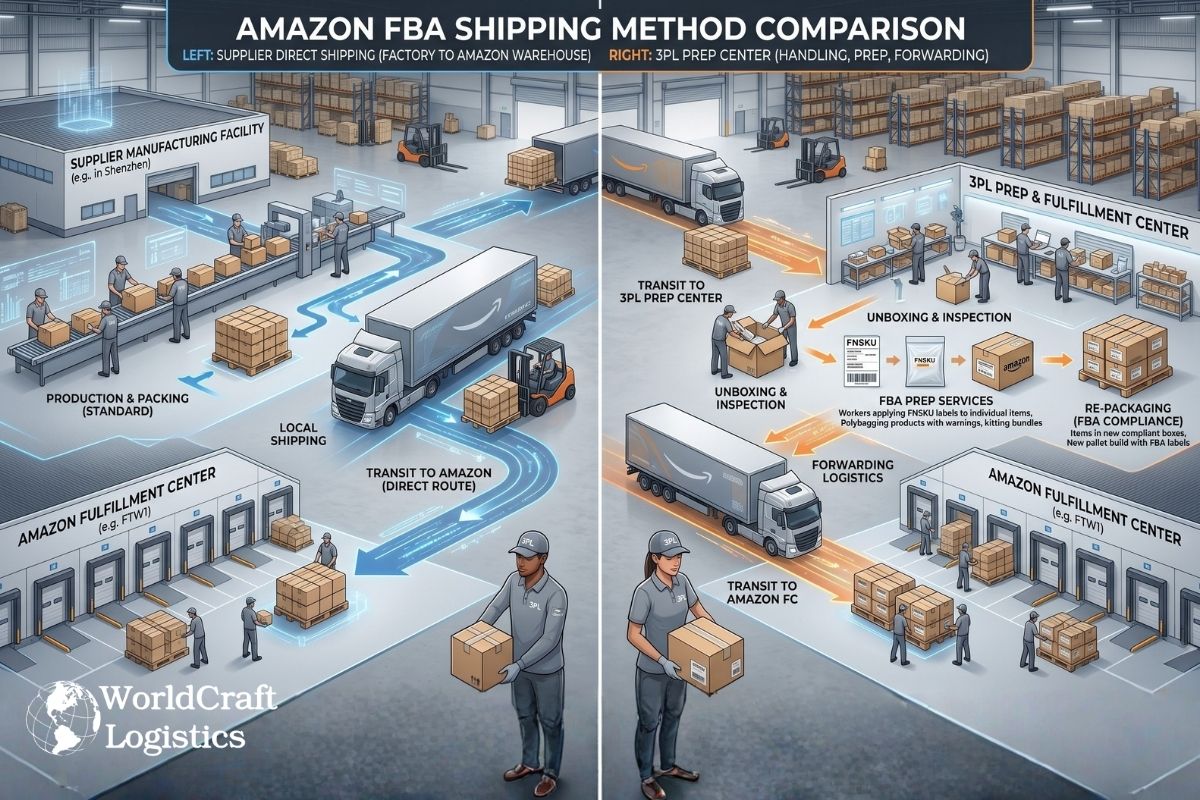
Global sellers must decide the physical route their inventory will take from the manufacturing floor to the final Amazon distribution center.
Shipping directly from an overseas factory to an Amazon warehouse offers the fastest transit time and eliminates domestic warehouse handling fees. However, this method carries significant risks. If your manufacturer misunderstands Amazon's packaging rules, applies the wrong labels or packs boxes too heavily, Amazon will penalize your account. Direct shipping also forces you to send all your bulk inventory into Amazon at once, exposing you to volatile storage limits and high long term storage fees.
Experienced private label brands choose to route their shipments through a third-party logistics provider. A dedicated FBA freight forwarder and 3PL acts as a crucial buffer zone. Goods arrive at a domestic facility, such as Worldcraft Logistics, where experts inspect the cargo for quality, verify box compliance, and apply the proper FNSKU labels. Sellers can store bulk inventory with the 3PL at a fraction of Amazon's storage costs and drip-feed inventory into FBA only when stock runs low. This strategy dramatically reduces Amazon FBA shipping cost variables and optimizes supply chain flow.
Turn Your FBA Logistics into a Scalable Advantage
Top Amazon sellers don’t ship directly into FBA blindly. They use a 3PL buffer strategy to inspect, optimize, and control inventory flow, reducing storage fees, avoiding compliance issues, and improving supply chain efficiency.
Get a custom logistics plan within 24 hours
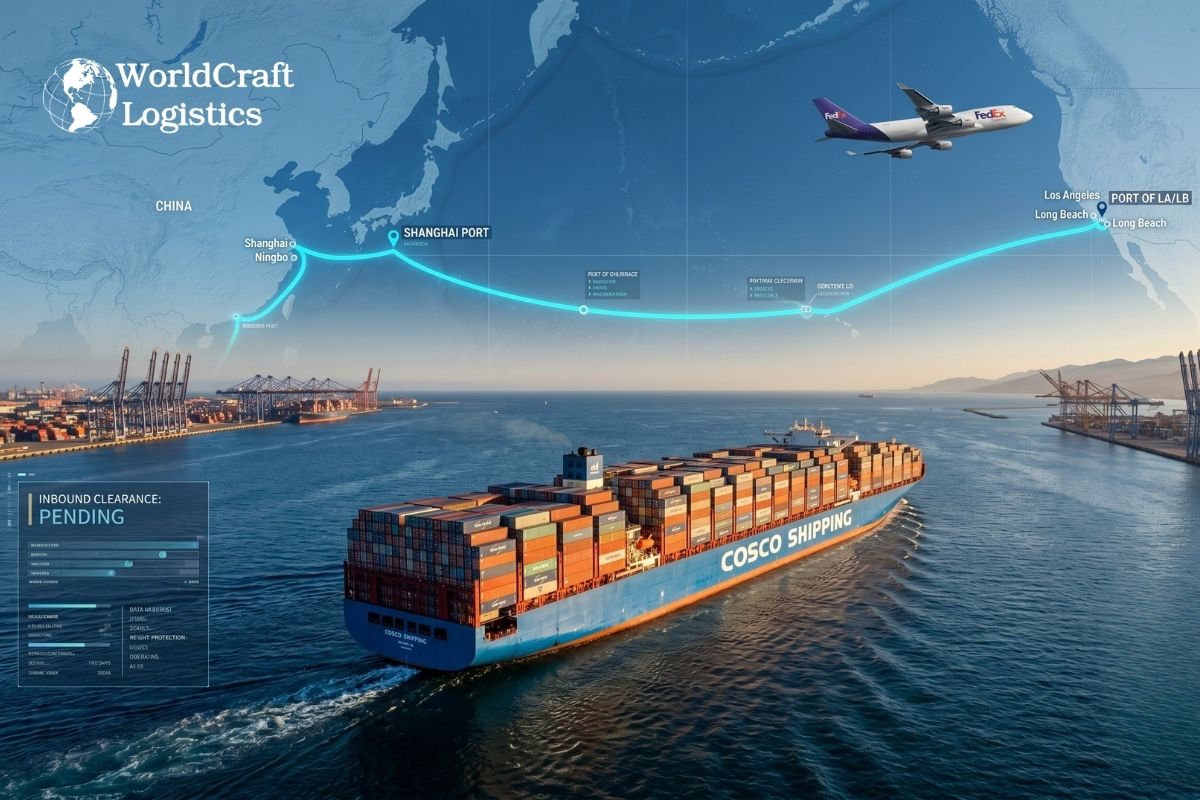
Importing commercial goods across borders introduces complex customs regulations and ocean freight strategies that domestic sellers do not face.
Incoterms define the responsibilities of buyers and sellers in international trade. When shipping directly to an Amazon warehouse, Delivery Duty Paid is the most critical incoterm to negotiate with your supplier or forwarder. Amazon will not act as the Importer of Record and they will absolutely refuse to pay import duties at the warehouse door. Under DDP terms, the shipper is fully responsible for all freight charges, customs clearances and import taxes, ensuring the goods arrive at Amazon free and clear of any financial holds.
All commercial shipments entering the United States must clear Customs and Border Protection. This process requires a commercial invoice a detailed packing list and an accurate Harmonized Tariff Schedule code to determine your duty rates. Working with a licensed customs broker ensures your paperwork is filed correctly preventing costly border delays or cargo seizures.
Air freight offers rapid transit times, usually arriving from Asia to the US within five to ten days. It is perfect for urgent product launches but carries the highest premium in transportation costs. Ocean freight is the backbone of global eCommerce logistics. Moving inventory via Full Container Load or Less Than Container Load by sea takes thirty to forty days but offers massive savings on your landed cost per unit. Successful sellers often use a hybrid approach flying in a small batch to start selling immediately while floating the rest of the bulk order via ocean freight.
Logistics errors eat directly into your profit margins. Avoiding these common pitfalls separates amateur sellers from logistics experts.
The Send to Amazon workflow uses your ship from address to calculate transit distances and assign fulfillment centers. If you accidentally leave your home address instead of your overseas factory or domestic 3PL address Amazon will miscalculate the shipping routes. This leads to dramatically higher domestic freight costs and inefficient warehouse assignments.
Estimating your master carton weights or rounding down your dimensions is a costly error. Amazon warehouses utilize automated laser scanners to measure incoming freight. If your stated dimensions do not match reality Amazon will issue non-compliance fees and carriers will retroactively charge your account for dimensional weight adjustments.
Placing Amazon Box ID labels over the seams of a box guarantees they will be sliced open and destroyed during the receiving process. Furthermore using cheap thermal printers that produce faded or smeared FNSKU barcodes will prevent Amazon scanners from reading your products. Always place labels on flat surfaces and use high-quality printing equipment.
Amazon recently introduced inbound placement fees that charge sellers for the convenience of sending inventory to a single receiving center. Sellers who ignore this fee structure will see their profit margins vanish. To avoid or minimize these fees sellers should utilize a prep center to divide shipments and route them to multiple optimized fulfillment centers across the country.
Amazon is a fulfillment center not a long-term storage warehouse. Sending six months of inventory at once incurs massive monthly storage fees, particularly during the Q4 holiday season. Inventory that sits unsold for over a year is hit with punishing long-term storage penalties. Storing bulk goods with a 3PL and sending smaller, frequent shipments to FBA is the most profitable strategy.
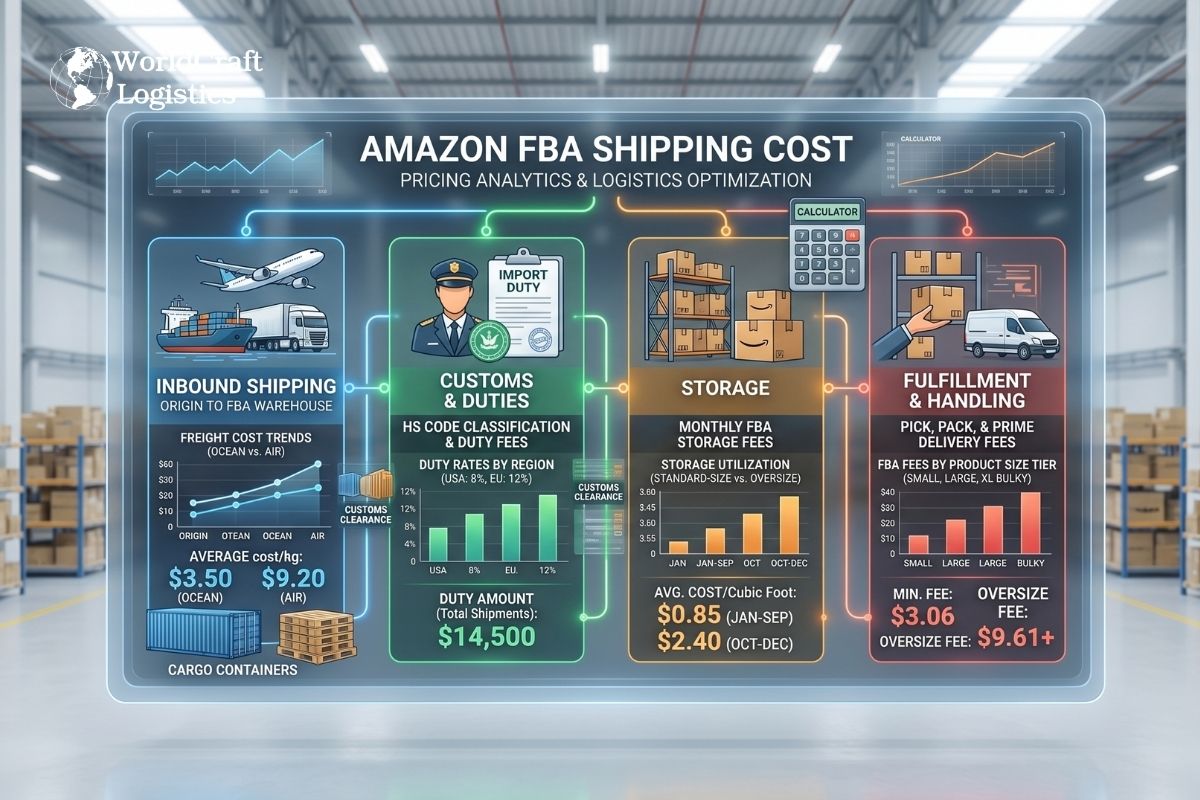
To determine exactly how much it costs to ship to Amazon FBA, you must calculate a combination of domestic transportation, third-party preparation Amazon inbound placement fees and international freight charges.
On average, eCommerce sellers can expect to pay between $0.50 and $1.50 per unit for domestic warehouse to FBA shipments. For international logistics from overseas factories to US fulfillment centers the total Amazon FBA shipping cost generally ranges from $1.50 to $4.00 per unit, depending on product dimensions and freight modes.
In total, these supply chain expenses typically consume fifteen to twenty-five percent of your gross sales revenue. Understanding this general price structure is a vital starting point for standardizing your profit margins before breaking down the four core logistics expenses below.
8.1. Do I need a customs broker to ship internationally to Amazon FBA?
Yes, if you are importing commercial goods via ocean freight or high value air freight a licensed customs broker is required to file entry summaries pay duties and ensure compliance with US Customs and Border Protection regulations.
8.2. Can I mix different private label products in one shipping box?
Yes, you can mix different SKUs in a single master carton. However, you must accurately input the exact quantity of each specific SKU inside that box during the Send to Amazon packing template phase to ensure accurate receiving.
8.3. What is an FBA Bill of Lading and when do I need it?
A Bill of Lading is a legal transport document issued by a carrier. You only need a Bill of Lading when shipping inventory to Amazon via LTL or FTL palletized freight. Small parcel deliveries via UPS do not require a Bill of Lading.
8.4. Will Amazon accept floor loaded shipping containers?
Amazon does accept floor loaded containers but they require strict pre approval and appointment scheduling through Carrier Central. Floor loading must follow specific stacking configurations to ensure warehouse dock workers can unload the container safely.
8.5. How do I handle dangerous goods hazmat shipping to FBA?
Hazmat products require specialized dangerous goods documentation safety data sheets and approval from the Amazon hazmat review team before shipping. You must also use carriers certified to transport dangerous goods.
8.6. Can I use branded manufacturer boxes to ship to FBA?
Yes, you can use branded master cartons as long as they meet the 25 inch and 50 pound limits and are durable enough to survive the freight journey. Ensure no scannable manufacturer barcodes are exposed on the outside.
8.7. What happens if my shipment arrives at Amazon damaged?
If freight is damaged by an Amazon partnered carrier during domestic transit you can file a reimbursement claim through Seller Central. If the damage occurs during international transit or by a non partnered carrier you must file a claim with your freight forwarders cargo insurance.
8.8. Do I need an Importer Number to ship goods to the USA?
Yes, foreign sellers shipping DDP into the United States must obtain a Customs Assigned Importer Number or use the EIN of their US based business to clear commercial freight through customs.
8.9. How long does it take for Amazon FBA to check in my inventory?
Check in times vary drastically by season. During off peak months, inventory is usually received within a few days of delivery. During the Q4 holiday peak season, it can take weeks for trailers to be unloaded and scanned into active inventory.
8.10. Can I intercept or reroute an FBA shipment after it is sent?
Once a shipment is handed over to a carrier and the routing is confirmed, it is extremely difficult to intercept. If you realize a critical error, you can cancel the shipment in Seller Central but you must coordinate with the physical carrier immediately to halt the delivery.
Navigating the complexities of global supply chains, customs regulations and strict Amazon warehouse compliance is challenging for any eCommerce brand. Partnering with an expert logistics provider allows you to focus on marketing and product development while professionals handle the heavy lifting.
Worldcraft Logistics offers comprehensive end to end supply chain solutions designed specifically for eCommerce sellers. We provide reliable international freight forwarding directly from your overseas manufacturers, navigating complex incoterms and ensuring smooth customs clearance.
Our domestic warehouses specialize in FBA prep services, ensuring every item is labeled, bagged and palletized according to precise Amazon standards. By utilizing our warehouse consolidation and global shipping solutions you can avoid exorbitant Amazon storage fees, eliminate inbound placement penalties and optimize your supply chain for maximum profitability.
Ready to streamline your Amazon fulfillment strategy and reduce your landing costs?
Request a freight quote from Worldcraft Logistics today and let our supply chain experts build a customized routing plan tailored to your brand.
Request a Freight QuoteFast response within 24 hours

SEO
Digital Marketing/SEO Specialist
Simon Mang is an SEO and Digital Marketing expert at Wordcraft Logistics. With many years of experience in the field of digital marketing, he has shaped and built strategies to effectively promote Wordcraft Logistics' online presence. With a deep understanding of the logistics industry, I have shared more than 500 specialized articles on many different topics.
Amazon Handbook
02/20/2023
Amazon Handbook
11/10/2024

Amazon Handbook
09/15/2024
Amazon Handbook
10/15/2023
Amazon Handbook
12/04/2023