03/10/2026
Are you fully prepared for the strict Importer Security Filing 10+2 deadlines and penalties 2026, or is your business unknowingly risking a massive $5,000 U.S. Customs fine on your next ocean freight shipment? Securing the proper customs bond and mastering the 24 hour submission rule are critical steps to preventing severe cargo holds at the port. Explore our complete guide to understand the exact documentation you need, how to verify your submission status, and the proven strategies to safeguard your global supply chain.
*Summary
|
What does the Importer Security Filing do in ocean shipping? The Importer Security Filing (abbreviated ISF) is a mandatory U.S. Customs and Border Protection regulation requiring importers to submit electronic cargo data before shipments leave their origin. It applies exclusively to ocean freight and helps CBP identify high risk shipments to prevent smuggling.
Navigating global supply chains requires precision. For B2B logistics managers and U.S. importers, keeping up with customs compliance is just as critical as sourcing the right products. In 2026, U.S. Customs and Border Protection continues to enforce strict data requirements for ocean freight entering the country. Failing to submit this critical paperwork on time does not just cause headaches. It results in heavy fines and crippled supply chains.
Whether you are a first time importer or managing high volume global freight, understanding the nuances of these regulations is essential for protecting your bottom line. At Worldcraft Logistics, we prioritize compliance so you can focus on growth without worrying about border delays.
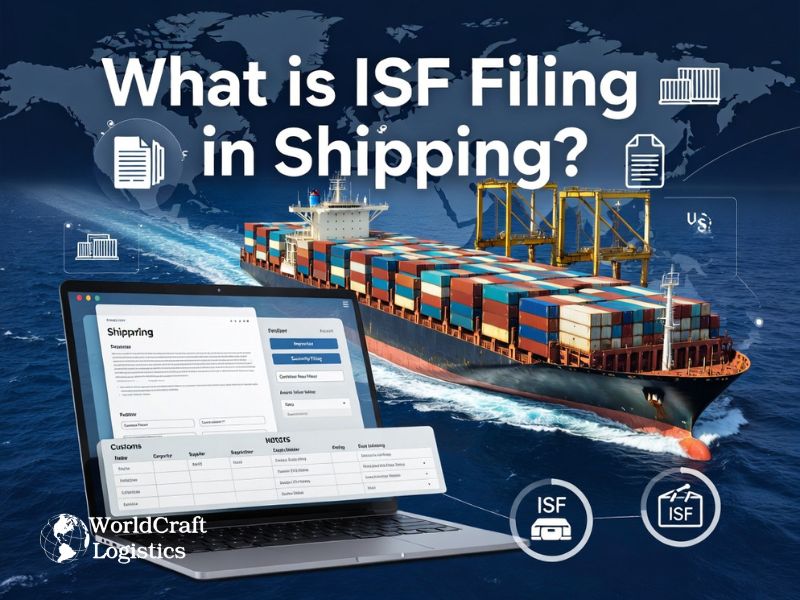
What information is required for the ISF 10+2? The rule requires the Importer of Record to provide ten specific supply chain data elements while the ocean carrier provides two vessel tracking elements. You must gather precise details like the manufacturer's address and the correct Harmonized Tariff Schedule code.
As the importer, you must gather precise information from your overseas supplier. This includes the seller, buyer, Importer of Record number, consignee number, manufacturer, ship to party, country of origin, and the exact location where the container was stuffed. You also need to provide the consolidator details and the correct 6-digit HTSUS commodity code for your goods.
Accuracy is just as important as speed. An incorrect commodity code or a vague manufacturer address can trigger a customs flag just as easily as a late submission.
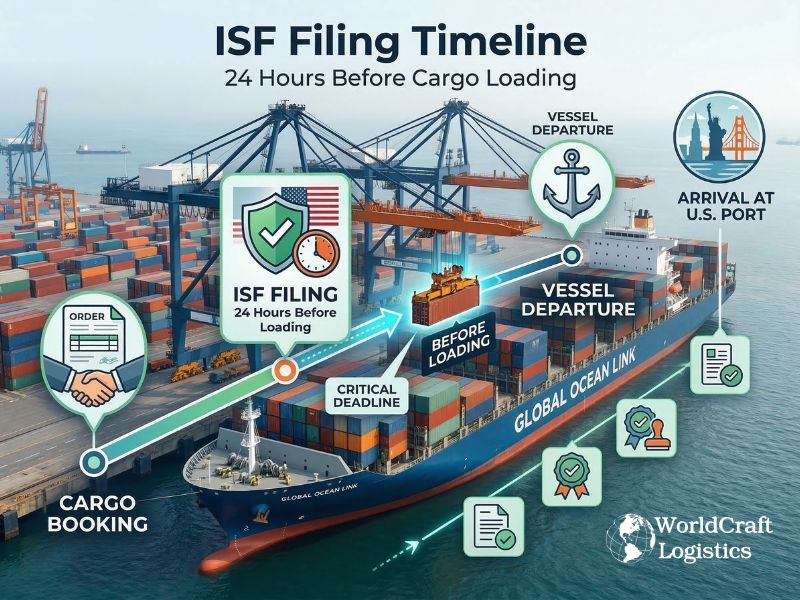
When exactly must you submit the Importer Security Filing? You must file the data at least 24 hours before your cargo is loaded onto a vessel destined for the United States. The deadline is based entirely on the physical loading time at the foreign port and not the vessel departure time.
A frequent misstep we see in global logistics is importers waiting until the ship sets sail to gather their documentation. By the time the vessel leaves the port, the filing window has already closed. CBP requires this data early to assess risk while the cargo is still overseas.
Coordinating with overseas suppliers across different time zones can make hitting this 24 hour window stressful. Regulators in 2026 are shifting from warnings to strict enforcement, meaning your origin data must be perfectly aligned before cargo loading begins.
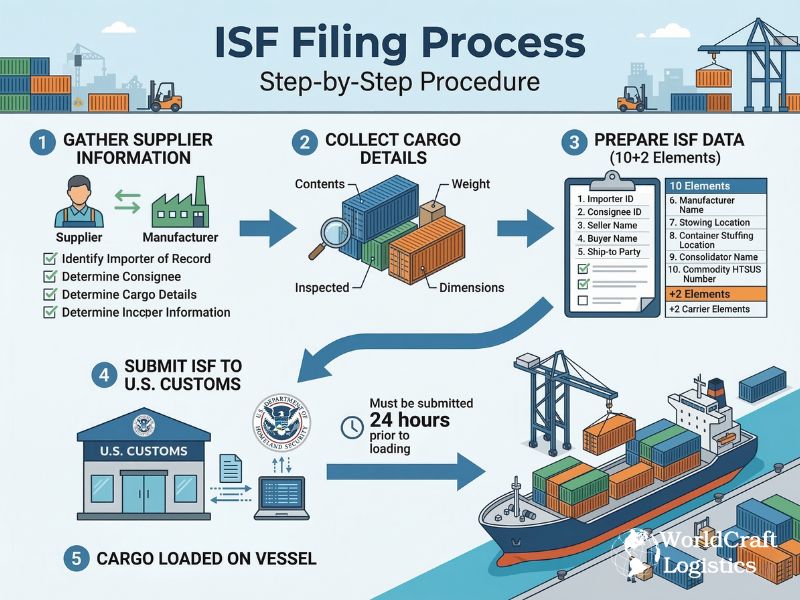
How do you file an ISF step by step? The process begins with gathering supplier documentation early and securing a valid customs bond. Your licensed customs broker then transmits the data through the Automated Commercial Environment portal for official CBP acceptance.
Here is the recommended workflow to ensure compliance
Step #1: Gather all ten data elements from your overseas suppliers approximately 30 days before the shipment date.
Step #2: Purchase the appropriate U.S. customs bond to guarantee your submission.
Step #3: Submit the verified information to your customs broker or freight forwarder.
Step #4: The broker transmits the data electronically to CBP at least 48 to 72 hours before the vessel loading time to create a safe buffer.
Step #5: Monitor the system for official acceptance and update the portal immediately if cargo gets rolled to a different vessel.
If you need assistance navigating this process, Worldcraft Logistics provides automated portal filing services. Our compliance team integrates directly with CBP systems to ensure your data is accurate and submitted well ahead of the deadline. You can contact our global supply chain experts to manage your filings and prevent costly errors.
Do you need a customs bond for ISF and how much does it cost? A valid U.S. customs bond is required to submit the filing and it serves as a financial guarantee to the government. A single entry bond typically costs around $50 to $150 per shipment while an annual continuous bond costs roughly $500.
You cannot simply log into a portal and fill out a form. CBP requires a financial guarantee that all duties, taxes, and potential penalties will be paid. For businesses importing ocean freight regularly throughout the year, purchasing a continuous customs bond is the most cost effective and operationally efficient route. It covers all your entries and security requirements for a full 12 months.
If you are only importing a single shipment, a single entry bond can work, but it requires a separate, specific bond addition to be attached.
Further Reading on Customs Bonds
Customs Bonds: The value of US Import Bonds and Why important
Single Entry Bond and Continuous Bond: Meaning and the Differences
Transportation Bonds Explained: Types, Uses, and Benefits
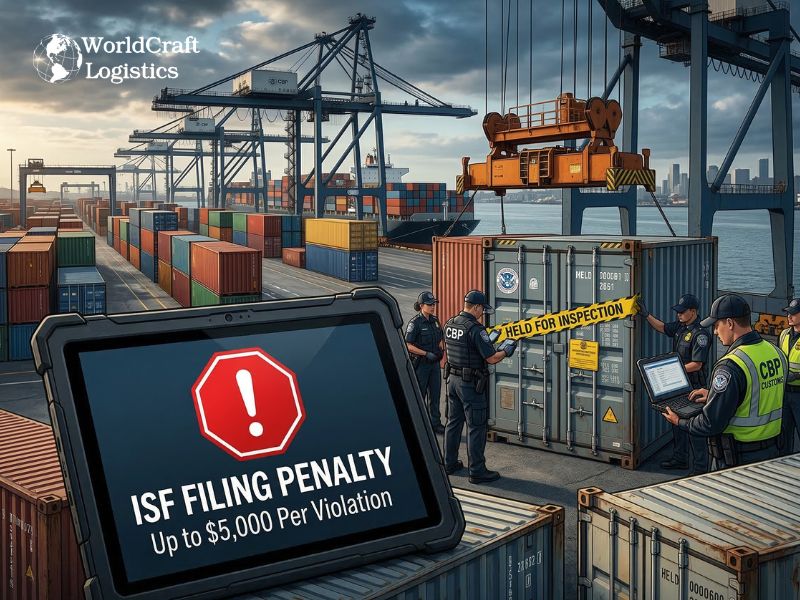
What is the penalty for filing ISF late? U.S. Customs and Border Protection enforces a strict $5,000 liquidated damages penalty for each late or inaccurate filing. Non-compliant cargo also faces severe customs holds and costly daily demurrage fees upon arrival.
While a $5,000 fine per shipment is a significant financial hit, the hidden costs of non-compliance are often much worse. If your cargo arrives at major terminals without a proper filing on record, CBP will place a strict customs hold on the container.
While the cargo sits frozen at the terminal, you will begin racking up daily demurrage charges. These port storage fees can easily exceed the initial penalty within days. More importantly, delayed cargo means missing vital retail delivery windows and disrupting your entire inventory cycle.
How can I verify if my ISF filing was accepted? Your customs broker or logistics partner can check the status directly through the Automated Broker Interface. They receive an electronic message from CBP confirming the filing matches the carrier bill of lading without errors.
Keeping track of your submission status is a critical final step. Once the data is transmitted, the system will return a specific transaction number along with an acceptance message. If the information does not match the ocean carrier manifest, the system will reject it, and you must correct the errors immediately.
Partnering with a proactive 3PL like Worldcraft Logistics means our team monitors these electronic match statuses for you, guaranteeing your cargo is cleared for a smooth arrival.
If the data is submitted after the cargo is loaded at the foreign port, CBP may issue a liquidated damages claim of $5,000. Additionally, your cargo is highly likely to face customs examinations and strict holds upon arriving in the United States.
No. This specific regulation is strictly an ocean freight security measure. It only applies to commercial cargo arriving by vessel into U.S. ports.
While technically possible through the official government portal, self-filing requires specialized software and an active customs bond. Most U.S. importers utilize a licensed customs broker or a capable 3PL to guarantee compliance and avoid costly formatting errors.
The Importer of Record holds sole legal and financial responsibility for the accurate and timely transmission of the data. Even if you hire a freight forwarder to submit the data, the financial liability for penalties remains with your company.
Yes. The regulation applies to all commercial ocean freight entering U.S. commerce. It does not matter if you are shipping a full container or just a few pallets.
The Automated Manifest System is filed by the ocean carrier to report exactly what physical cargo is on the ship. The importer submits the security filing to report the specific business parties and supply chain entities involved in the transaction.
Yes. If your cargo gets rolled to a different vessel or the container stuffing location changes, the filing must be updated immediately. You can amend the data right up until the cargo arrives at the U.S. port of discharge.
CBP can assess a $5,000 penalty for submitting inaccurate data. The total fines can reach up to $10,000 per shipment if there are multiple violations such as filing late and submitting incorrect information.
It depends on your import volume. Frequent importers purchase a continuous annual bond that covers all shipments for the year, while infrequent importers buy a single entry bond for each specific shipment.
You should request a commercial invoice and a packing list well before the shipment date. These documents contain the necessary manufacturer details, buyer information, and product descriptions required to complete the filing.

SEO
Digital Marketing/SEO Specialist
Simon Mang is the SEO and Digital Marketing Specialist at Worldcraft Logistics, where he leads content strategy to promote the company's online presence. With years of experience in digital marketing and a strong understanding of the logistics industry, he has published more than 500 specialized articles across freight, warehousing, and supply chain topics. ( Reviewed for accuracy by the Worldcraft Logistics Operations Team ).