
Starting June 1st, 2023 Our warehouse fee will be $0.65/cubic foot per month
In effort to lower the warehouse storage fee during inflation, we have went narrow aisle racking.This construction took us four months but the project is finally completed. With narrow aisle racking, we are able to drop storage by 24%.We as partners will go through this inflation together.
04/14/2026
The debate over in house vs outsourced logistics is quietly becoming the most expensive, margin-killing decision modern supply chain leaders face today. Are you bleeding vital capital on rigid warehouse leases, labor shortages, and inefficient fulfillment while your competitors aggressively scale by shifting to variable costs? This comprehensive guide strips away the industry noise to reveal the harsh truths, hidden financial landmines, and exact operational breakpoints between managing a DIY supply chain and leveraging a global 3PL, ensuring you don't make a fatal mistake with your company's growth.
To understand the true in house logistics meaning, it refers to a business managing its entire supply chain internally without relying on third-party providers. This model requires the company to assume full responsibility for warehouse ownership, inventory management, daily order fulfillment, and shipping management using its own workforce and capital.
For early-stage startups or brands with highly specialized product lines, taking the DIY approach seems like the logical first step. You sign a commercial lease, buy the racking, hire a warehouse manager, and start packing boxes.
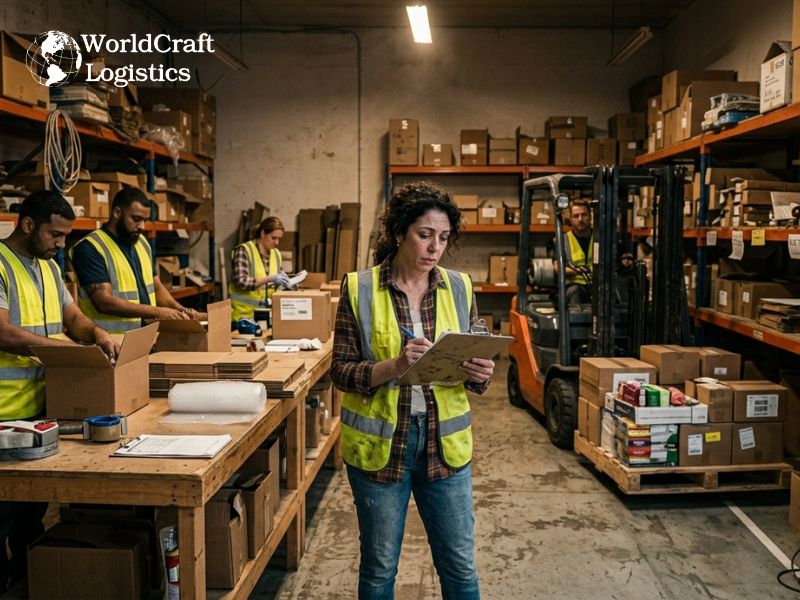
For certain business models, keeping operations under one roof is a strategic choice rather than just an operational default. The fundamental advantage of this model is absolute visibility. When you own the facility, you dictate every granular detail of the workflow.
Full Operational Control: You determine the exact layout of your facility, picking routes, and daily fulfillment priorities without having to negotiate service level agreements (SLAs) with an external partner.
Direct Employee Management: Your warehouse staff are direct hires. This allows you to train them specifically on your unique product lines, safety protocols, and company culture.
Brand Packaging Customization: E-commerce businesses focused on a premium unboxing experience can execute highly complex, customized kitting and packaging rules that some external providers might find difficult to accommodate economically.
Tighter Oversight of Inventory: Walking the warehouse floor allows supply chain managers to conduct immediate, hands-on quality control and physical cycle counts whenever a discrepancy arises.
Despite the appeal of absolute control, the financial reality of running your own fulfillment center is heavily front-loaded and incredibly rigid. Building and maintaining this infrastructure traps vital cash flow in fixed assets rather than revenue-generating activities like marketing or new product development.
Crippling Capital Expenditure (CapEx): You are on the hook for multi-year commercial warehouse leases, regardless of your actual utilization. Furthermore, you must purchase expensive material handling equipment like forklifts, conveyor belts, and enterprise-grade Warehouse Management Systems (WMS).
Labor Management Headaches: Sourcing, hiring, training, and retaining reliable warehouse workers is a massive HR burden. Managing payroll, benefits, and workers' compensation claims distracts from your core business objectives.
Seasonal Scaling Challenges: This is the most dangerous limitation. If your order volume spikes during a Q4 holiday rush, your in-house facility cannot magically expand overnight. You risk bottlenecks, delayed shipments, and damaged brand reputation. Conversely, during slow months, you are still paying for empty warehouse space and idle labor.
These rigid financial constraints and scalability roadblocks are the exact reasons many growing companies eventually explore logistics outsourcing. The inability to flex space, labor, and technology dynamically often becomes a severe bottleneck to long-term profitability and global expansion.
Outsourced 3PL logistics, or third-party logistics, is the strategic delegation of warehousing, inventory management, and transportation to an external operational partner. A 3PL logistics provider handles the physical receiving, storage, order picking, packing, and outbound shipping processes so brands can scale without building physical infrastructure.
In the modern global supply chain landscape, a high-performing 3PL operates as an invisible extension of your business. Through direct API integrations between the 3PL’s Warehouse Management System (WMS) and your e-commerce storefront or ERP, order data flows seamlessly in real time. When a customer completes a purchase, the external fulfillment center is instantly notified, processing the shipment without your internal team ever needing to touch a single box.
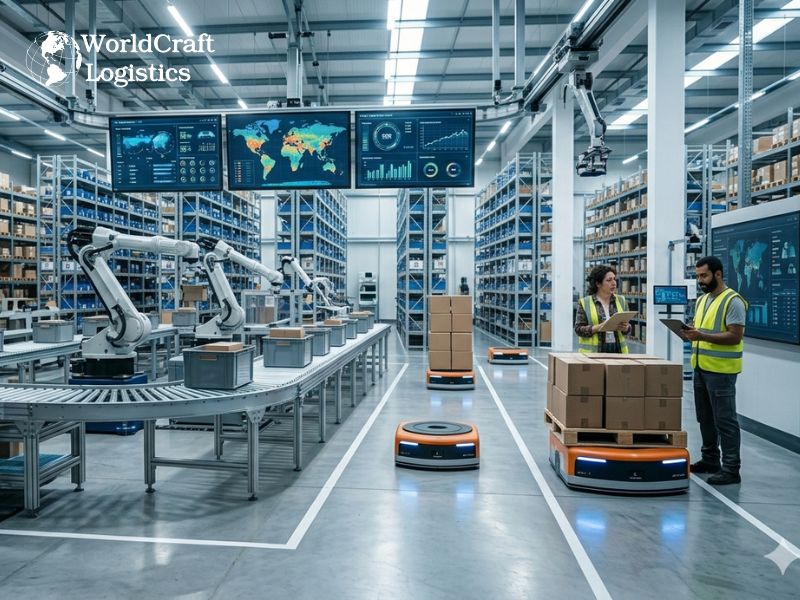
Partnering with an established logistics provider unlocks enterprise-level capabilities for businesses of all sizes. The primary advantage is transforming rigid fixed costs into flexible variable expenses.
Scalable Operations and Flexible Capacity: You only pay for the exact pallet space and pick-and-pack labor you utilize. If your business experiences a massive Q4 holiday spike, the 3PL seamlessly absorbs the volume. During slow summer months, your costs naturally shrink alongside your inventory footprint.
Discounted Freight Rates: Because a 3PL aggregates shipping volume across hundreds of clients, they negotiate massive carrier discounts that a standalone SME could never secure. Leveraging this volume is one of the fastest ways to improve freight efficiency with outsourcing.
Advanced Logistics Technology: Top-tier providers invest heavily in automated sorting, robotics, and robust inventory tracking platforms. You gain access to this cutting-edge infrastructure without the crippling upfront capital expenditure.
Focus on Core Competencies: By utilizing outsourced supply chain services, your executive team reclaims hundreds of hours previously lost to warehouse HR issues and forklift maintenance, allowing them to focus entirely on product development, sales, and market expansion.
While the financial and operational benefits are substantial, shifting away from an in-house model requires realistic operational adjustments.
Reduced Direct Control: You can no longer simply walk down to the warehouse floor to physically inspect a damaged pallet or change a custom packaging insert on the fly. You must trust the provider’s internal quality assurance protocols.
Total Reliance on System Integration: Your fulfillment speed is entirely dependent on the health of your digital connection to the 3PL. If the software integration fails or inventory data misaligns between your storefront and their WMS, operations can grind to a halt.
Onboarding Complexity: Transitioning your physical inventory and aligning Standard Operating Procedures (SOPs) with a new partner requires a heavy upfront lift. Both teams must establish clear Service Level Agreements (SLAs) regarding order cutoff times, error rates, and reverse logistics handling.
The financial debate between managing your own fulfillment and hiring a partner ultimately comes down to how your company deploys its capital. Supply chain managers must look beyond the simple cost of shipping a single box and evaluate the total landed cost of their entire logistical operation.
To make an informed decision, you need a clear breakdown of where your money actually goes under both models.
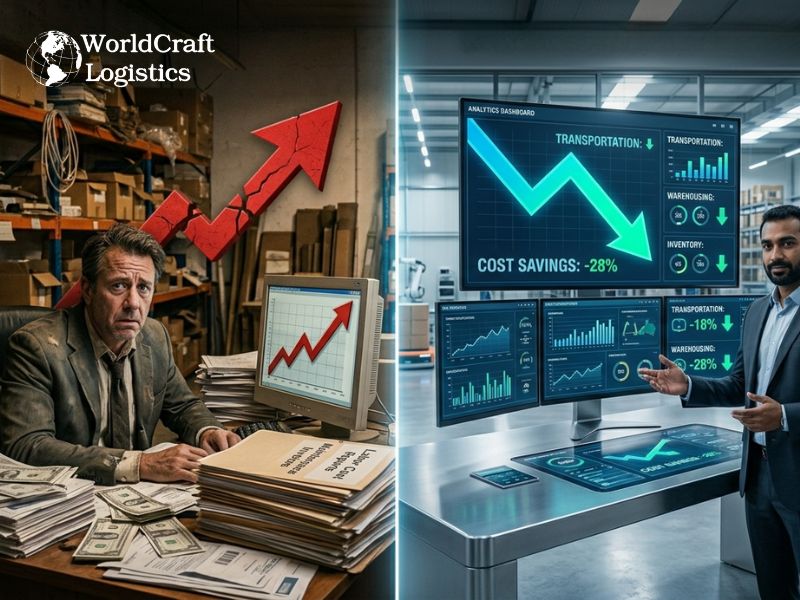
The most critical financial distinction in supply chain optimization is the transition from Capital Expenditure (CapEx) to Operating Expense (OpEx).
In-house logistics requires high fixed costs. You must invest heavily in warehouse space, staffing, and technology infrastructure long before you ship your first product. These expenses remain static regardless of your sales velocity. If you have a slow month, your lease and payroll remain identical, destroying your profit margins.
Conversely, a 3PL operates on variable costs using volume-based pricing. This transforms your supply chain into an OpEx model. You only pay for the exact amount of space your inventory occupies and the precise number of orders picked and packed that day. This financial elasticity allows growing brands to protect their cash flow and invest capital directly into customer acquisition and product development.
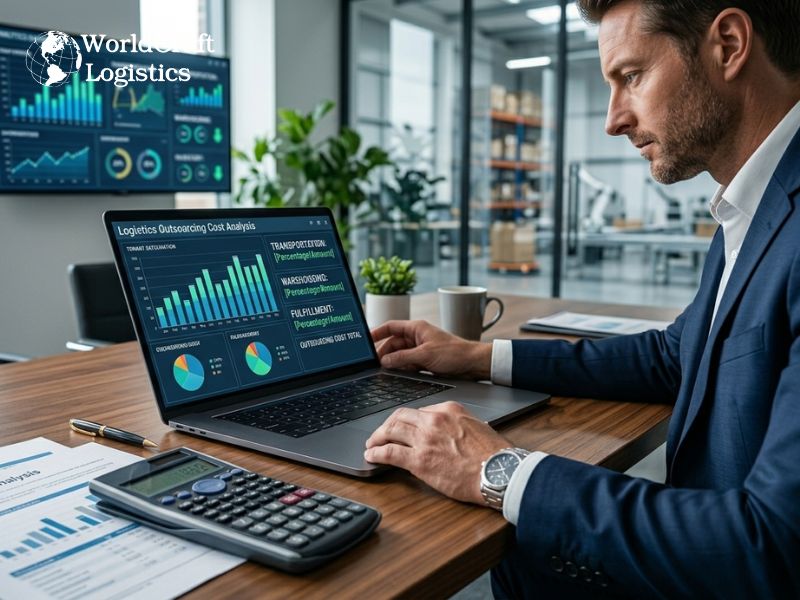
Calculating the cost of outsourcing logistics involves adding five core variable fees: inbound inventory receiving, monthly storage rates, per-order pick and pack fulfillment fees, outbound carrier shipping, and any value-added services like kitting or returns processing based on your volume.
To accurately forecast your expenses and evaluate the 3pl in house vs outsourced logistics cost, you must break down the typical pricing components a provider will charge:
Receiving: Providers charge to unload, count, and enter your incoming freight into their WMS. This is usually billed per hour, per pallet, or per container.
Storage: You are billed monthly for the physical footprint your products take up. This is calculated per pallet, per shelf bin, or by cubic footage.
Pick and Pack: This is the core fulfillment fee. 3PLs typically charge a base rate for the first item in an order and a smaller fractional fee for each additional item placed in the same box.
Shipping: The actual cost of moving the parcel from the facility to the end customer. A high-quality logistics partner will pass down significant carrier discounts here.
Additional Services: Often referred to as Value-Added Services (VAS), these include processing customer returns, custom brand kitting, inserting marketing materials, or specialized B2B freight preparation.
Making the leap from a self-managed facility to a global 3PL partner is a major operational milestone. But how do you know when your company has officially outgrown its DIY infrastructure? Waiting too long to transition can throttle your revenue growth and damage customer relationships, while switching too early might strain early-stage cash flow.
The decision usually comes down to recognizing the physical and administrative breaking points within your supply chain. If your daily operations are characterized by constant firefighting rather than strategic planning, it is time to evaluate an external partner.
Here is a practical checklist of operational indicators that signal your business is ready to outsource:
If your company is experiencing critical growth bottlenecks, continuing to rely on rigid DIY infrastructure will only erode your profit margins. Partnering with a proven expert like Worldcraft Logistics allows you to instantly bypass these challenges and scale efficiently.
Whether you need 3PL fulfillment services to handle domestic order spikes or freight forwarding to streamline global supply chains, our team helps you build a fully optimized, scalable logistics operation.
Get a Custom Logistics Solution →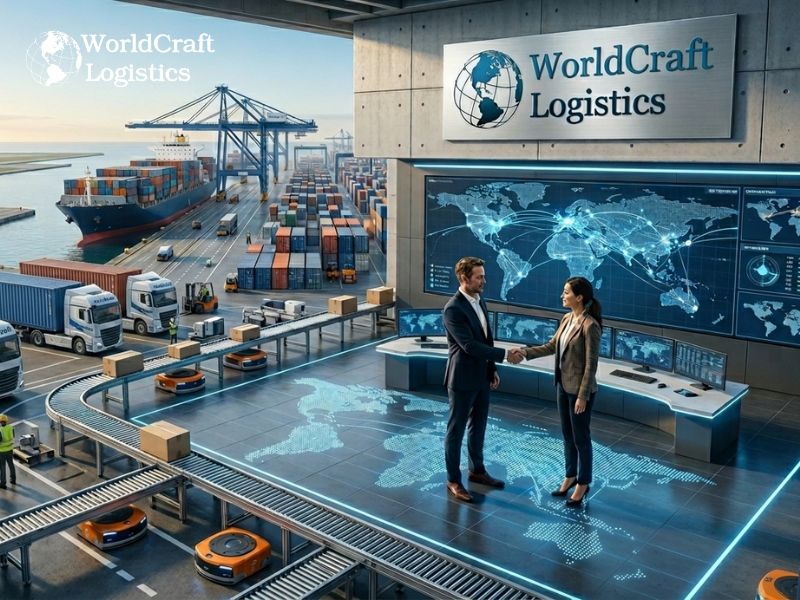
The primary difference between 3PL and in-house logistics is ownership of infrastructure. In-house logistics requires a business to manage its own warehouse, staff, and technology (fixed costs). A 3PL provider offers these as an external service, allowing companies to pay only for the space and labor they use (variable costs).
The 7 C's of logistics define a successful supply chain: getting the Right Product, in the Right Quantity, in the Right Condition, to the Right Place, at the Right Time, to the Right Customer, at the Right Cost. Mastering these ensures operational efficiency and high customer satisfaction.
Protecting IP while using outsourced supply chain services is manageable through robust Non-Disclosure Agreements (NDAs) and strict data security protocols. Most modern 3PLs use encrypted WMS integrations to protect client data. However, if the manufacturing process itself is a trade secret, some firms prefer keeping that specific stage in-house.
To calculate the cost, compare your current fixed expenses (rent, labor, equipment, software) against a 3PL’s variable fees (receiving, storage, pick/pack, and shipping). Often, the deeply discounted shipping rates provided by a 3PL can offset a significant portion of their fulfillment service fees.
Many 3PLs, including Worldcraft Logistics, offer integrated freight forwarding alongside warehousing. This provides a seamless transition from the factory floor in one country to the customer’s doorstep in another, significantly reducing the complexity of managing multiple international vendors and customs documentation.
Yes, outsourcing can significantly improve freight efficiency with outsourcing. 3PLs often have multiple strategically located fulfillment centers, allowing you to store inventory closer to your customers. This reduces zones traveled, lowering both the shipping cost and the total time in transit for the end consumer.
In a logistics context, the 80/20 rule often suggests that 80% of your shipping volume comes from 20% of your product SKUs. Outsourcing allows you to optimize storage for these high-velocity items while the 3PL efficiently manages the complexities of the remaining long-tail inventory.
Absolutely. A major benefit of 3PL fulfillment services is their ability to manage the entire returns loop. They receive the item, inspect it for damage, update your inventory levels, and either restock the item or dispose of it based on your specific brand requirements.
Modern logistics management outsourcing relies on cloud-based API integrations. Your e-commerce platform (like Shopify or Magento) sends order data directly to the 3PL’s Warehouse Management System. This allows for real-time inventory syncing, automated tracking updates for customers, and total visibility into the fulfillment lifecycle.
The biggest risk is operational rigidity. If your sales double overnight, an in-house facility cannot scale its physical space or labor force fast enough to keep up. This leads to massive shipping delays, customer churn, and wasted capital on emergency temporary solutions.
The debate over in house vs outsourced logistics isn't about which model is better in a vacuum; it is about which model empowers your business to scale without friction. While in-house logistics may offer a sense of total control for early-stage startups or highly specialized boutique operations, it often becomes a financial anchor as a company grows. The hidden costs of rigid leases, labor management, and outdated technology can quickly erode the very margins you worked so hard to build.
Transitioning to a 3PL logistics provider represents more than just outsourcing chores; it is a strategic shift toward operational elasticity. By converting fixed overhead into variable costs and leveraging global shipping networks, you gain the freedom to focus on what actually moves the needle: product innovation and customer acquisition.
If your current fulfillment process is struggling to keep pace with your ambition, it’s time for a professional assessment. Worldcraft Logistics specializes in turning supply chain complexity into a competitive advantage. From seamless 3PL fulfillment services to expert international freight forwarding, we provide the infrastructure you need to reach customers anywhere in the world.
Request a free logistics consultation or freight quote from Worldcraft Logistics today and unlock a more efficient, scalable supply chain.

SEO
Digital Marketing/SEO Specialist
Simon Mang is an SEO and Digital Marketing expert at Wordcraft Logistics. With many years of experience in the field of digital marketing, he has shaped and built strategies to effectively promote Wordcraft Logistics' online presence. With a deep understanding of the logistics industry, I have shared more than 500 specialized articles on many different topics.
Education
01/05/2025
Education
02/18/2025
Education
01/01/2024
Education
09/09/2025
Education
08/28/2024