
04/09/2026
Last-mile delivery is the final step of the logistics supply chain, where goods are transported from a local distribution center or micro-fulfillment facility directly to the end consumer's doorstep. This critical phase focuses on speed, accuracy, and customer satisfaction, representing the single most expensive and complex segment of order fulfillment.
Moving a product from a warehouse shelf to a customer’s hands requires precise orchestration. The process is broken down into five distinct operational stages.
Before a package leaves the facility, route optimization software analyzes the day's delivery volume, drop densities, delivery windows, and live traffic patterns. This creates the most efficient path for the driver, minimizing mileage and fuel consumption while maximizing the number of stops per hour.
Once the route is mapped, the system assigns the delivery block to a specific driver or carrier. Warehouse teams pick, pack, and stage the orders in the exact reverse sequence of the delivery route, ensuring the driver can load the vehicle quickly and access the first drop-off immediately.
This is the physical movement of the goods. Depending on the density of the route and the size of the packages, transport can be executed via traditional step vans, local courier fleets, or specialized box trucks for heavy and bulky items.
As the driver navigates the route, GPS systems feed data back to the central dispatch and directly to the consumer. This transparency is critical for managing delivery expectations and ensuring someone is available to receive high-value goods.
Upon arrival, the driver secures proof of delivery systems. This involves capturing an electronic signature, scanning a barcode to update the status, or taking a photo of the parcel safely placed on the porch.
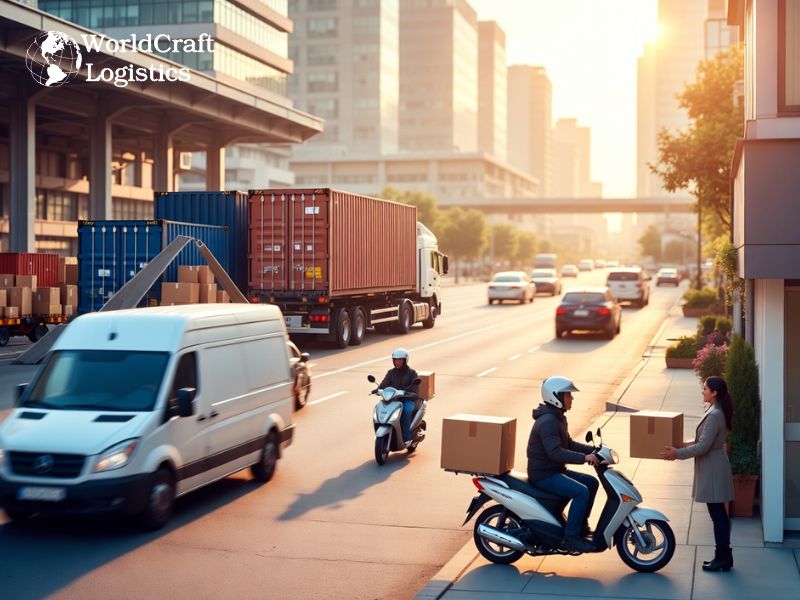
*Last Mile Delivery Example: A Shopify merchant selling fitness equipment relies on a 3PL to handle their fulfillment. When a customer in Chicago orders a treadmill, the item is pulled from a local regional hub. The 3PL routes the oversized package to a specialized local carrier who delivers it directly into the customer’s garage, capturing a photo for proof of delivery.
The final stretch of the supply chain carries disproportionate weight regarding both operational costs and brand reputation. Consumers have been conditioned by Amazon Logistics to expect rapid, transparent, and flawless deliveries.
From a financial perspective, last-mile delivery accounts for roughly 53% of total shipping costs. Unlike ocean freight or middle-mile trucking, where thousands of units share the cost of a single container or trailer, the final mile fractures that volume. A driver must navigate residential streets, deal with gate codes, and walk up driveways for a single parcel. This loss of economies of scale makes it the highest cost portion of fulfillment.
Customer experience hinges entirely on this final touchpoint. A delayed ocean container is invisible to the end consumer, but a missed delivery window or a damaged package on the porch directly damages brand loyalty and increases customer churn.
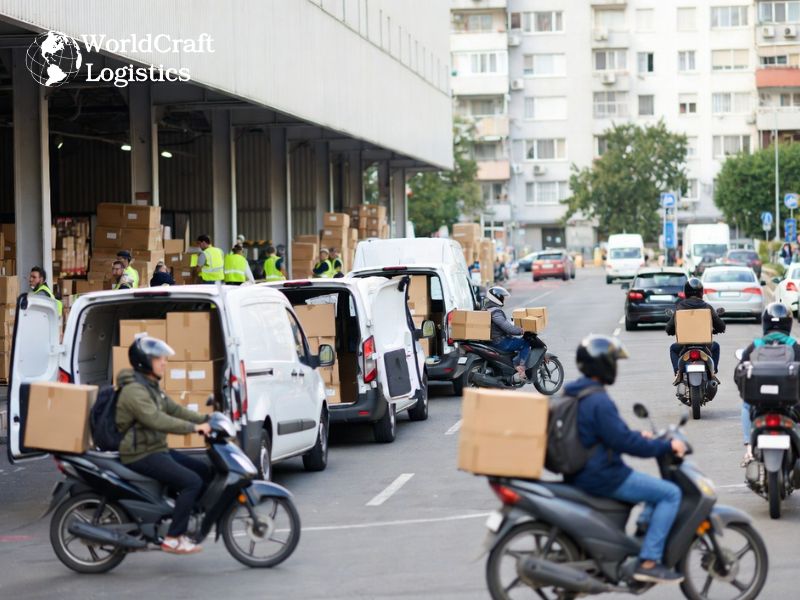
Managing local distribution involves navigating highly variable environments. Successful operators build frameworks to mitigate these specific friction points.
The sheer expense of fuel, driver wages, and vehicle maintenance continuously pressures profit margins.
Solution Framework: Shippers must utilize micro-fulfillment centers to place inventory closer to the end consumer, drastically reducing the physical distance of the final drive. Partnering with 3PL providers that aggregate volume from multiple brands also helps re-establish economies of scale.
Navigating major metropolitan areas involves gridlock, limited parking, and strict delivery time windows.
Solution Framework: Implement dynamic route optimization software that adjusts paths in real time based on live traffic data. Operators are also increasingly deploying alternative transport, such as electric cargo bikes or centralized parcel lockers, in high-density zones.
Where is my order? Inquiries overwhelm customer service teams and indicate a breakdown in operational transparency.
*Solution Framework: Deploy proactive, automated communication. Send SMS or email notifications at distinct milestones: when the package is out for delivery, when the driver is ten stops away, and immediately upon completion with photographic proof.
Returns are inevitable in e-commerce, and picking up a single item from a residence is just as costly as delivering it.
*Solution Framework: Establish centralized drop-off points or utilize software that allows drivers to process returns dynamically while they are already in the neighborhood executing outbound deliveries.
Visibility and efficiency in modern fulfillment are entirely dependent on a robust technology stack.
Legacy routing relied on static zip code territories. Modern AI systems evaluate millions of data points simultaneously, including historical driver speeds, weather conditions, and precise delivery windows, to construct dynamic routes that shave hours off transit times.
These applications bridge the gap between the driver, the dispatcher, and the buyer. They provide turn-by-turn navigation for the courier while updating the consumer's tracking page with live ETA adjustments, drastically reducing failed delivery attempts.
Automation handles the heavy lifting in the background. This includes automated dispatching rules that select the most cost-effective local carrier for a specific zip code, robotic sorting within the local hub, and digital proof of delivery systems that instantly trigger invoicing and inventory reconciliation.
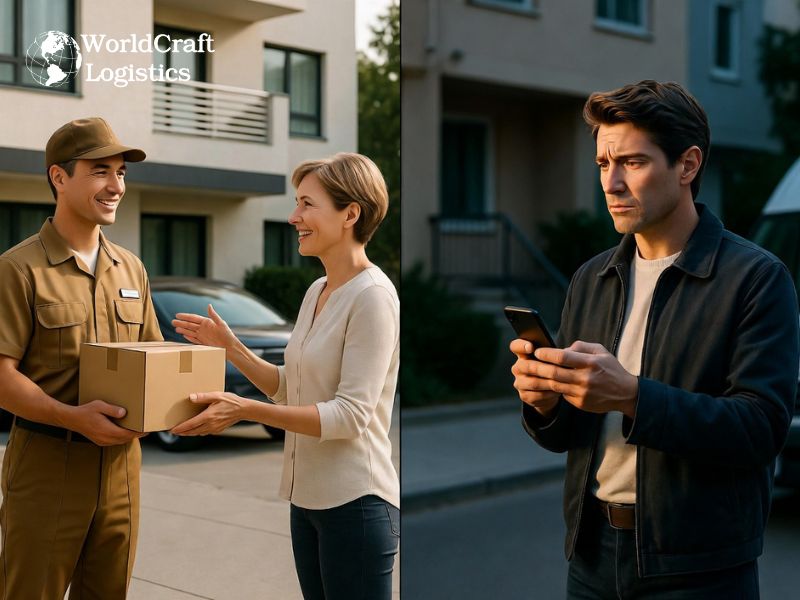
Understanding the distinction between these two critical phases helps shippers allocate logistics budgets accurately.
Feature | Middle Mile Logistics | Last-Mile Delivery |
Definition | Moving goods from a port, factory, or national hub to a regional distribution center. | Moving goods from the local distribution center to the final consumer. |
Distance | Hundreds to thousands of miles. | Typically under 50 miles. |
Complexity | Low (Point A to Point B on highways). | High (Multiple stops, traffic, residential areas). |
Cost | Lower cost per unit due to high volume consolidation. | Accounts for up to 53% of total shipping costs. |
Stakeholders | Freight forwarders, full truckload (FTL) carriers. | Local couriers, gig-economy drivers and postal workers. |
Selecting the right operator requires looking beyond basic shipping rates. Importers and brands must evaluate how a partner's infrastructure aligns with their specific product types and customer locations.
3PL vs FedEx / UPS: National carriers offer extensive reach but often dictate strict pricing and pickup schedules. A dedicated 3PL provider aggregates multiple carrier networks (including FedEx and UPS) and selects the best option per package, offering greater flexibility and bulk rate discounts.
3PL vs USPS: The postal service excels at lightweight, rural deliveries. A strong 3PL will utilize USPS for standard parcels while reserving regional carriers for heavy or expedited freight.
When evaluating a partner, prioritize network density to ensure they have hubs near your customers. Scrutinize their technology stack for seamless API integrations with your storefront. Assess their tracking capability, their framework for handling returns, and their historical SLA reliability during peak seasons.
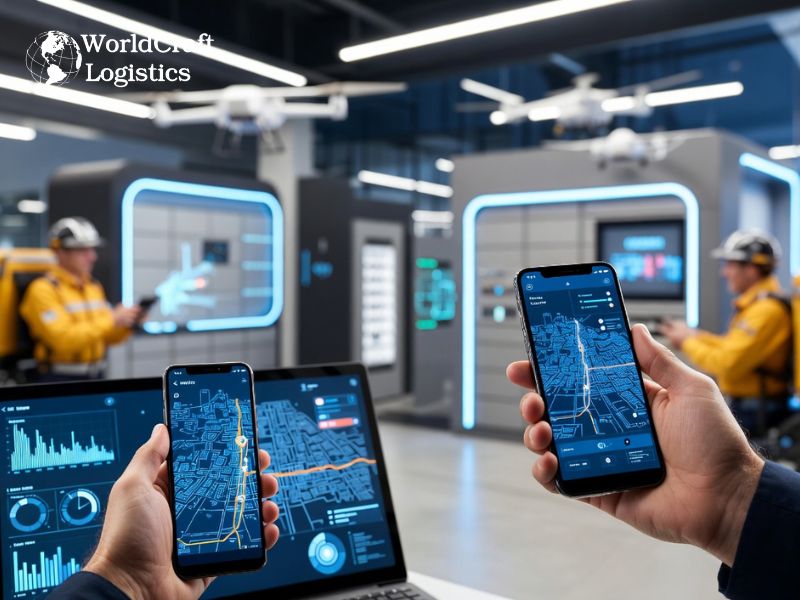
Managing the transition from international freight to domestic delivery requires a unified approach. Worldcraft Logistics bridges the gap between global importing and the final consumer's doorstep.
Our expansive US fulfillment coverage allows brands to distribute inventory strategically across regional nodes, cutting down transit times and local shipping zones. We utilize an advanced technology stack that integrates your storefront directly with our warehouse management system, providing total visibility from the moment a container arrives at the port to the second a package is scanned at a residence.
By integrating freight forwarding with order fulfillment, we eliminate the blind spots and handover delays typical of fragmented supply chains. Ready to reduce your shipping costs and improve delivery speeds? Speak with our logistics team to audit your current fulfillment strategy.
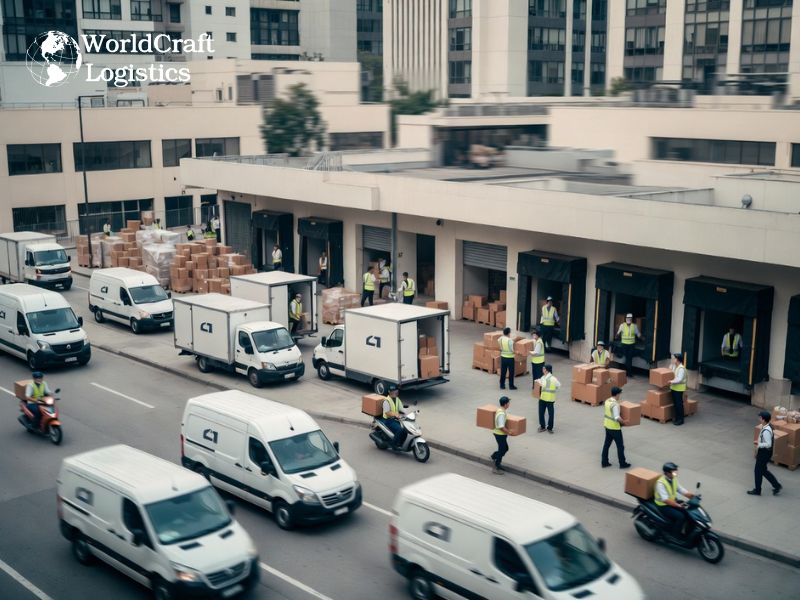
Last-mile delivery is the final segment of the logistics process where goods are transported from a local distribution center directly to the end consumer. It is designed to maximize delivery speed and customer satisfaction but is the most complex and expensive part of the supply chain.
Last-mile delivery typically takes between a few hours to two days, depending on the service level selected and the distance from the local fulfillment center to the delivery address. Same-day and next-day options rely on placing inventory in urban micro-fulfillment hubs.
Last-mile delivery accounts for approximately 53% of total shipping costs. This high percentage is due to the lack of economies of scale, as drivers must make individual stops at residential addresses, consuming significant fuel, time, and labor for single-parcel drop-offs.
The cost of last-mile delivery generally ranges from $10 to $50 per package. This variance depends heavily on the package dimensions, weight, delivery speed, routing density, and whether the delivery requires specialized white-glove handling or standard doorstep drop-off.
Delays in the final mile are primarily caused by severe urban traffic congestion, inaccurate shipping addresses provided by the consumer, severe weather conditions, vehicle breakdowns, or the lack of a secure location to leave the package if a signature is required.
A 3PL (Third-Party Logistics) provider manages the broader supply chain, including warehousing, inventory management, and picking/packing. Last-mile is a specific delivery service. Many modern 3PL providers execute last-mile delivery themselves or manage the software that routes packages to local carriers.
It is the most expensive part of shipping because it is highly fragmented. Unlike moving thousands of products on a single freight truck, last-mile requires individual drivers navigating local traffic, dealing with parking, and walking to individual doorsteps to deliver a single order.
A micro-fulfillment center is a small-scale, highly automated storage facility located in dense urban areas. By holding inventory closer to the end consumer, these centers drastically reduce transit times and mileage, enabling profitable same-day or next-day delivery options.
Yes, but it requires specialized final-mile carriers. Delivering oversized freight, such as furniture or large appliances, involves box trucks, two-person delivery teams, and often requires inside delivery or installation services, commonly referred to as white-glove delivery.
Companies measure last-mile success using key performance indicators such as On-Time Delivery (OTD) rates, First-Attempt Delivery Rate (FADR), Cost Per Delivery, route efficiency (stops per hour), and overall customer satisfaction scores based on the delivery experience.

SEO
Digital Marketing/SEO Specialist
Simon Mang is an SEO and Digital Marketing expert at Wordcraft Logistics. With many years of experience in the field of digital marketing, he has shaped and built strategies to effectively promote Wordcraft Logistics' online presence. With a deep understanding of the logistics industry, I have shared more than 500 specialized articles on many different topics.
Education
01/05/2025
Education
02/18/2025
Education
01/01/2024
Education
09/09/2025
Education
08/28/2024