
02/11/2026
The lunar new year 2026 supply chain disruption is projected to be the most volatile logistics event of the year, with a record-breaking 9-day official holiday block that will effectively freeze Asian manufacturing for nearly a month.
*Executive Summary: The 2026 Disruption Outlook
|
In Chinese culture, 2026 is the Year of the Fire Horse (Feb 17, 2026), a zodiac sign associated with high energy, speed, and unpredictability. For global supply chains, this metaphor is alarmingly accurate.
The 2026 cycle differs significantly from 2025 due to its late timing. With Lunar New Year landing in mid-February, the Pre-Holiday Rush is extended, but the recovery period is pushed dangerously close to the Q2 retail preparation window.
The Long Drag Pre-Holiday: Unlike January holidays, where the rush is compressed, a mid-February holiday allows factories to run full throttle for 6 weeks in Q1. This creates a massive accumulation of export cargo, leading to severe feeder vessel congestion in South China by early February.
The Double Fire Volatility: Analysts predict extreme rate volatility. Carriers are expected to implement aggressive blank sailings immediately following the holiday (Weeks 8–9) to artificially sustain the high rates established during the January rush.
The 9-Day Official Break: The Chinese government has extended the official public holiday to 9 days for 2026 (Feb 15–23). While intended to boost domestic tourism, for importers, this guarantees that port staffing and customs operations will remain on skeleton crews longer than usual, creating a bottleneck that will not clear until mid-March.

Distinguishing official holidays from actual factory closures is critical for accurate Lunar New Year 2026 supply chain planning.
China has announced a record 9-day Spring Festival holiday from February 15 to February 23, 2026. For logistics managers, this extended public holiday signals a longer period of production slowdown and operational disruption beyond the official calendar dates.
Official Public Holiday Dates (Government Mandated)
Country / Region | Official Dates | Duration | Operational Impact & Key Notes |
China Mainland | Feb 15 – Feb 23, 2026 | 9 Days | Record Extension. Warehouses & customs operate on skeleton crews. Note: Feb 14 (Sat) and Feb 28 (Sat) are adjusted working days. |
Vietnam (Tết) | Feb 14 – Feb 22, 2026 | 9 Days | High Impact. Manufacturing hub shuts down simultaneously with China. Expect near-zero output during these dates. |
Taiwan | Feb 14 – Feb 22, 2026 | 9 Days | Significant Slowdown. Factories will operate at severely reduced capacity; ports remain open but drayage is limited. |
South Korea (Seollal) | Feb 14 – Feb 18, 2026 | 5 Days | Moderate Impact. Massive domestic travel disruption affects local logistics and last-mile delivery. |
Hong Kong / Macao | Feb 17 – Feb 19, 2026 | 3 Days | Financial Hub Closure. Banks and offices close, but business closures often extend 4–5 days purely for cultural observance. |
Malaysia | Feb 17 – Feb 18, 2026 | 2 Days | Variable. Chinese-owned businesses may close for 3–7 days; non-Chinese sectors operate normally. |
Singapore | Feb 17 – Feb 18, 2026 | 2 Days | Low Impact. Most logistics operations continue with reduced staff, minimal disruption to transshipment. |
*Important operational note:
Although the official holiday begins on February 15, the lunar new year 2026 supply chain slowdown starts earlier.
February 14 is technically a working day in China, but it is typically reserved for administrative wrap-up rather than new cargo movement.
Migrant workers begin leaving factories around February 6, gradually reducing production capacity in the two weeks before the holiday.
Vietnam’s Tết holiday overlaps from February 14 to 22, limiting alternative sourcing options across Southeast Asia.
For importers, the practical shutdown window begins well before the government-mandated dates.
For supply chain directors, the Lunar New Year is not a single date but a six-week operational cycle. Managing this disruption requires understanding the specific constraints of each phase, from the pre-holiday capacity crunch to the volatile post-holiday recovery. In 2026, the late holiday timing creates a distinct long drag leading into the shutdown, followed by a compressed recovery before Q2.
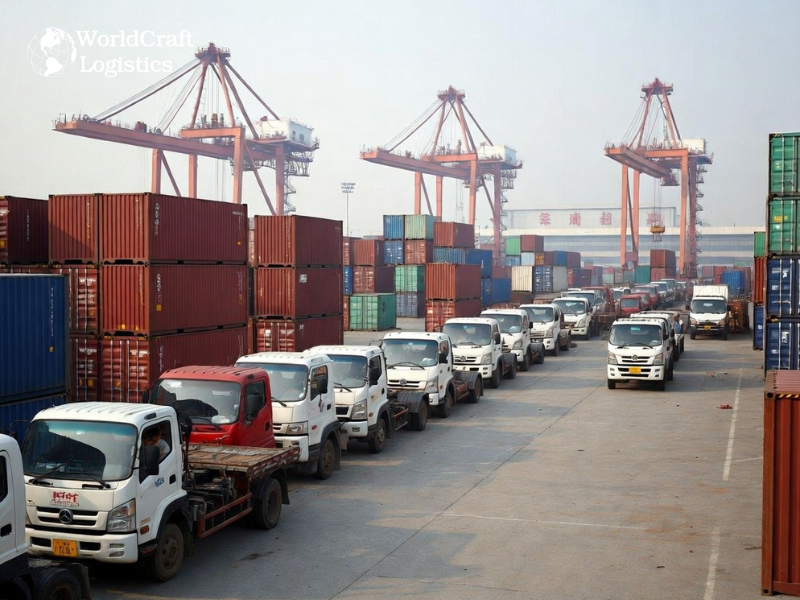
Status: High Risk / Severe Congestion.
This is the Gate-In panic period. As factories race to finish production before the migrant workforce departs, demand for trucking and feeder vessels spikes violently.
Feeder Vessel Cut-Off: South China feeder barges (connecting Pearl River Delta ports to Hong Kong/Yantian) typically stop services 7–10 days before the main holiday.
Drayage Inflation: Trucking rates in Ningbo and Shanghai often increase by 50–80% during this window as drivers leave early for the holiday.
The Rolled Cargo Risk: Carriers will overbook vessels to ensure 100% utilization. If your cargo is not gate-in by Jan 25, it faces a high probability of being rolled to the next sailing, missing the pre-holiday departure entirely.
Status: Operational Stop / Blank Sailings Peak
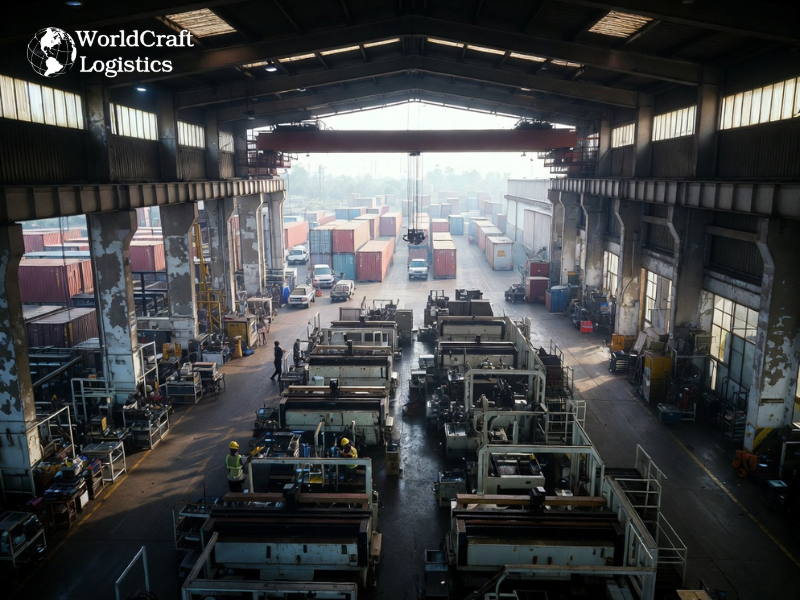
While the official holiday begins Feb 15, the logistics network enters a comatose state much earlier.
The Silent Period: By Feb 6, most factories will have ceased outbound shipments. Ports remain technically open, but terminal efficiency drops significantly due to skeleton staffing.
Blank Sailings Wave: Carriers will implement their most aggressive blank sailing programs during weeks 7, 8, and 9 (mid-to-late February). Expect 30–40% of scheduled capacity to be withdrawn to prevent spot rates from collapsing during the demand lull.
Customs Delays: Customs offices operate with minimal staff. Routine clearances may take days instead of hours, and inspections can lead to cargoes being stranded at the terminal until March.
Status: Unstable Recovery / Labor Shortages.
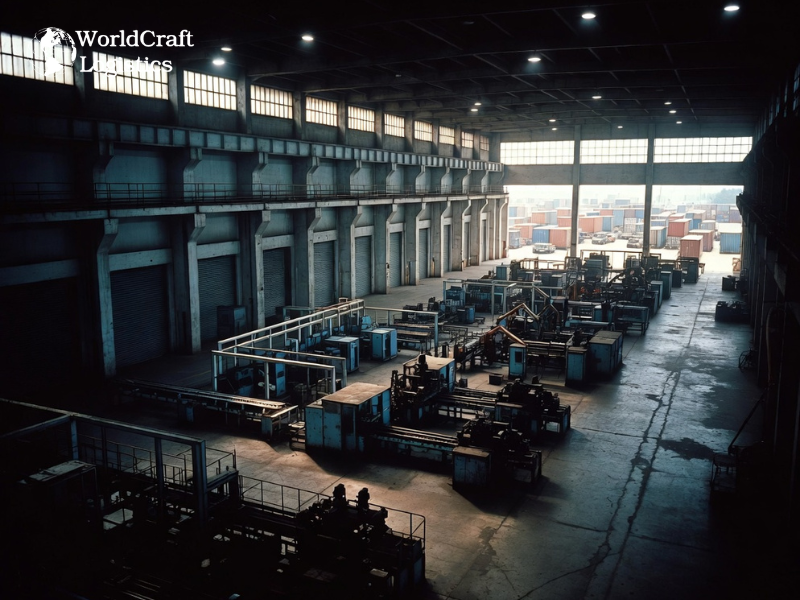
This is the most deceptive phase. The official holiday is over, but the supply chain is fragile.
The Ghost Shift: Factories reopen on Feb 24, but often with only 30–50% of their workforce. Productivity is low, and output is limited to finishing pre-holiday WIP.
Feeder Congestion: As feeder services resume, they are immediately overwhelmed by the backlog of cargo that was produced but not shipped before the break.
Equipment Imbalance: The 3-week halt in exports creates a deficit of empty containers in Asian depots. Finding 40ft HC equipment becomes difficult for inland locations.
Status: Normalization / Rate Volatility
By week 11, the system stabilizes, but often at a cost.
The GRI Spike: As volume surges back to 100%, carriers frequently announce a General Rate Increase (GRI) for the second half of March to capitalize on the desperate demand for space.
Backlog Clearance: It typically takes until late March for the rolled cargo from Phase 1 and the stuck cargo from Phase 3 to fully clear the major hubs.
>>> To compare historical data and avoid repeating the congestion scenarios of the previous cycle, please refer back to our in-depth analysis of Lunar New Year 2025 Shipping Delays Solution.
The Year of the Fire Horse creates a volatile environment for logistics managers. Beyond the standard holiday closures, specific operational risks in Q1 2026 will compound to create a challenging shipping environment.
Importers must monitor four critical risk vectors that will define the success or failure of Q1 sourcing strategies.
The most immediate threat to supply chain continuity is the aggressive cancellation of voyages.
Carrier Strategy: To prevent ocean freight rates from collapsing during the low-volume holiday weeks, carriers will implement extensive blank sailings in February 2026.
Projected Impact: Industry analysis suggests that carriers may withdraw up to 20–30% of Transpacific capacity during Weeks 7, 8, and 9 (mid-to-late February).
The Risk: Shipments booked on paper schedules may disappear without notice. If your cargo is not on the first vessel out after the holiday, it risks being rolled into the March backlog.
The weeks immediately following the holiday are historically defined by a whiplash effect in pricing and capacity.
The V-Shape Rate Curve: Spot rates typically soften in late February as demand vanishes, only to spike aggressively in mid-March. This post-CNY shipping rush is driven by the simultaneous release of weeks' worth of pent-up production.
GRI Exposure: Carriers frequently announce General Rate Increases for March 15 and April 1 to capitalize on this surge. Importers without fixed-rate contracts or valid NACs will be exposed to peak spot market pricing.
For sourcing regions reliant on transshipment (e.g., Pearl River Delta, smaller Vietnam ports), the risk is not just the main vessel, but the last mile to the port.
The Feeder Freeze: Feeder barge services in South China often suspend operations 7–10 days earlier than the main terminals. Cargo produced just in time for the holiday may find itself stranded at a river port, unable to reach the mother vessel in Hong Kong or Yantian.
Hub Congestion: Major transshipment hubs like Singapore and Busan often experience a backlog of 2–3 weeks post-holiday as they struggle to process the sudden influx of feeder containers alongside main-line vessels.
The Fire Horse disruption is cyclical. When vessels stop sailing in February, they stop repositioning empty containers back to Asia.
The Empty Crisis: By early March, the lack of incoming vessels in February creates a severe deficit of empty containers, specifically 40ft High Cube (HC) units at key Asian loading ports.
Inland Scarcity: This shortage is most acute in inland Chinese manufacturing hubs (e.g., Chengdu, Chongqing) and across Vietnam, where the supply of empty equipment is tightly controlled by carriers. Logistics managers may find space on a vessel, only to be unable to secure a container to fill it.
Based on 50+ years of historical data, the following sectors face the most acute operational exposure:
Industry Sector | Operational Vulnerability | Critical At-Risk Products |
Electronics & Semiconductors | Highest Risk. Heavily reliant on single-source suppliers in Greater China for PCBs and components. Facing compounding delays from Red Sea diversions and US tech restrictions during Q1 restocking. |
|
Automotive & EV | Critical Exposure. Operates on strict JIT models where minor part delays halt entire assembly lines. China dominates the supply chain for essential EV battery materials. |
|
Retail & E-commerce | Timing Conflict. Continuous replenishment models clash with the 6-week shutdown. Inventory depletion risks coincide directly with Valentine’s Day and Easter sales peaks. |
|
Apparel & Fashion | Margin Squeeze. Manufacturing for Spring/Summer collections overlaps exactly with the shutdown. Low margins make air freight contingency prohibitively expensive. |
|
In the Year of the Fire Horse 2026, a reactive approach will result in stranded cargo and inflated costs. Success requires a military-grade execution of the Split & Secure strategy, dividing inventory by urgency and locking in capacity before the market tightens.
Worldcraft Logistics recommends the following three-tier defense strategy for US importers.
The most common failure point is the assumed availability in late January. Because the holiday is in mid-February, many logistics managers mistakenly believe they can book space in Week 4 or 5.
The Reality: By January 25, 2026, most vessels departing before the holiday will be overbooked by 120%.
The Action: Implement a No-Roll booking policy. Secure your space by January 20 for any cargo that must sail before the shutdown.
The Worldcraft Tactic: For critical POs, we recommend booking on Premium Guaranteed Services (e.g., CMA CGM EAGLE / MATSON / ZIM EXPEDITED). While the rate is $800–$1,200 higher per FEU, these services offer loading guarantees that standard FAK contracts cannot match during the pre-holiday rush.

Do not put all your eggs in one 40ft High Cube. The risk of a single container being rolled is high; the risk of partial shipment delay is manageable.
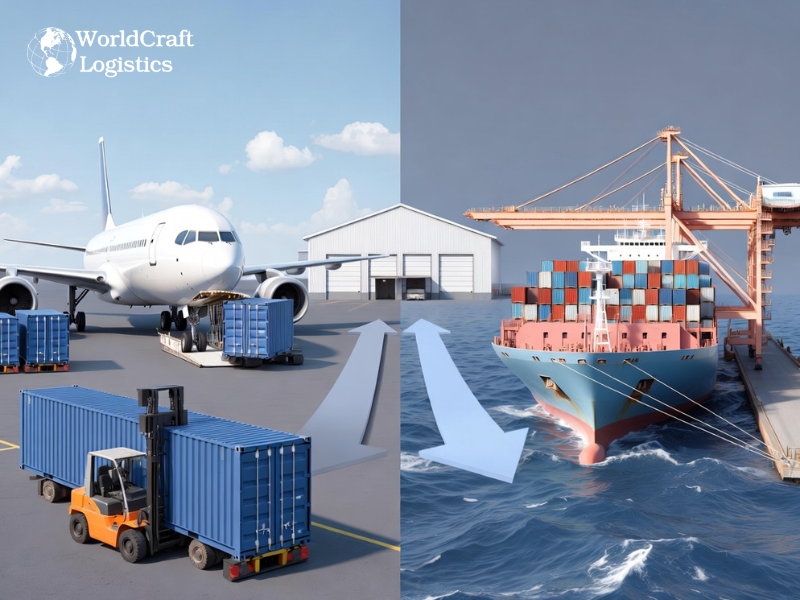
Air-Sea Hybrid: Identify the top 10% A-Class SKUs that would cause a line-down situation. Move these via air freight or fast-boat service by February 5.
Standard Ocean: Move the remaining B-Class inventory on standard ocean freight. If this cargo is rolled to a post-holiday sailing (departing late February), the impact is financial rather than operational.
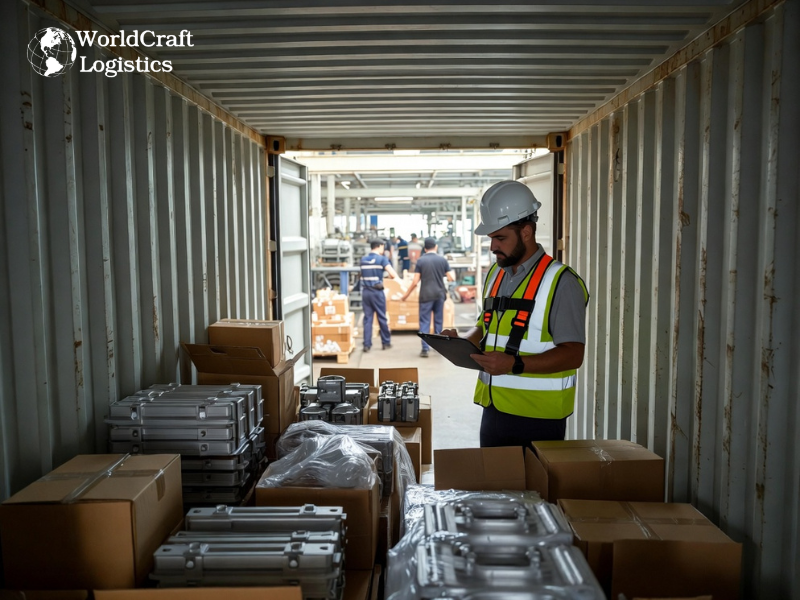
The Pre-CNY Quality Trap is a documented phenomenon. As factories rush to clear order backlogs before the migrant workforce departs on February 6, defect rates historically spike by 15–20%.
The Risk: A container shipped in a rush on Feb 10 arrives in Long Beach in March, only to be found full of defective goods. You cannot return them because the factory is closed, and when it reopens, the original workforce may not return.
The Action: Enforce a strict Third-Party Inspection (TPI) policy.
Rule: No goods leave the factory gate after February 6 without a signed inspection report.
Logic: It is better to delay a shipment and fix defects in China than to ship defective goods to the US and face a total write-off.
While the factories sleep, your logistics partner must be wide awake. The Shutdown is actually the most critical period for data hygiene and documentation preparation.
A high-performance 3PL should be executing this checklist between Feb 15 and Feb 23:
Action: Daily verification of all containers sitting at transshipment hubs (Singapore, Busan, Kaohsiung).
Why: Containers often get buried in the stack during the holiday lull. Active monitoring ensures your box is marked for the First Vessel Out when sailings resume.
Action: File ISF (Importer Security Filing) and submit Entry Summaries (7501) while the vessel is on the water.
Why: US ports do not stop for the Lunar New Year. By clearing customs before arrival, you ensure that as soon as the vessel docks, your cargo is eligible for pickup, avoiding the post-holiday trucker shortage.
Action: Secure domestic trucking power for US arrivals in early March.
Why: The Post-CNY Recovery (Phase 4) creates a surge of arrivals in US ports. Chassis shortages (especially for 40ft units) are common in LA/LB and NY/NJ. Pre-booking ensures your cargo moves while competitors wait for wheels.
Action: Aggregate data on 2026 delays, rate spikes, and supplier performance.
Why: The best time to negotiate your 2027 service contract is immediately after the 2026 pain points are visible. Use the data to demand better allocation or extended free time for the next cycle.
The most successful supply chain directors do not just survive the Lunar New Year; they use the disruption data to build resilience for the next cycle.
While the immediate focus is on 2026 recovery, the data gathered during this Fire Horse year provides critical leverage for future contract negotiations.
Audit Your Rolled Ratio: Track exactly how many containers were rolled in Weeks 4–6 of 2026. If your carrier contract promised protected space but failed during the crunch, use this data during the May 2026 contract renewal season to demand stricter penalty clauses for non-performance.
Diversify Your Port Entry: Did congestion at LA/LB or Savannah paralyze your recovery in March? Use the 2026 bottleneck data to justify a Four-Corner routing strategy for 2027, splitting volume between West Coast, East Coast, and Gulf ports to mitigate single-point failure risks.

SEO
Digital Marketing/SEO Specialist
Simon Mang is the SEO and Digital Marketing Specialist at Worldcraft Logistics, where he leads content strategy to promote the company's online presence. With years of experience in digital marketing and a strong understanding of the logistics industry, he has published more than 500 specialized articles across freight, warehousing, and supply chain topics. *Reviewed for accuracy by the Worldcraft Logistics Operations Team.

Hot News
08/05/2024

Hot News
02/23/2023

Hot News
02/23/2023

Hot News
02/06/2023

Hot News
02/07/2023