Blogs/hot-news
04/22/2024
The Port of Los Angeles, situated on the West Coast, anticipates a continued surge in cargo volumes throughout April, despite the typically subdued shipping season. Reporting from Los Angeles, cargo volumes at the port soared by 19% compared to the previous year, totaling 743,417 TEUs in March, marking the eighth consecutive month of year-over-year growth.
Gene Seroka, Executive Director of the Port of Los Angeles, expressed optimism during a media briefing on Wednesday, stating, "Moving into April and the second quarter, I expect robust cargo flow to continue here." He attributed this expectation to a resilient job market, sustained consumer spending, and the port's capacity to accommodate increased volume.
Although loaded imports experienced a 19% year-over-year increase, this growth rate decelerated from the remarkable 64% surge witnessed in February. On the exports front, March marked the West Coast port's most promising month since January 2020, with loaded exports totaling 144,718 TEUs, reflecting a substantial 47% year-over-year rise, according to Seroka.
More article:
👉 Over 2 million TEU are expected at Port of Long Beach in Q1 2024
👉 Strong U.S. Import Growth Continues into February, S&P Global Market Intelligence Analysis
👉 Modal shifts in the Red Sea and an e-commerce push have driven March air volumes up by 11% YoY
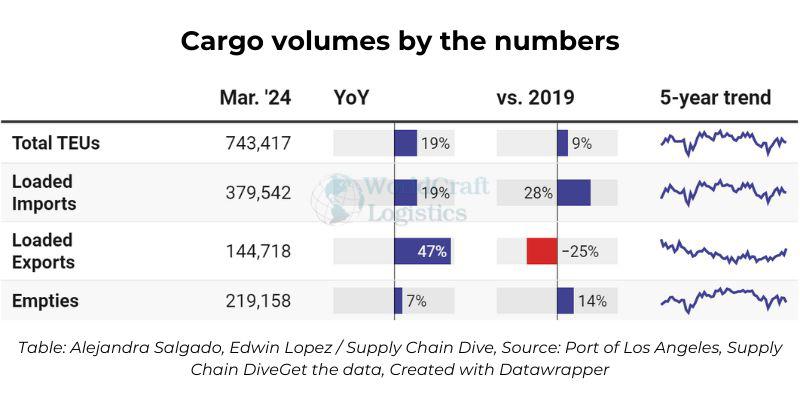
Source: Supply Chain Dive
"Presently, we bring in 2.6 import boxes for each export," stated Seroka, emphasizing a notable improvement from 2021's trade imbalance of 6.2 imports per export. Seroka emphasized the port's goal to boost American exports, aiming for a 2:1 ratio.
Seroka anticipates April, historically deemed a "slack season," to be bustling, with total TEUs projected to surpass 700,000.
The National Retail Federation and Hackett Associates project U.S. import volumes to increase, reaching 2 million total TEUs in May across the nation's leading 12 ports. This growth persists despite shippers grappling with uncertainties arising from various global trade disruptions.