
11/13/2023
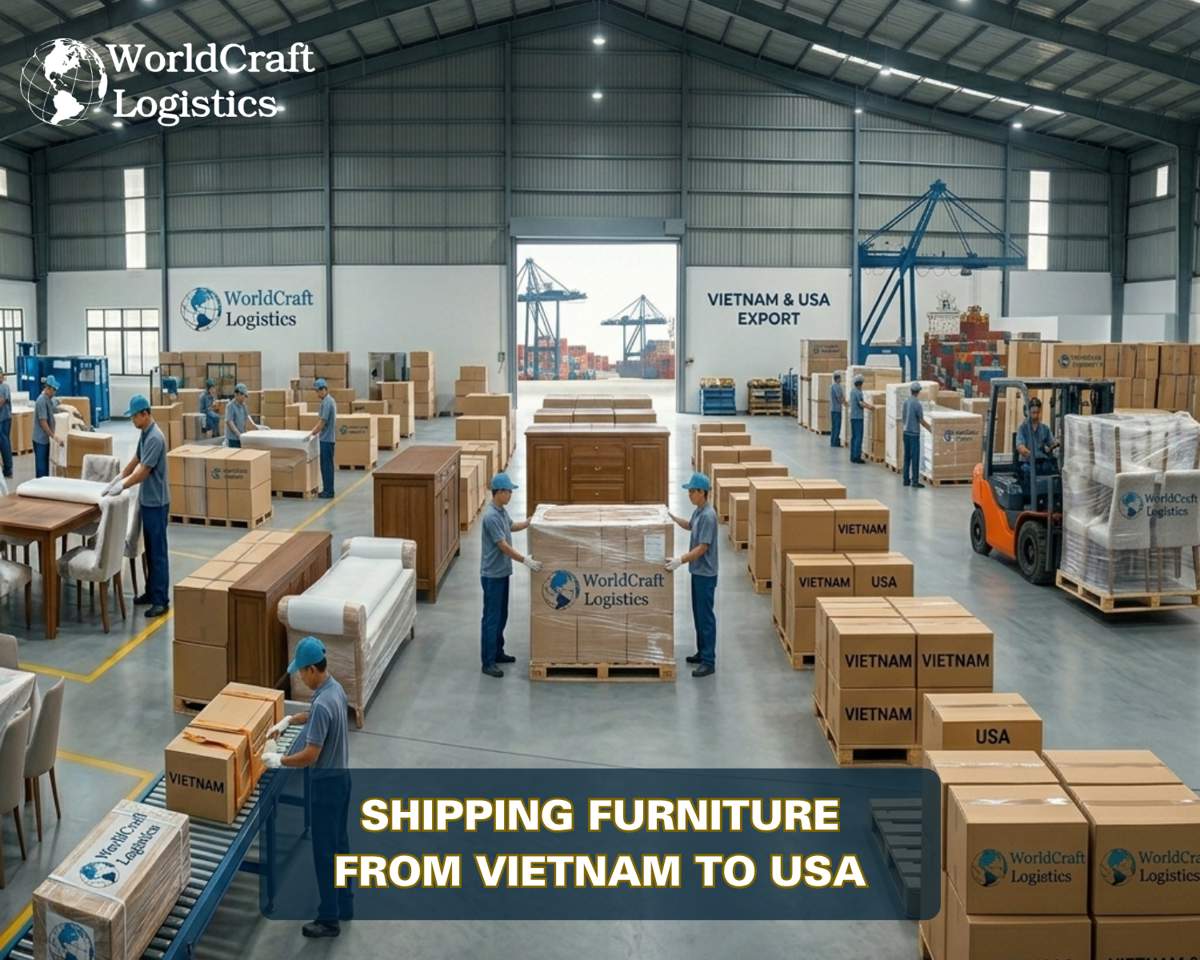
Shipping furniture from Vietnam to the USA is one of the most active trade routes in global logistics. Vietnam surpassed China as the largest furniture exporter to the United States, and in 2024 alone, Vietnamese furniture shipments to the US reached $10.4 billion, a 21.6% increase compared to the previous year. For US importers, Amazon sellers, interior brands, and retail buyers, understanding how to ship furniture from Vietnam correctly means the difference between a profitable sourcing deal and a costly customs nightmare.
This guide covers everything you need to know: shipping costs, transit times, container options, export documentation, US import duties as updated for 2025, and how to work with a reliable freight forwarder to move furniture from Vietnam to any US port or warehouse.

Vietnam is now the top supplier of wood furniture to the U.S., surpassing China by 3–4× in late 2024. The industry generates nearly $10 billion annually and ranks among the country’s top five export sectors. Its growth is driven by competitive labor, sustainable timber sources, and strong manufacturing hubs in Binh Duong, Dong Nai, and Ho Chi Minh City.
With the global furniture market expected to reach $650 billion by 2026, Vietnam is well-positioned as a key supplier. Buyers benefit from a wide manufacturer network, faster lead times, and reliable shipping routes from Cat Lai and Qui Nhon ports.
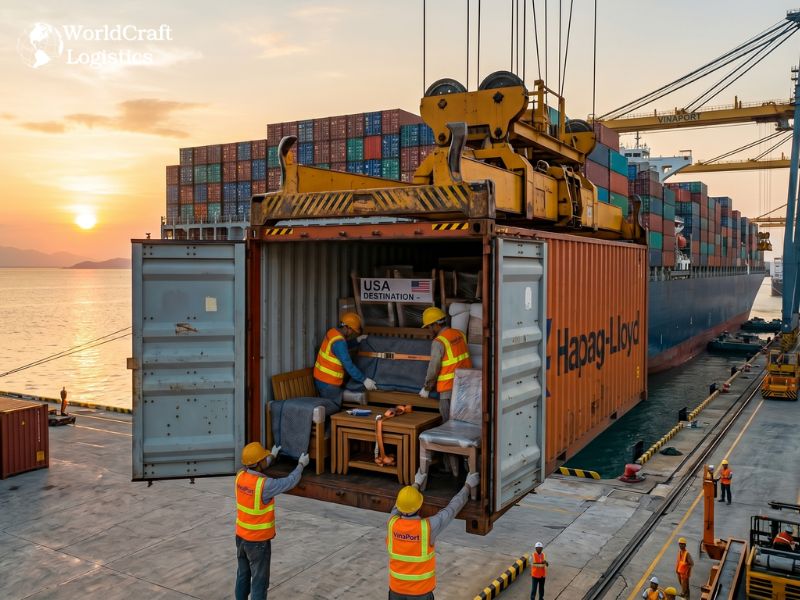
Vietnam primarily exports furniture made from wood or featuring wooden frames, often incorporating MDF, OSB, or solid wood species from cultivated forests, including acacia, pine, rubber, eucalyptus, rubberwood, and beech. The main product categories exported under Chapter 94 of the Harmonized System include the following:
Most furniture production is concentrated in southern Vietnam, particularly in Binh Duong Province and Ho Chi Minh City. As a result, the majority of furniture exports depart from Cat Lai Port in Ho Chi Minh City, which is the busiest container port in Vietnam. For buyers sourcing from central or northern factories, Da Nang Port and Hai Phong Port are commonly used alternatives, though transit times to US ports will vary depending on the departure point.
Video dialogue between WCL & HPG about procedures when importing and exporting furniture from Vietnam to the US
Understanding the full cost structure before booking a shipment is essential for accurate landed cost calculations. Furniture shipping costs depend on volume, shipping method, route, and current market conditions. Below are realistic estimates for 2025.
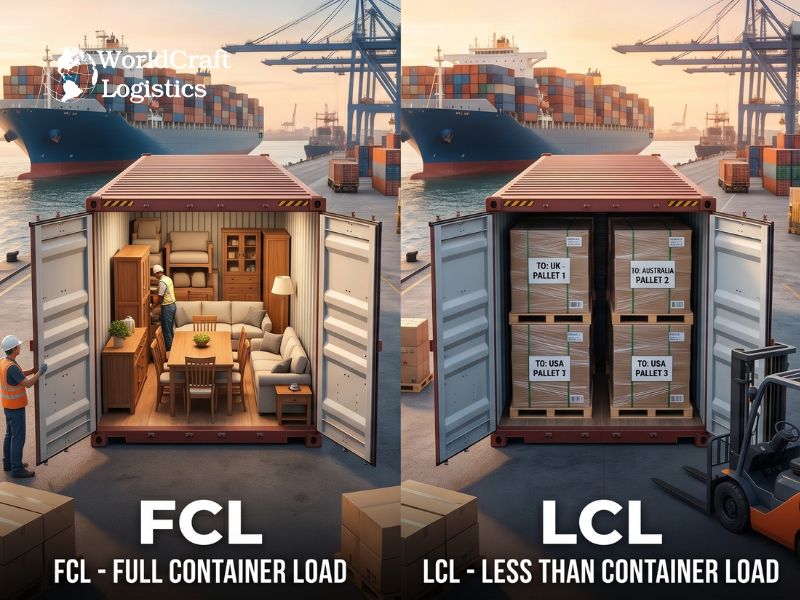
Sea freight is the dominant method for shipping furniture from Vietnam to the US due to the bulky nature of most furniture items. There are two main options: Full Container Load (FCL) and Less than Container Load (LCL).
FCL Rates from Vietnam to the USA (2026 estimates):
These rates cover ocean freight only and do not include inland trucking, port handling charges, customs clearance fees, or import duties. FCL rates are calculated as a flat fee per container, making them highly cost-effective when your shipment fills most or all of the container space.
LCL Rates (per CBM, 2026 estimates):
LCL shipping is priced by the cubic meter (CBM). Current LCL rates from Vietnam to the US range from $50 to $80 per CBM for ocean freight, excluding surcharges. A standard sofa or large cabinet typically measures 1.5 to 3 CBM, so an LCL shipment of 5 CBM could cost roughly $400 to $600 in freight alone before additional fees.
Additional costs to budget for in every shipment:
Inland trucking (factory to port): $100 to $300 depending on distance
Origin handling and documentation fees: $150 to $250
Destination port handling (THC): $200 to $400
Customs clearance (US side): $150 to $300
Merchandise Processing Fee (MPF): 0.3464% of cargo value (minimum $31.67, maximum $614.35)
Cargo insurance: typically 0.5% to 1% of declared value
Import duty: varies by HTS code and current tariff schedule (see section below)
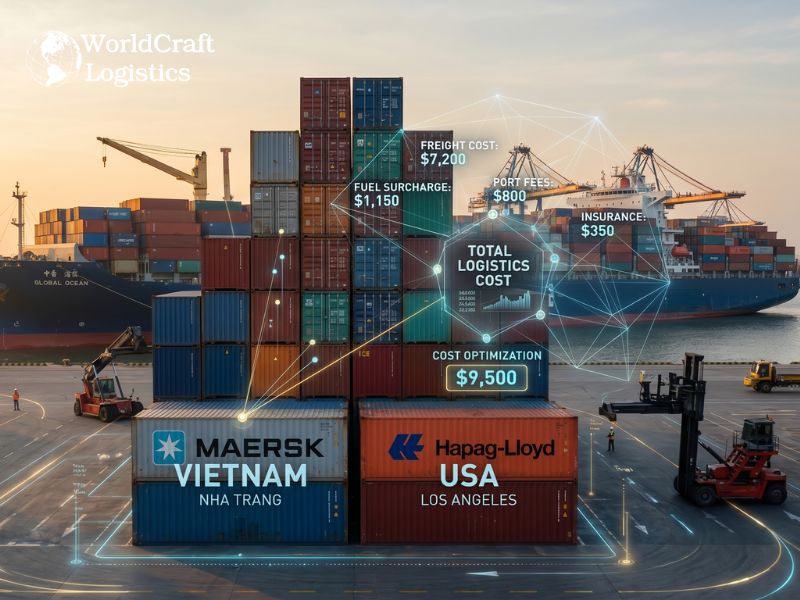
Air freight for furniture is rarely cost-effective for large or heavy items, but it is a viable option for small, high-value pieces such as designer chairs, custom lighting fixtures, or sample orders. Air freight rates from Vietnam to the US in 2025 range from:
Standard air freight for shipments over 1,000 kg: $1.10 to $1.60 per kg
Standard air freight for smaller shipments: $4.50 to $6.00 per kg
Express air (3 to 5 business days): $8 to $12 per kg
A single wooden dining chair weighing 15 kg would cost approximately $67 to $90 just in air freight at standard rates, before handling and customs fees. For context, the same chair in an LCL ocean shipment would cost a fraction of that amount, though transit time extends to 30 to 45 days.
Several variables can significantly change the final freight cost:
Seasonality: Peak shipping periods around the Lunar New Year (January to February) and the pre-holiday restocking season (September to November) drive rates up by 15% to 30%. Booking at least 4 to 6 weeks in advance during these periods is strongly recommended.
Port congestion: Delays at Cat Lai Port or at US destination ports like Long Beach and Los Angeles can add demurrage and detention charges of $75 to $150 per day per container.
Fuel surcharges (BAF/EBS): Bunker adjustment factors fluctuate monthly and are separate from the base freight rate. Always request an all-in quote that includes these surcharges.
Volume and weight: For LCL, the chargeable weight is the greater of actual weight or volumetric weight. Furniture with low density but large dimensions will be charged by volume.
Container type: Most furniture ships in standard 20-foot or 40-foot dry containers. Oversized or irregularly shaped items may require flat rack containers at a higher rate.
Worldcraft Logistics is a US-based freight forwarder with warehouse operations in Ontario, California, specializing in Vietnam-to-USA shipments across sea freight, air freight, and Amazon FBA preparation. With established relationships at Cat Lai Port and direct service to all major US ports, including Long Beach, Los Angeles, New York, and Savannah, Worldcraft Logistics provides transparent, all-inclusive pricing for furniture importers of all sizes.
Whether you are moving a full container of bedroom sets or consolidating a mixed LCL shipment from multiple Vietnamese suppliers, Worldcraft Logistics handles end-to-end logistics, including pickup in Vietnam, customs documentation, US customs clearance, and final-mile delivery to your warehouse or fulfillment center.
Contact Worldcraft Logistics for a customized solution tailored to your furniture shipment and supply chain needs.
The following transit times are realistic port-to-port estimates for 2025, not counting inland trucking at origin or destination:
These are vessel transit times only. Adding 2 to 5 days for origin port processing and 3 to 7 days for US customs clearance and inland delivery, a realistic door-to-door timeline for sea freight is 28 to 50 days, depending on route and service type.
Air freight from Ho Chi Minh City (SGN) or Hanoi (HAN) to major US airports typically takes 5 to 10 days door to door, including customs clearance on the US side. Express services can achieve delivery in 3 to 5 business days at premium rates.
The following periods consistently cause delays and rate increases on the Vietnam-to-USA trade lane:
Lunar New Year (late January to February): Factories close for 2 to 4 weeks; production lead times extend significantly and space on vessels immediately after the holiday is extremely tight
Pre-holiday restocking (September to November): High demand from US retailers stocking for Thanksgiving and Christmas creates vessel space shortages and rate spikes
Post-holiday surge (March to April): Manufacturers process backlogs from Lunar New Year; port congestion at Cat Lai can add 5 to 10 days to standard schedules
Importers who plan their orders 6 to 8 weeks ahead of their required delivery date and book vessel space in advance consistently avoid the worst delays and surcharges.
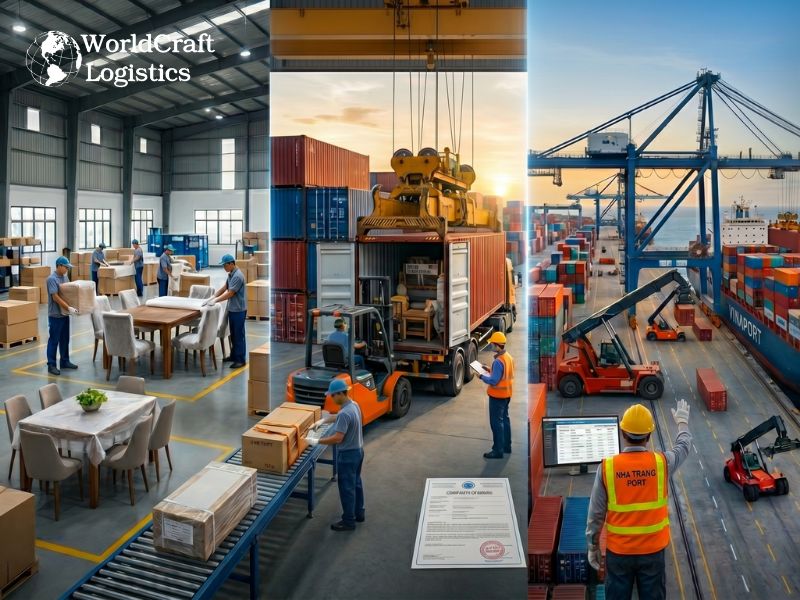
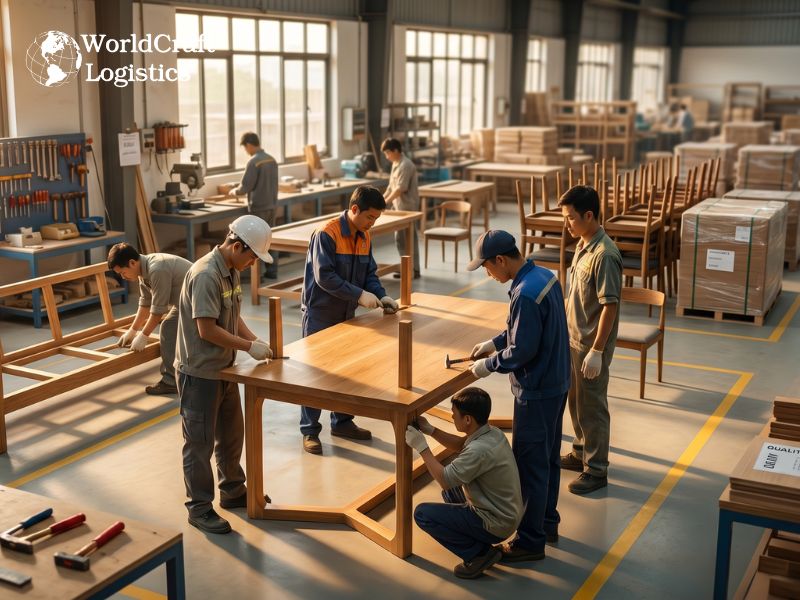
The shipping process begins with inland trucking from the manufacturer's warehouse to the designated export port, most commonly Cat Lai Port in Ho Chi Minh City. Furniture must be properly packaged at this stage, with individual pieces wrapped in foam, bubble wrap, or blankets and loaded into either the shipping container (for FCL) or wooden crates (for LCL). All packaging materials must comply with ISPM 15 if they include solid wood.
The Vietnamese exporter files an electronic customs declaration through the national customs system. Required documents, including the commercial invoice, packing list, timber origin dossier, and phytosanitary certificates, must be submitted and approved before the shipment is released for loading. Certain items may require additional quarantine inspection depending on the wood species and product type.
For FCL shipments, the container is either stuffed at the factory (door loading) or at a container freight station near the port. For LCL, goods are brought to a consolidation warehouse where they are loaded together with other cargo before being sealed into a shared container. The shipper receives a Bill of Lading upon completion of loading, which serves as the title document for the goods.
The container departs Vietnam and begins its transit to the US port of destination. The most common ocean routes are:
Ho Chi Minh City to Los Angeles or Long Beach (West Coast): 18 to 25 days direct service; 22 to 30 days with transshipment
Ho Chi Minh City to New York, Savannah, or Houston (East Coast): 28 to 38 days via Panama Canal or Suez Canal routing
Transit times can extend by 7 to 14 days during peak seasons or due to port congestion.
Upon arrival at the US port, the importer or their licensed customs broker files an entry with CBP, submits the commercial invoice, packing list, bill of lading, and ISF (Importer Security Filing, which must be submitted at least 24 hours before vessel departure from the foreign port). CBP reviews the entry, applies the applicable HTS classification, and issues a duty bill. Payment of all duties, taxes, and fees must be made before the goods are released.
After CBP releases the shipment, the container is made available for pickup at the terminal. For FCL shipments, a drayage carrier transports the entire container to the importer's warehouse. For LCL shipments, goods are deconsolidated at a customs-bonded warehouse near the port before being trucked to the final destination.
The furniture arrives at its final US destination, whether that is a retail warehouse, Amazon FBA fulfillment center, a wholesale showroom, or a residential address. For Amazon FBA shipments, goods may require additional preparation, including labeling, repackaging, or quality inspection, before being transferred to the fulfillment center.
Choosing the right shipping method directly affects your cost per unit, risk of damage, and time to market. Here is a practical guide based on shipment size and urgency.
FCL is ideal for shipments from 15 CBM (20ft) or 25 CBM (40ft). You get exclusive container use, reduced handling, and significantly lower damage risk. It is the preferred option for bulk buyers and established importers due to lower cost per unit and predictable pricing.
A 40ft High Cube container is commonly used for furniture, as its extra height allows more efficient loading of bulky items like wardrobes and bed frames.
LCL is suitable for shipments under 15 CBM or for trial orders. It allows flexibility without waiting to fill a container but comes with longer transit times (35–45 days) due to cargo consolidation.
Because goods are shared in one container, proper packaging (crating, foam protection) is critical to minimize damage risk.
Air freight is best used selectively for high-priority shipments such as samples, urgent restocks, or high-value custom furniture.
Transit time is fast (5–10 days from Ho Chi Minh City to major US airports), but costs are significantly higher, so it only makes sense when speed or value justifies the expense.
Furniture exported from Vietnam to the United States is subject to a VAT rate of 0% at the point of export. This means Vietnamese exporters do not pay value-added tax to the Vietnamese government on goods leaving the country. This tax treatment applies to all furniture categories exported under Chapter 94.
Standard finished furniture products do not fall under the list of taxable export commodities in Vietnam, meaning no export duty is charged at the time of shipment. However, raw timber and certain minimally processed wood materials are subject to export duties or restrictions, which is why documentation of the wood's origin and processing chain is required.
For furniture made from wood, particularly solid wood species, Vietnamese authorities require exporters to verify the legal origin of all timber inputs. The specific documentation required depends on the wood source:
Furniture made from wood sourced from domestic cultivated forests: An invoice compliant with Ministry of Finance regulations, plus a timber origin confirmation from the local forest ranger unit, is required, in accordance with applicable forestry management decrees.
Furniture made using wood purchased from domestic processing factories: An invoice compliant with Ministry of Finance regulations, plus a timber origin confirmation from the local forest ranger unit, is required.
Furniture made using wood purchased directly from farmers: A timber origin confirmation from local authorities, such as the People's Committee of the ward or commune, is required.
Furniture incorporating imported wood materials: An import declaration for the raw wood materials must be filed before the finished furniture can be exported. This is common in factories using imported oak, walnut, or teak.
The standard customs dossier for exporting furniture from Vietnam includes:
Commercial Invoice: Detailed breakdown of goods, quantities, unit values, and total value in the agreed currency
Packing List: Item-by-item dimensions, weights, and number of cartons or crates per consignment
Bill of Lading or Airway Bill: Issued by the carrier upon loading
Timber Origin Dossier: Required for all wood-based furniture
Phytosanitary Certificate: Mandatory for wood packaging and pallet materials under ISPM 15 regulations
Certificate of Origin Form B or Form AJ: Not legally mandatory under Vietnamese law, but required by most US importers
Export Customs Declaration: Filed electronically through the VNACCS/VCIS system
This section is critical for any importer calculating landed costs. The US tariff environment for Vietnamese furniture has changed significantly since 2024, and failing to account for the current duty structure can result in unexpected costs at the border.
Under the standard US Harmonized Tariff Schedule (HTS), most wooden furniture from Vietnam enters at relatively low base duty rates:
These base rates represent the standard Most Favored Nation (MFN) duty rates. However, they are not the final duty rate that importers pay in 2025.
Since 2025, US tariffs on Vietnamese furniture have become more complex, with multiple layers added on top of base HTS rates.
Reciprocal Tariff (July 2025): Vietnamese-origin goods now face a 20% tariff. However, goods flagged as transshipped (e.g., Chinese origin routed through Vietnam) are subject to a much higher 40% rate, with stricter enforcement from CBP.
Section 232 Tariffs (Effective Oct 14, 2025):
Upholstered wooden furniture (HTS 9401): +25%
Cabinets, vanities, and parts (HTS 9403): +25%
These tariffs, issued under Proclamation 10976, are set to increase but have been delayed until January 1, 2027.
Impact on Landed Cost: Even products with a 0% base duty can now face total tariffs of 20%–45%. For example, a $50,000 shipment may incur $10,000–$22,500 in duties.
Additional Fee: The Merchandise Processing Fee (MPF) applies to all imports at 0.3464%, with a minimum of $31.67 and a cap of $614.35 per shipment.
There are several compliant strategies to manage duty impact effectively. First, accurate HS classification is critical, as some furniture subcategories may qualify for lower or even 0% Section 232 duties. Working with a licensed customs broker helps prevent costly misclassification. Additionally, a valid Certificate of Origin is essential to prove genuine Vietnamese manufacturing and secure the 20% reciprocal tariff instead of the 40% transshipment rate.
Importers can also optimize costs through First Sale Valuation, declaring goods based on the factory price rather than the final sale price to reduce dutiable value. Finally, a US Customs bond is mandatory for shipments over $2,500, and a continuous bond is the most efficient option for businesses importing regularly.
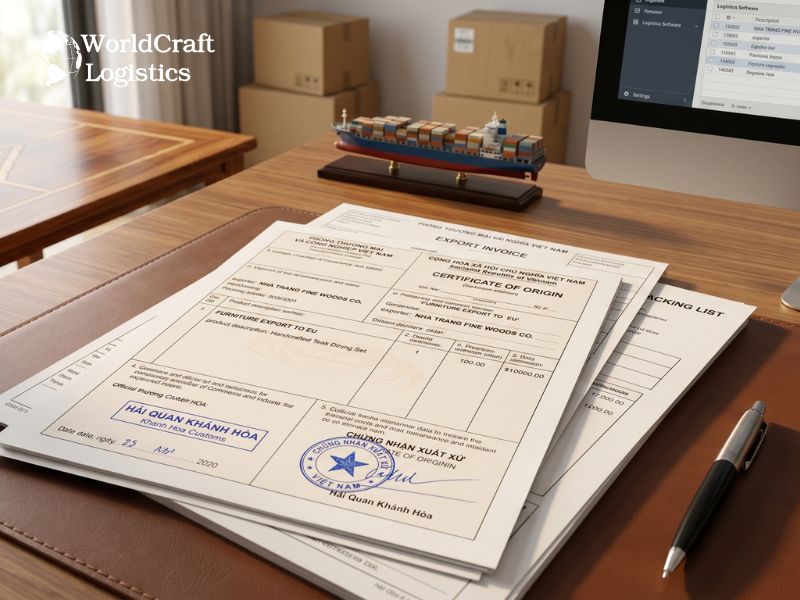
The Vietnamese government does not mandate a certificate of origin for all exports. However, US importers typically require Vietnamese exporters to provide one to confirm the country of origin and facilitate a compliant customs entry.
Form B is the standard non-preferential certificate of origin issued by the Vietnam Chamber of Commerce and Industry (VCCI). It declares that the goods were manufactured in Vietnam and provides the legal basis for applying the appropriate duty rate.
Form AJ may be applicable under the ASEAN-related framework and can support reductions in some circumstances. Exporters should confirm with their customs broker or freight forwarder which form is appropriate for their specific shipment.
Given the heightened CBP enforcement on transshipped goods in 2025, having a clear and well-documented certificate of origin is more important than at any previous time in this trade lane.
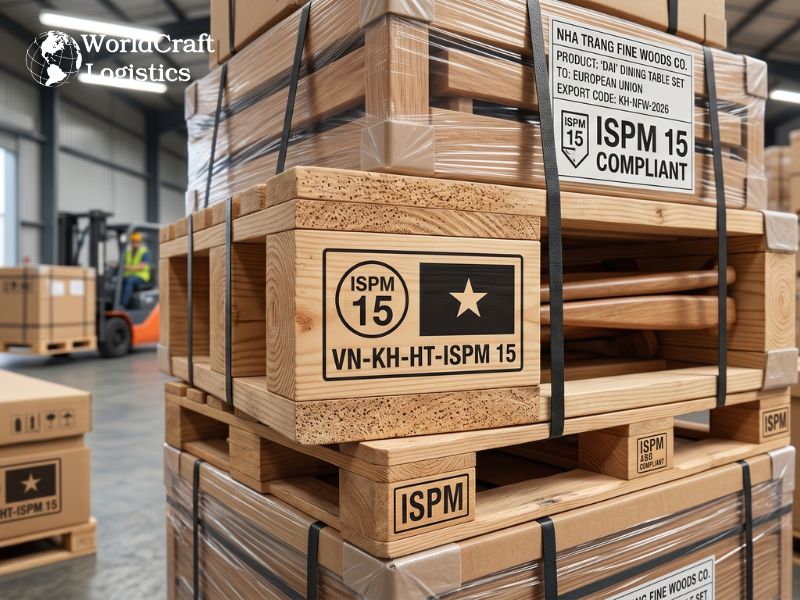
The International Standards for Phytosanitary Measures No. 15 (ISPM 15) is a mandatory requirement for all wood packaging materials and pallets used in shipments entering the United States. This standard requires that solid wood packaging materials (including crates, pallets, dunnage, and spool components) be either heat-treated or methyl bromide fumigated and marked with the official ISPM 15 stamp before departure.
Failure to comply with ISPM 15 results in shipment holds, mandatory treatment at the port of entry at the importer's expense, or refusal of entry by CBP. For furniture shipments packed in wooden crates, this requirement applies to the crating material itself, not just the furniture.
Forest Stewardship Council (FSC) certification is not legally required for importing furniture into the US. However, it is increasingly requested by US retailers and major e-commerce platforms as part of their sustainability sourcing policies. FSC certification confirms that the wood used in furniture production comes from responsibly managed forests. Vietnamese manufacturers supplying to major US retail chains typically hold FSC certification, and having it can strengthen market access and buyer trust.

Choosing the right freight forwarder is as important as choosing the right manufacturer. A good forwarder with deep experience on the Vietnam-to-USA lane will save you time, prevent costly errors, and provide accurate landed cost calculations before you commit to an order.
Key criteria to evaluate:
Experience on the Vietnam-to-USA lane: A forwarder with established relationships at Cat Lai Port and with US customs brokers will handle exceptions and delays far more effectively than a generalist provider.
Transparency in quoting: Always request an all-in quote that includes ocean freight, origin handling, destination handling, customs clearance, and any applicable surcharges. Quotes that list only ocean freight and exclude port fees or documentation costs are incomplete.
Customs broker access: For US-bound shipments, your forwarder should either have in-house licensed customs broker services or work with a trusted licensed broker. This is especially important given the current complexity around Section 232 tariffs and origin verification.
Warehouse and distribution capability: If you are importing to sell through Amazon FBA, retail distribution, or a US warehouse, a forwarder with bonded warehouse facilities near major US ports can hold and re-export goods, perform FBA prep, and manage inventory more efficiently.
Communication and track record: Ask for references from other furniture importers. A forwarder who responds within 24 hours, provides tracking updates proactively, and has handled furniture-specific challenges such as ISPM 15 compliance and timber documentation is worth significantly more than a lower-priced provider who disappears during a customs hold.

Worldcraft Logistics is headquartered in Ontario, California, one of the primary inland distribution hubs in the US, with direct access to the ports of Los Angeles and Long Beach. Since its founding, Worldcraft Logistics has built specialized expertise in importing goods from Vietnam including furniture, home goods, and consumer products, serving importers ranging from individual business owners to established retail brands.
Services offered for Vietnam furniture importers include end-to-end sea freight management, air freight, Amazon FBA preparation, US customs clearance, bonded warehousing, LTL distribution, and pick-and-pack fulfillment. Worldcraft Logistics also assists clients with HS code verification, Section 232 tariff assessment, and certificate of origin documentation to ensure compliant and cost-effective entry into the US market.
Contact Worldcraft Logistics for a customized solution tailored to your furniture shipment and supply chain needs.
Sea freight costs approximately $1,800–$2,800 for a 20-foot container to the US West Coast, and $2,800–$4,500 for a 40-foot container. LCL rates range from $50–$80 per CBM. Air freight typically costs $4.50–$12/kg depending on service level. These figures exclude duties, port fees, and customs clearance.
Ocean freight takes 18–22 days to the West Coast (direct) or 24–30 days with transshipment. Door-to-door delivery is typically 28–45 days. Air freight takes 5–10 days.
Most wooden furniture has a base duty of 0%, but additional tariffs may apply, including 20% reciprocal tariffs and 25% Section 232 duties on certain categories. Always verify with a licensed customs broker.
Not always required, but strongly recommended due to complex tariff structures and CBP enforcement. A broker helps avoid delays, penalties, and incorrect duty payments.
Required documents include a commercial invoice, packing list, bill of lading, certificate of origin, ISF filing, and phytosanitary certificate if applicable.
Yes. All wood packaging must be heat-treated or fumigated and stamped according to ISPM 15 regulations.
Yes, but it is only cost-effective for small or high-value items. Bulk furniture shipments are better suited for ocean freight.
FCL uses a full container exclusively, while LCL shares space with other shipments. FCL is faster and safer; LCL is more cost-effective for small volumes.
While not always mandatory, it is strongly recommended for US imports to verify origin and avoid compliance issues.
Recent tariffs have increased landed costs significantly, prompting importers to optimize classification, documentation, and compliance strategies.

SEO
Digital Marketing/SEO Specialist
Simon Mang is the SEO and Digital Marketing Specialist at Worldcraft Logistics, where he leads content strategy to promote the company's online presence. With years of experience in digital marketing and a strong understanding of the logistics industry, he has published more than 500 specialized articles across freight, warehousing, and supply chain topics. ( Reviewed for accuracy by the Worldcraft Logistics Operations Team ).
Shipping
12/21/2023

Shipping
02/28/2024
Shipping
04/02/2024

Shipping
12/24/2023
Shipping
11/13/2023