
Starting June 1st, 2023 Our warehouse fee will be $0.65/cubic foot per month
In effort to lower the warehouse storage fee during inflation, we have went narrow aisle racking.This construction took us four months but the project is finally completed. With narrow aisle racking, we are able to drop storage by 24%.We as partners will go through this inflation together.
04/21/2026
As geopolitical tensions continue to reshape global energy flows in 2026, the Trump administration is doubling down on its strategy to position the United States as India's primary energy supplier. India, the world's largest net energy importer, represents an enormous prize. The reality on the ground, however, is far more complicated than Washington's diplomatic overtures suggest.
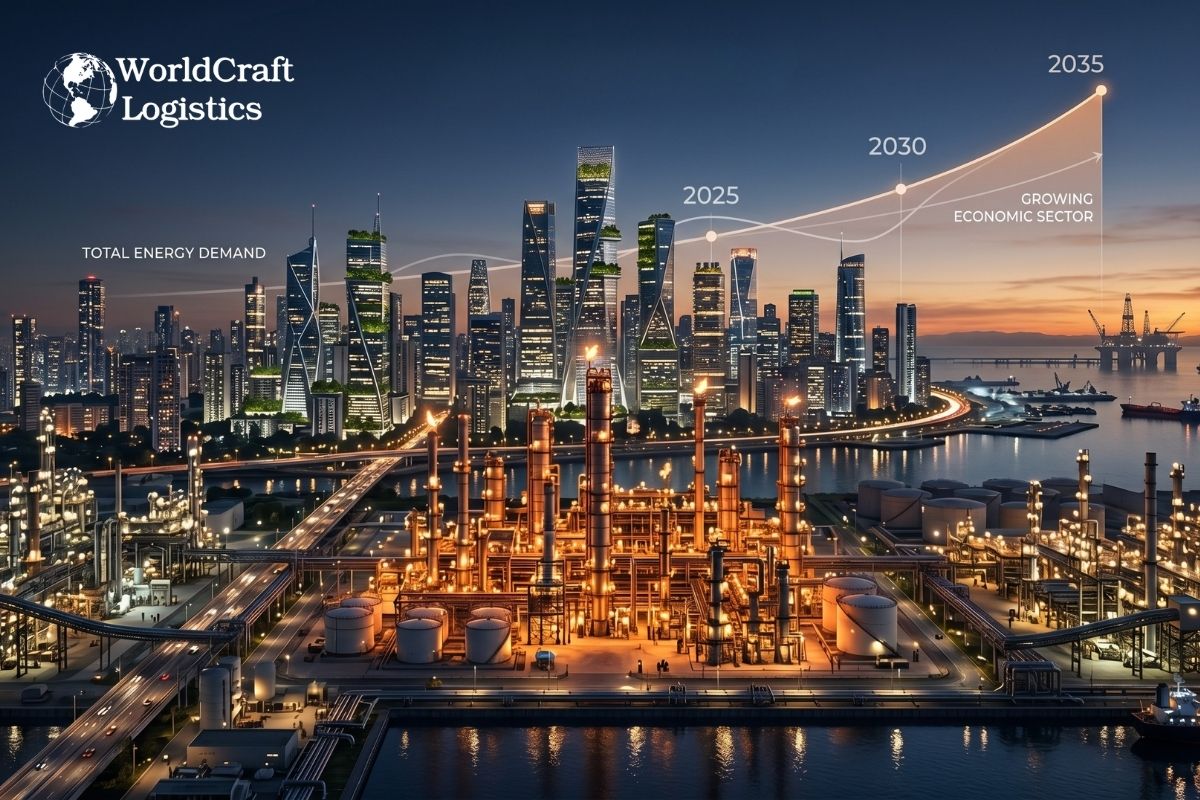
India is the kind of market that every major energy-exporting nation covets. The country relies on foreign sources to meet more than 85% of its total energy demand, consuming crude oil, LNG, LPG, ethane, and propane in enormous volumes. That level of dependency makes it both an attractive commercial opportunity and a significant geopolitical pressure point.
In April 2026, Washington's ambassador to New Delhi, Sergio Gor, met with Indian Energy Minister Hardeep Singh Puri to discuss expanding access to American energy. In the ambassador's words, the goal was to "deepen economic ties and support long-term energy security and diversity for both nations." Earlier in the year, during a high-profile diplomatic summit, India pledged to purchase approximately $500 billion worth of U.S. goods, including energy, information and communication technology, coal, and other products, signaling what appeared to be a breakthrough in bilateral trade relations.
Yet months later, concrete progress on the energy front remains elusive. The very fact that Ambassador Gor needed to hold another round of persuasion talks with India's government is itself telling.
Compiled by Worldcraft Logistics · Sources: OilPrice.com, CNBC, Visual Capitalist, Rystad Energy · April 2026
India crude oil import sources — daily average, 2024
Russia
1.754M
bbl/day · 38.2%
Iraq
1.005M
bbl/day · 21.9%
Saudi Arabia
~600K
bbl/day · ~13%
United States
158K
bbl/day · 9%
India's crude import sources — share (%)
4.59M
bbl/day total
India crude imports — indexed change after U.S. waiver (Mar 2026)
Jan 2026 = 100 (baseline index)
Key barriers to U.S. energy export growth in India
Key figures at a glance
India energy import dependency
85%+
of total demand
India–U.S. trade pledge
$500B
multi-category, 2026
ONGC domestic drilling budget
$18–20B
announced Mar 2026
Russia's import surge after the waiver
+90%
March 2026 MoM
The data tables and charts above illustrate the core challenge facing U.S. energy exporters. In 2024, the United States supplied an average of only 158,000 barrels per day to India, representing roughly 9% of India's total crude imports. Russia, by comparison, delivered 1.754 million barrels per day, accounting for over 38% of India's supply. Iraq contributed a further 1.005 million barrels per day at 21.9%.
The gap between U.S. and Russian supply volumes is not marginal. It is structural, and it reflects market forces that diplomatic agreements alone cannot easily override.
Beyond the raw volume figures, two deep-rooted obstacles make it particularly difficult for American crude to gain a significant share in India's oil market.
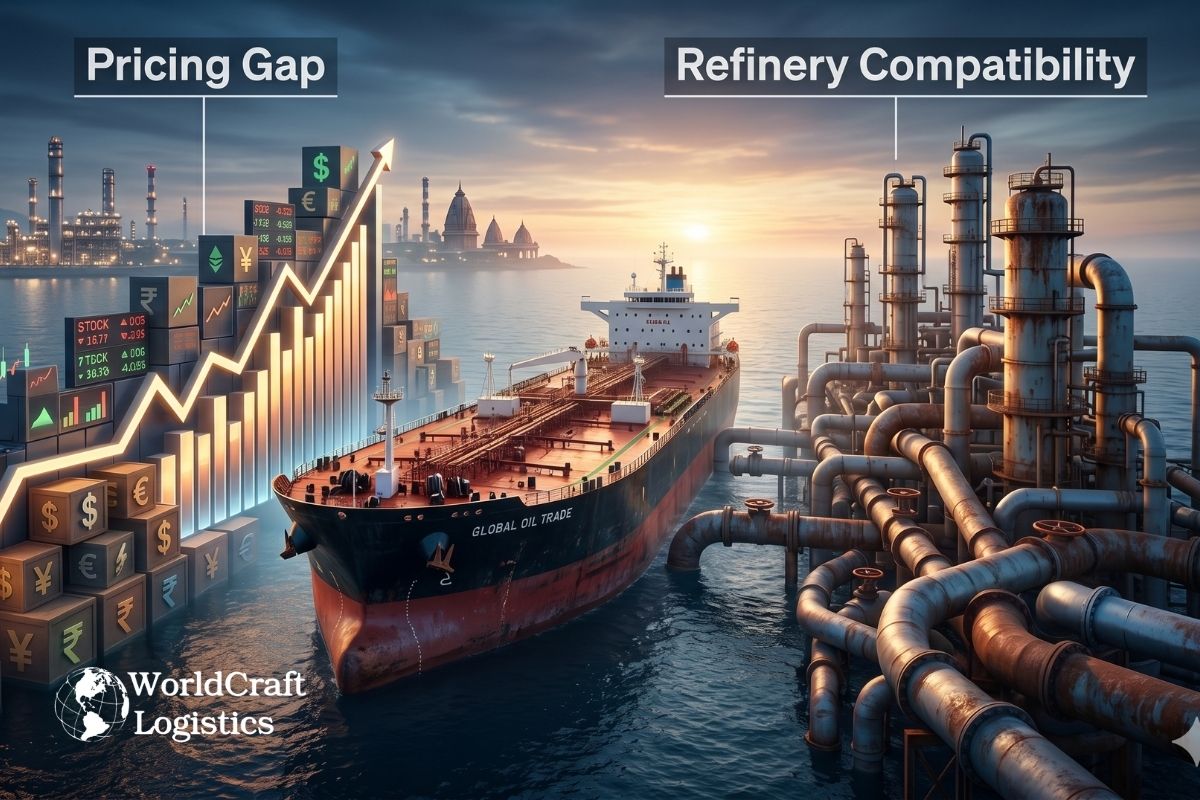
The first is price. India's energy procurement decisions are overwhelmingly driven by cost. Russian crude has flooded Indian refineries since 2022, largely because Western sanctions forced Russian exporters to offer substantial discounts to willing buyers. The pattern held as recently as March 2026: following a U.S.-issued sanctions waiver for Russian oil, India's imports of Russian crude surged by 90% month-over-month, even as the country's total crude imports fell by 15%. When given the freedom to buy cheap Russian barrels, Indian refiners made their priorities unmistakably clear.
The second barrier is technical. Most crude oil exported from the United States is of the light, sweet variety, low in sulfur and relatively easy to refine into gasoline and other lighter products. India's refinery infrastructure, however, was built and configured to process heavy, sour crude grades that yield higher volumes of diesel, which remains the dominant transport fuel across the subcontinent. Converting these facilities to handle U.S.-grade crude would require multi-billion dollar capital expenditure and years of construction. It is not a short-term fix.
The picture changes meaningfully when the focus shifts from crude oil to natural gas and petroleum products. India is one of the world's largest and fastest-growing importers of liquefied natural gas, liquefied petroleum gas, ethane, and propane. The United States holds an abundant surplus in all of these categories and has been actively seeking to grow its export footprint in Asia.
The ongoing conflict in the Middle East has disrupted regional gas supply chains significantly, limiting the availability of historically cheaper Gulf-sourced cargoes. This supply squeeze creates an opening for American LNG and LPG exporters to step in but as Rystad Energy analysts noted in commentary to CNBC in April 2026, even this opportunity hinges on pricing. The U.S. can realistically become a major gas partner for India, analysts argue, but only if American exporters are willing to offer competitive discounts to close the landed-cost gap.
Whether private U.S. energy companies are prepared to compress margins in a global supply-constrained environment is a different question entirely.
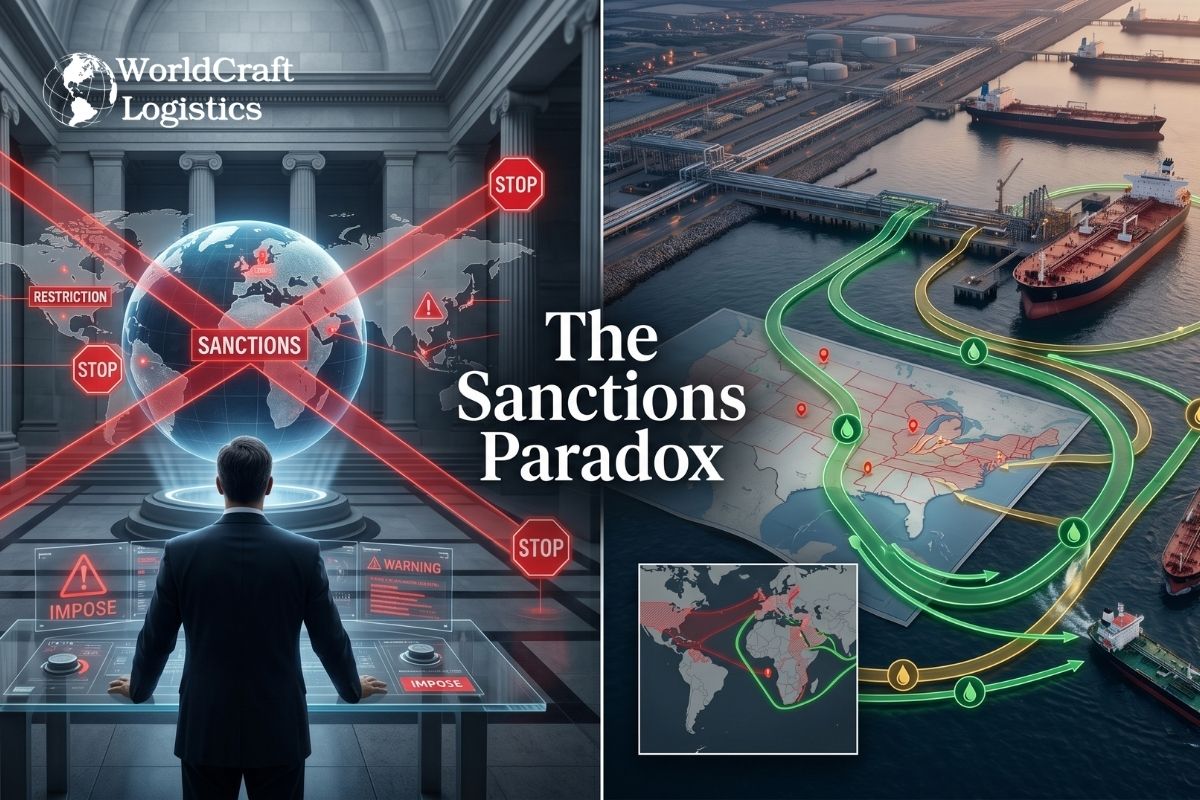
Perhaps the most striking dimension of this story is the contradiction at the heart of U.S. energy policy toward India. On one hand, Washington is actively lobbying New Delhi to buy more American oil and gas. On the other hand, the U.S. government has been issuing, extending, and re-extending sanctions waivers that allow India to freely purchase discounted crude from both Russia and Iran, the two suppliers whose market share Washington claims it wants to displace.
Earlier in 2026, the United States and Israel launched military operations against Iran, triggering a regional supply shock that hit India particularly hard. In response, Washington was compelled to issue sanctions waivers for both Iranian and Russian crude, allowing Indian state refiners to continue sourcing from these suppliers without penalty. The waiver for Russian oil was extended even after senior U.S. officials had signaled no renewal was forthcoming.
The underlying logic is straightforward: with India absorbing more than 85% of its energy from abroad, Washington could not afford to let supply constraints destabilize a bilateral relationship already under strain from previous tariff disputes. But the consequence is that the very supply crunch that theoretically should have driven India toward American energy ended up driving India further into the arms of sanctioned producers with U.S. blessing.
Adding another layer of complexity, India's state energy giant ONGC announced in March 2026 that it would invest between $18 billion and $20 billion in new domestic oil and gas drilling campaigns aimed at reducing the country's import dependency over the long term. That investment signals India's broader strategic intent: to reduce vulnerability to any single foreign supplier, including the United States.
The ripple effects of these supply-side dynamics extend well beyond bilateral diplomacy. When crude oil and LNG flows shift, whether due to sanctions, conflict, or geopolitical realignment, so do the shipping routes, freight rates, and cargo scheduling patterns that underpin global energy logistics.
The disruption of Middle Eastern gas exports, the rerouting of LNG tankers and the surge in long-haul crude movements from the U.S. Gulf Coast to South Asian ports all of these developments create real operational pressures for shipping operators and trading companies. Freight rates on key routes fluctuate in response, vessel availability tightens or loosens across different corridors, and importers who rely on predictable delivery windows face new uncertainty.
For businesses involved in commodity trading, industrial supply chains, or any form of cross-border logistics in the Asia-Pacific region, these dynamics warrant close attention. Reactive logistics planning is costly; anticipating shifts before they materialize is the more resilient approach.
Are supply chain disruptions affecting your import or export operations? Contact Worldcraft Logistics for a strategic consultation on freight planning, routing optimization, and cost management in today's volatile trade environment.
The following represents our independent perspective based on years of operational experience in international logistics and trade flows, not advocacy for any government, producer, or commercial interest.
The U.S.–India energy story is, at its core, a textbook illustration of how market fundamentals outlast political ambition. Trade agreements and diplomatic pledges create frameworks; they do not override the calculations that procurement officers make every day when evaluating supplier bids.
Three observations stand out for those of us who work at the intersection of trade policy and physical supply chains.
The situation will continue evolving. What remains constant is the need to plan based on data rather than headlines.
Worldcraft Logistics partners with businesses across Vietnam and the Asia-Pacific region on end-to-end freight forwarding, customs brokerage, and supply chain strategy. Explore our ocean freight, air freight, and trade advisory services at worldcraftlogistics.com or speak directly with our team today.
*This article was independently researched, synthesized, and editorially developed by Worldcraft Logistics for informational purposes, drawing on publicly available international sources. The content has been substantially rewritten and expanded to serve the specific perspective and readership of Worldcraft Logistics, and does not reproduce original copyrighted material from any referenced publication.

SEO
Digital Marketing/SEO Specialist
Simon Mang is an SEO and Digital Marketing expert at Wordcraft Logistics. With many years of experience in the field of digital marketing, he has shaped and built strategies to effectively promote Wordcraft Logistics' online presence. With a deep understanding of the logistics industry, I have shared more than 500 specialized articles on many different topics.

Hot News
08/05/2024
Hot News
02/23/2023
Hot News
02/23/2023

Hot News
02/06/2023

Hot News
02/07/2023